

Advice and answers from the Advanced Web Ranking Team
Search for articles
>
>
AI Overviews vs. AI Mode vs. LLM Search: What’s the Difference and How to Track Them in AWR
Learn the difference between AI Overviews, Google AI Mode, and LLM search platforms like ChatGPT and Perplexity, and discover how to track AI search visibility with Advanced Web Ranking.

Search no longer means just a list of ten blue links.
Today, the same query can trigger several different AI powered experiences. You might type your question into Google search, just like you always did, and see the answer instantly summarised in an AI Overview at the top of the page. You might switch to Google’s AI Mode, where the traditional list of results disappears and the page becomes a long AI generated response. Or you might skip traditional search altogether and ask the same question in ChatGPT or Perplexity, receiving a conversational answer with cited sources.
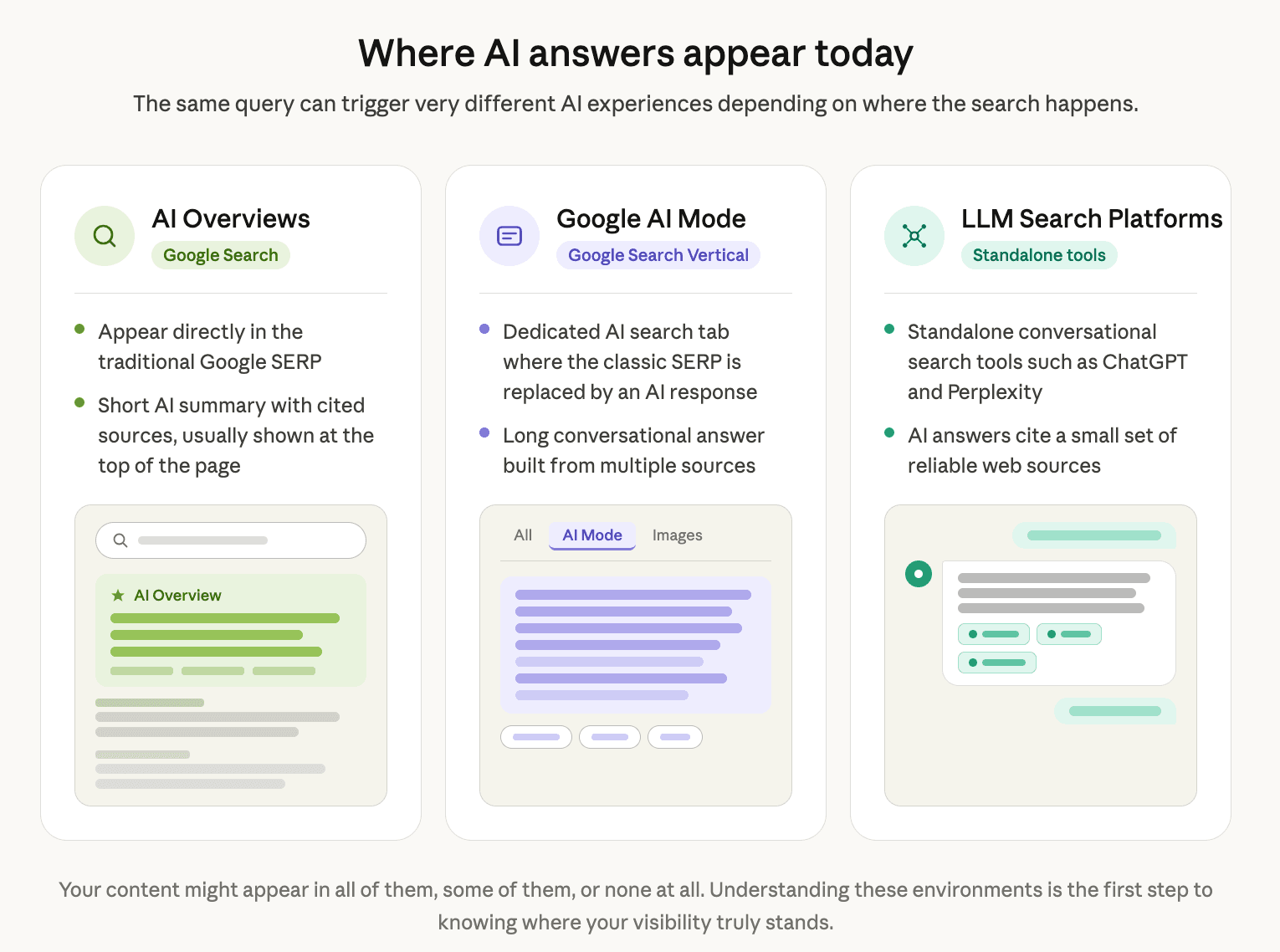
They may all look like “AI answers,” but they actually belong to different search environments, each with its own rules, visibility dynamics, and tracking challenges.
Understanding where and how your content appears across these environments is becoming just as important as tracking your position in the classic SERP.
In this guide, we’ll break down the differences between AI Overviews, AI Mode, and LLM powered search results, and show how you can track each of them with Advanced Web Ranking to adapt your strategy as search continues to evolve.
TL;DR: Not all AI answers are the same
AI powered answers appear today in three main environments: as AI Overviews in Google search results, on the Google AI Mode vertical, and inside AI search platforms such as ChatGPT and Perplexity.
AI Overviews can appear directly within Google’s traditional search results as a short AI summary with cited sources.
AI Mode is Google’s separate search vertical where the traditional results page is replaced by a fully AI generated response built from multiple sources.
AI search platforms like ChatGPT and Perplexity work as standalone conversational environments where users can ask questions and receive AI generated answers that reference trusted web sources.
Each environment influences how users discover information and which websites gain visibility.
Advanced Web Ranking allows you to track these search environments through dedicated search engines, helping you understand where your content appears and how your visibility evolves across the AI driven search landscape.
AI Overviews: AI generated summaries inside Google search results
AI Overviews are probably the most familiar form of AI powered search, as they appear directly inside Google’s standard results page.
When Google believes a query would benefit from a summarised answer, it generates a short AI response that usually appears above the organic results. Inside this summary, Google includes an AI generated explanation of the topic along with links to the sources used to build that answer.
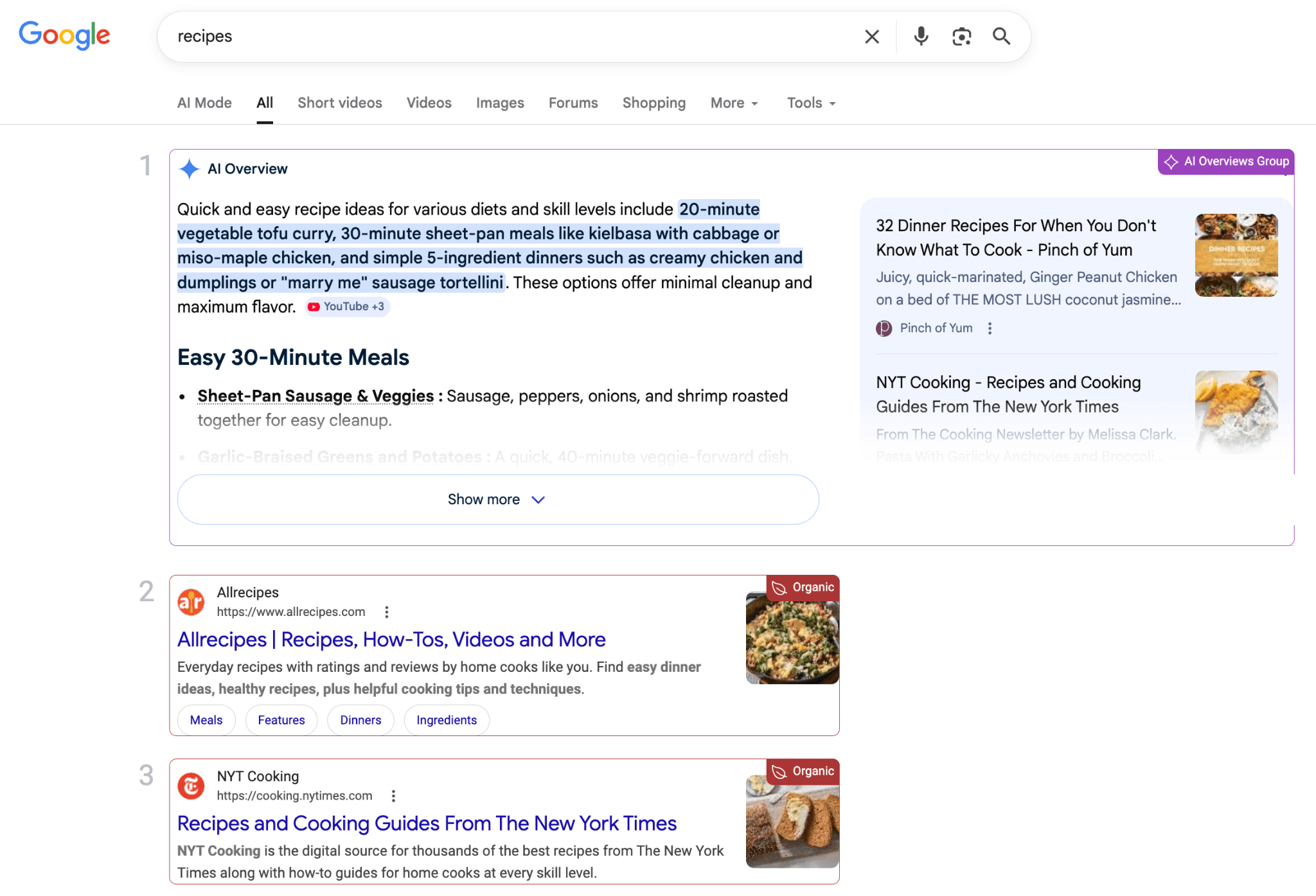
From a user perspective, this makes search faster. Instead of opening multiple pages to piece together information, users can often find the answer they need directly within the search results.
From an SEO perspective, however, this changes the competition. Instead of competing only for the top organic positions, websites also need to compete to be cited inside the AI generated summary itself. A page might rank in the traditional results, appear as a cited source inside the AI Overview, or both.
Because AI Overviews are often part of the traditional SERP layout, they influence how organic results are seen and interacted with.
How to track AI Overviews with AWR
To track them accurately, Advanced Web Ranking offers a dedicated Google Search + AIO search engine. This search engine captures the ranking positions of both standard search results and AI Overview blocks appearing on the results page, allowing you to see your citation rank and the sources used in the generated summary.

Once this search engine is added to a project, AWR will begin collecting data on the next scheduled update or after triggering an on demand refresh, helping you monitor whether and how your visibility is impacted by the presence of these results.
You can learn more about how tracking Google Search + AIO works and how to configure it step by step in this detailed guide here.
Since AI Overviews are dynamically generated, retrieving this block of data requires an additional query sent to Google for each keyword you are tracking. For this reason, tracking the Google Search + AIO search engine consumes twice the number of keyword units compared to a standard search engine (eg. Google Universal or Google Organic).
AI Mode: AI generated answers inside Google’s dedicated search tab
While AI Overviews are integrated into the traditional web search results, AI Mode is a standalone search environment.
AI Mode appears as a separate tab in Google Search. When users switch to it, the familiar list of blue links disappears and the classic search results page becomes a fully AI generated response.
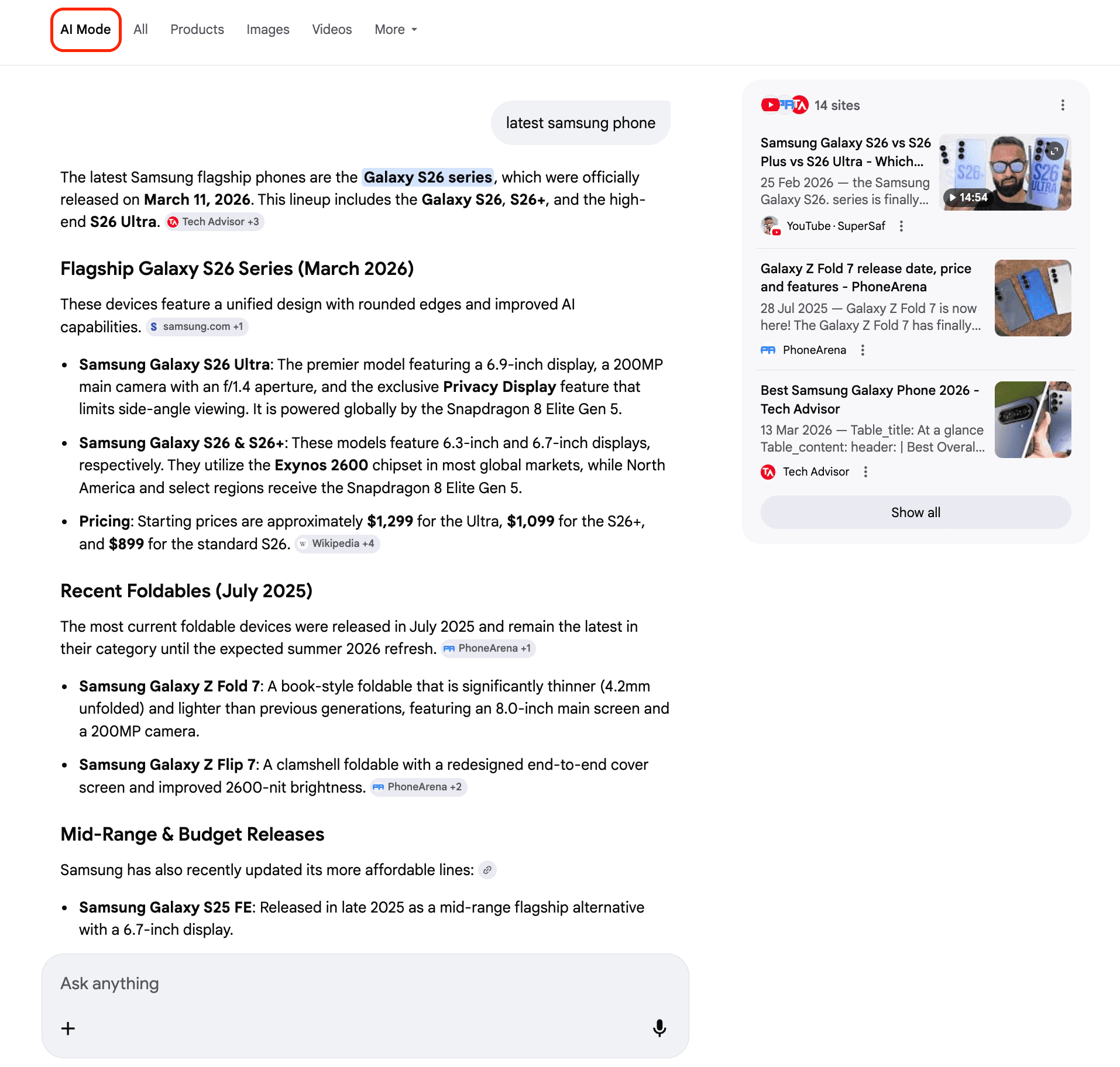
Instead of returning a simple list of results, Google analyses the query and performs multiple related searches in the background, then synthesises information from different sources into a long form answer with supporting citations.
This process, sometimes called query fan out, means that a single user query can trigger several underlying searches before the final AI response is assembled.
The result is a more conversational search experience where users can continue asking follow up questions and explore a topic without leaving the AI environment.
From a visibility perspective, this changes the goal entirely. The question is no longer where your page ranks in the SERP, but whether your content is selected by the AI system as a trusted reference.
How to track AI Mode with AWR
In Advanced Web Ranking, AI Mode can be tracked as a standalone search engine, allowing you to monitor exactly which websites appear in AI generated answers and whether your content is being cited or mentioned within them.
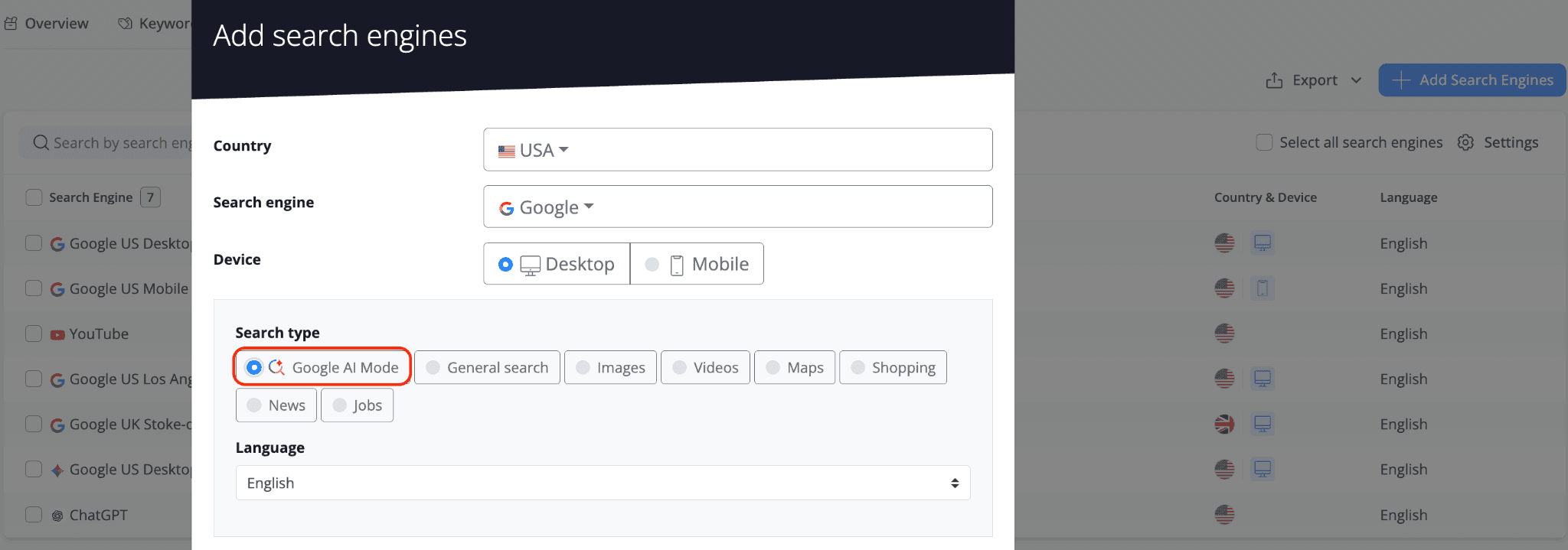
For a detailed walkthrough on setting up this search engine and interpreting the retrieved data, please check out this guide here.
AI Mode relies on an advanced query mechanism similar to Google Search + AIO, this is why tracking this environment consumes twice the number of keyword units compared to standard search engines.
LLM powered search: AI generated answers in conversational tools like ChatGPT and Perplexity
Beyond Google, a new generation of AI driven search platforms has quickly become part of how people discover information online.
Platforms like ChatGPT and Perplexity combine conversational AI with real time web sources, allowing users to ask questions in natural language and receive answers that often include cited references from across the web.
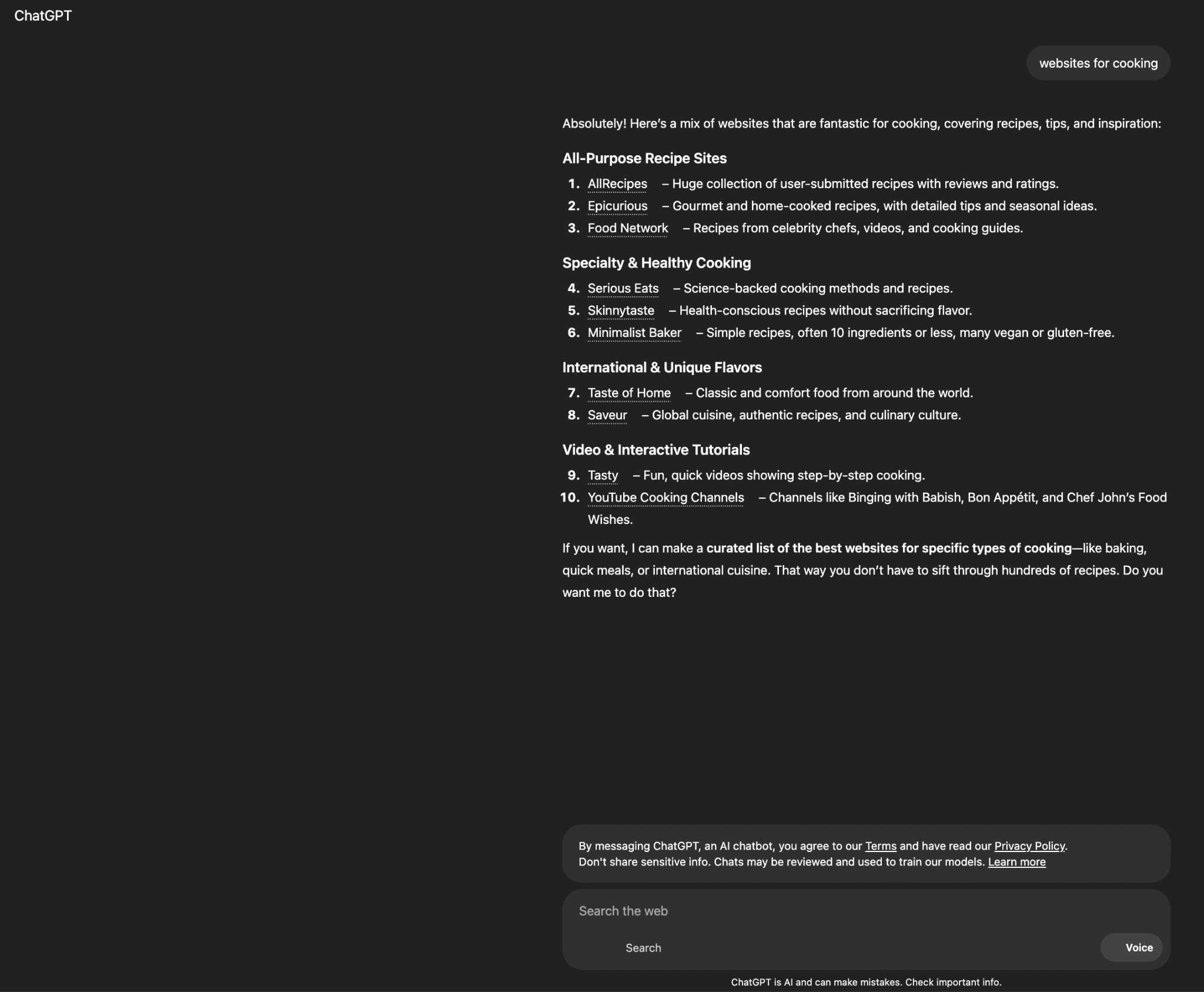
In many cases, these platforms select only a handful of sources they consider reliable and use them to build the response. If your website appears among those cited sources, it becomes part of the answer itself.
This makes visibility in these platforms extremely valuable. Being cited by the AI can position your content as an authoritative reference and expose your brand to users who may never visit a traditional SERP.
How to track ChatGPT and Perplexity with AWR
Advanced Web Ranking allows you to track both ChatGPT and Perplexity as dedicated search engines. For each keyword, AWR retrieves the list of sources cited in the AI response and provides snapshots of the actual AI results page.
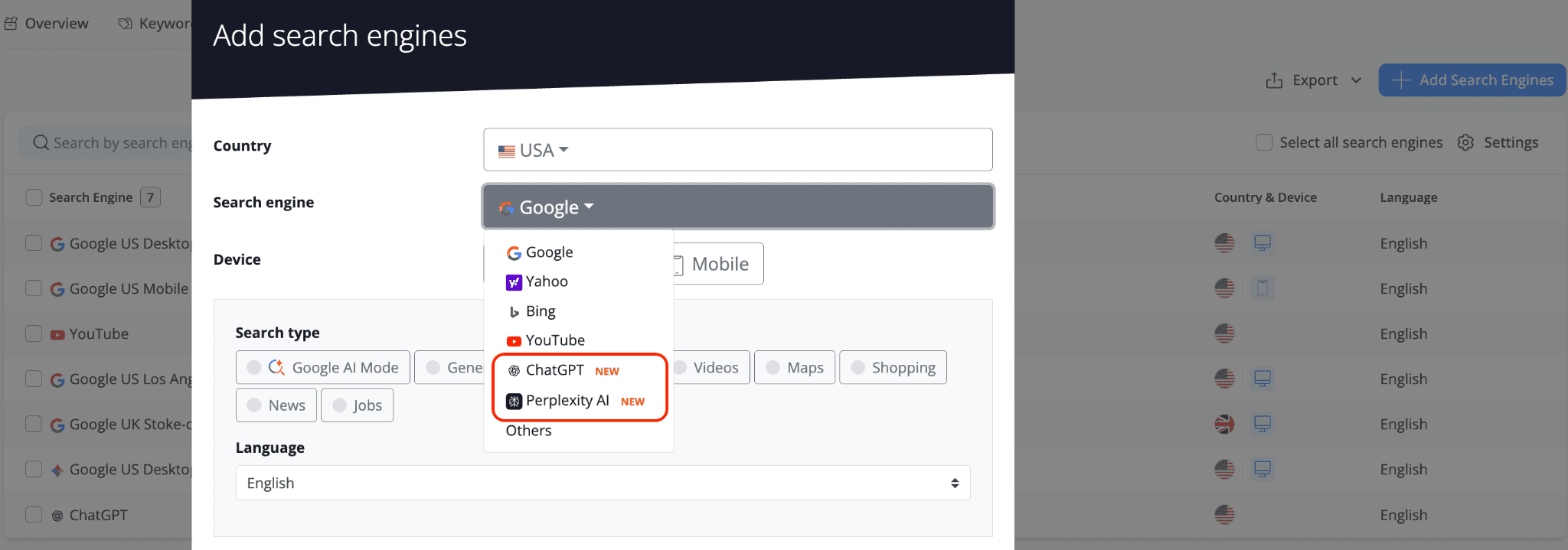
This makes it easier to see how your content is surfaced in conversational AI search and which websites are competing for visibility in these environments.
If you want to explore how to set up each of these search engines in AWR or how citations and visibility are reported in more detail, see our guides on tracking ChatGPT and Perplexity.
Tracking ChatGPT and Perplexity uses keyword units in the same way as other standard search engines in Advanced Web Ranking, meaning that only 1 unit is required for each keyword and search engine combination, not 2 as for Google Search + AIO or Google AI Mode.
Why tracking AI search results matters
Search no longer happens in just one place. Today, the information users are looking for might appear inside AI summaries in Google Search, within dedicated AI search experiences like AI Mode, or in conversational platforms such as ChatGPT and Perplexity.
However, the shift toward AI powered search does not replace traditional SEO. Instead, it adds new layers to how information can be discovered online. For SEO teams, this means visibility can now come from several channels.
The same page might rank in the classic Google web results, appear as a cited source inside an AI Overview, and also be referenced in ChatGPT or Perplexity answers.
Without tracking these search environments, it becomes difficult to see the full picture.
By monitoring AI Overviews, AI Mode, and LLM powered search results, you gain a clearer understanding of whether and how your content is referenced across the evolving AI search ecosystem and where your brand is truly visible.
Advanced Web Ranking brings traditional search and AI powered search together, allowing you to track rankings, AI citations, brand mentions, and visibility trends in one place.
Do you have any further questions or need more information about this product update? Don't hesitate to get in touch with our dedicated support team.
stay in the loop