


Roughly a third of this guide belongs outside Google, and not out of balance-for-its-own-sake. Three of the four surfaces here reach shoppers Google increasingly does not: Pinterest owns the inspiration phase, Amazon owns the transaction, and social platforms own the youngest cohort’s discovery entirely. Bing matters for a different reason, because a large share of AI search is grounded in its index.
The good news is that these surfaces want substantially the same assets. The section closes with a reconciliation table showing where the requirements genuinely diverge.
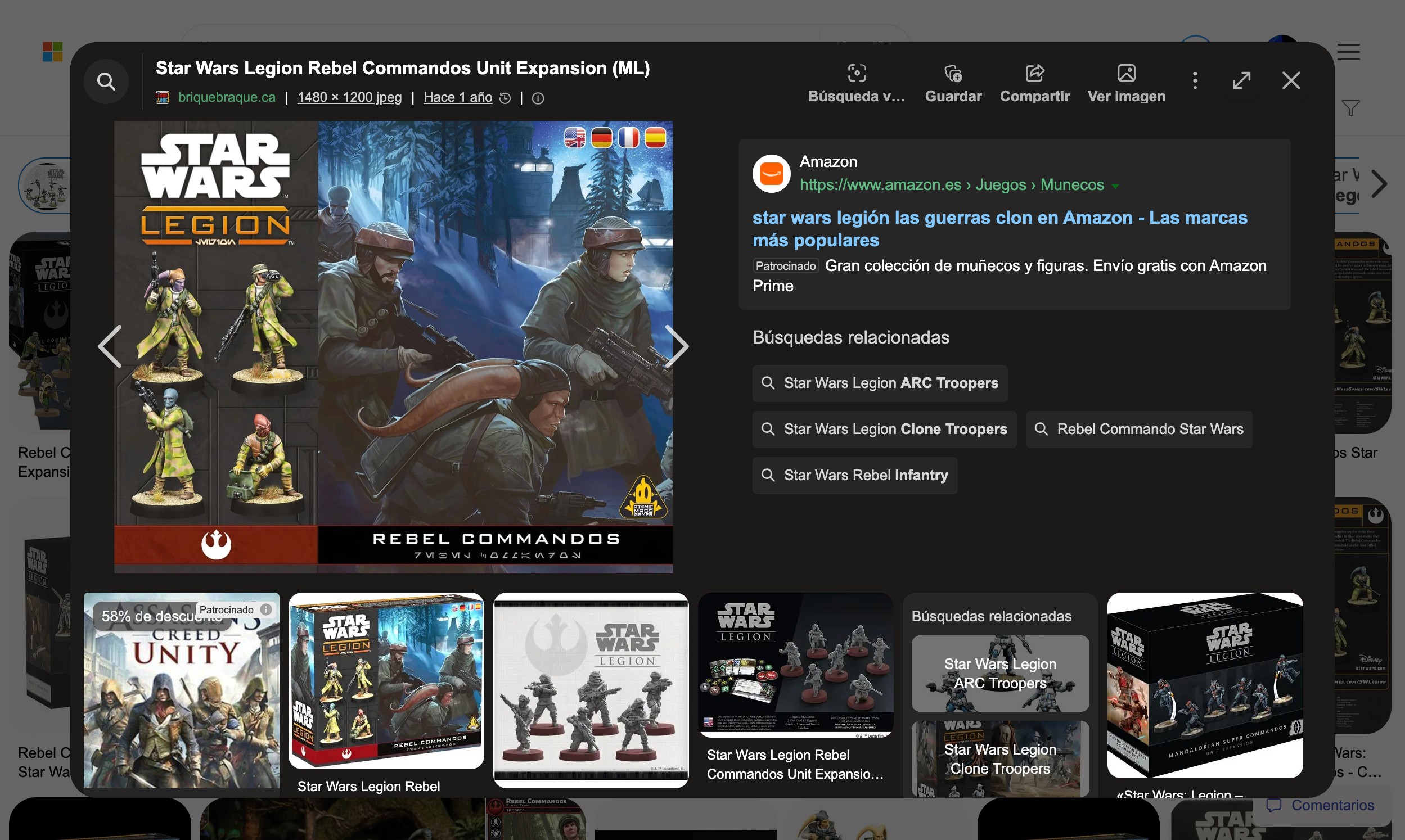
Bing Visual Search and Copilot
Bing’s direct search share makes it easy to deprioritize. Its indirect reach does not: ChatGPT and Copilot both lean on Bing’s index for grounding, which means Bing indexing quality is a lever on AI visibility well beyond Bing itself.
Microsoft has been unusually explicit about this. Bing rewrote its Webmaster Guidelines in 2025 to cover Copilot grounding and citation and published dedicated AI-citation guidance in October 2025. Copilot Search in Bing launched in April 2025 with cited sources, images and video; Copilot inside Bing Webmaster Tools reached general availability in March 2025.
The single most consequential technical detail, and it is under-reported: `NOARCHIVE` now prevents your content from being used in Copilot responses and grounding.
That directive has sat harmlessly in many enterprise templates for years, often applied by legal or security teams with no search involvement, historically doing little more than suppressing a cached copy. It now removes you from an AI answer surface. Audit for it. It is the cheapest possible win in this section and a genuinely silent failure.
Bing’s visual search is also worth knowing on its own terms. Bing shipped object-framing — dragging a box around part of an image to search within it — before Google did, and its visual search experience remains capable, particularly for products and fashion. Bing Webmaster Tools provides image-specific reporting that Search Console does not.
Practical brief for Bing:
Audit NOARCHIVE and NOINDEX across templates, and confirm what your CDN adds at the edge
Register in Bing Webmaster Tools — the image reporting alone justifies it
Submit sitemaps including image extensions; Bing supports IndexNow for fast updates
Structured data is read broadly as Bing supports schema.org
Treat Bing indexing as infrastructure for AI visibility, not as a minor traffic channel
Turn visual search data into actionable insights
Advanced Web Ranking gives you a clearer view of visual search performance, from rankings in Google Images to image results in Universal SERPs and visibility across major AI engines.
Pinterest: the surface that was visual-first
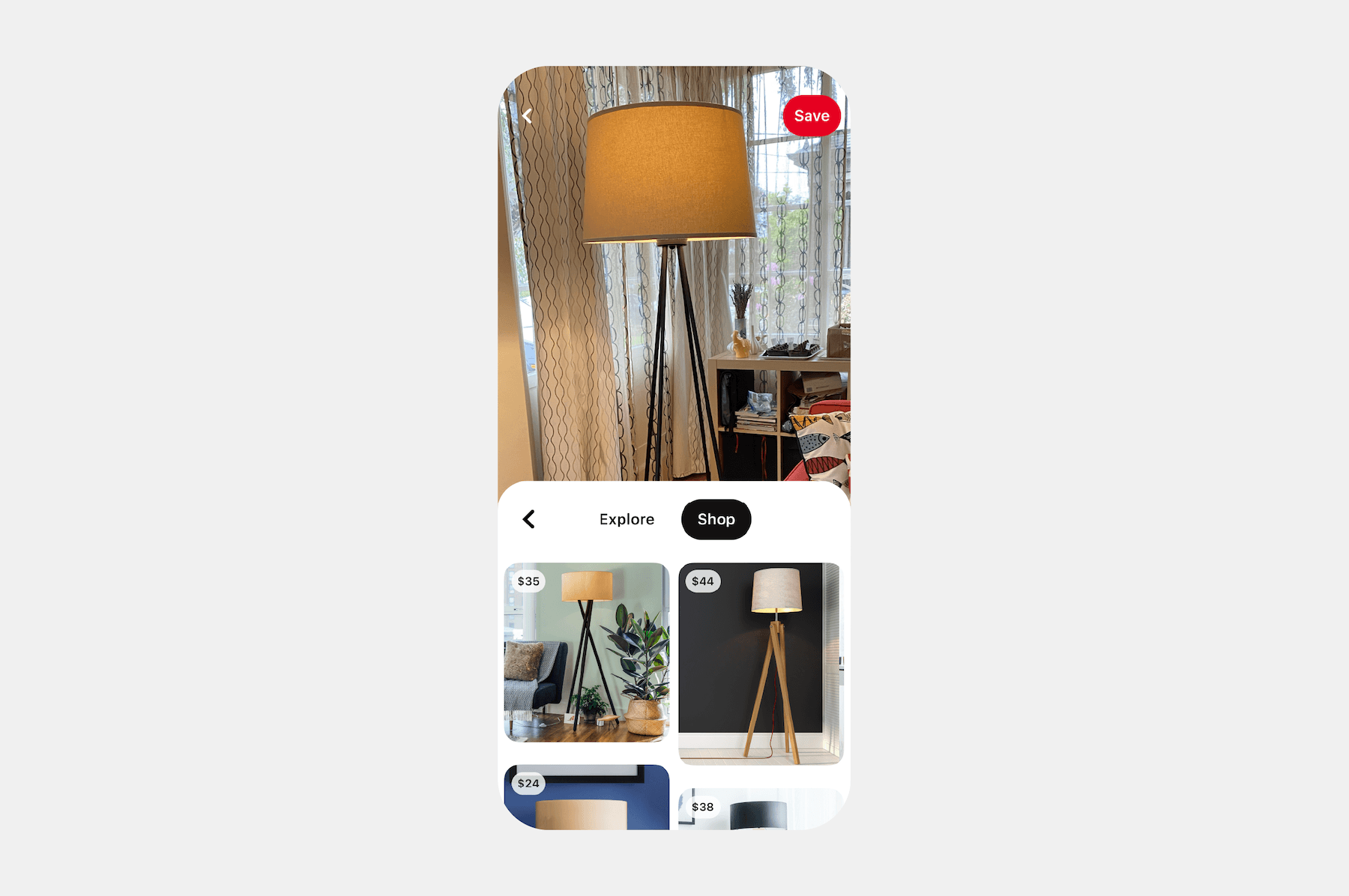
Pinterest is the only major platform where visual search was never bolted on, but it is the product. For inspiration-led categories (home, fashion, food, weddings, DIY, beauty) it captures shoppers at the exact stage described in the very first section of the guide: I don’t know what I want, but I’ll know it when I see it.
On the scale figures, a caution. Pinterest’s CEO cited roughly 80 billion searches per month in February 2025 earnings, but that figure describes broad search and discovery engagement, not typed queries, and should be characterized that way. A commonly-repeated 1.5 billion Pinterest Lens queries per month does not trace to a Pinterest primary source and should be attributed cautiously or omitted. The directionally reliable and strategically useful number is different: around 80% of Pinterest searches are unbranded. Users arrive describing what they want, not who makes it, which is precisely the condition under which a well-optimized product can win against a better-known one.
Pinterest publishes more about visual search architecture than Google ever has, which is why section 2 drew on its engineering work. Its stack includes unified visual embeddings serving multiple visual products from a single representation, object detection for multi-object scenes, and — from June 2025 — TransActV2, scaling behavioral modelling across up to 16,000 lifetime user actions. If you want to understand how any of these systems work, Pinterest’s engineering blog remains the most generous public source.
What to actually do:
Rich Pins sync product metadata — price, availability, description — from your site’s markup into the Pin. The same `Product` structured data from section 7 powers this, which makes Pinterest one of the highest-return surfaces per unit of incremental work.
Vertical imagery. The feed is portrait; a 2:3 ratio (1000 × 1500) is the working standard. This is the clearest asset divergence in the guide because the 1:1, 4:3, and 16:9 Google assets are not optimal here.
Text overlay is acceptable and often effective: the opposite of Merchant Center’s rules. Pinterest is a browsing feed; a legible caption in-image earns saves.
Lifestyle over catalogue. Pinterest rewards aspirational context. The styled-scene brief from section 9 applies directly, and the multi-object argument applies doubly.
Shop the Look and shoppable Pins turn a scene into individually purchasable objects, aka the same object-level commerce Lens performs, inside a platform built for saving.
Amazon: Lens Live, Rufus, and a walled garden
Amazon is where a large share of product searches begin, and its visual capabilities have advanced quickly:
Amazon reported a 70% year-over-year increase in visual searches worldwide in October 2024.
Amazon Lens Live launched in September 2025 for tens of millions of US iOS customers: real-time camera scanning with a swipeable product carousel, powered by computer-vision infrastructure and wired into Amazon’s shopping assistant.
Rufus, that assistant, was renamed "Alexa for Shopping" in May 2026.
Amazon’s image requirements are stricter than Google’s, and a catalogue built to Google’s floor will fail them:
Amazon | Google Merchant Center | |
|---|---|---|
Minimum | 1000 × 1000 px for zoom | 500 × 500 px |
Background | Pure white (#FFFFFF) for main image | White or neutral |
Product fill | 85% of frame | 75–90% |
Overlays | Prohibited on main image | Prohibited |
Build to Amazon’s spec and you clear Google’s automatically. The reverse is not true, which makes Amazon’s the sensible production standard for anyone selling on both.
The strategic complication is the more important story. Amazon has been blocking third-party LLM crawlers, and sued Perplexity in March 2026 over scraping of product pages, reviews and imagery.
The consequence is structural: Amazon sellers are largely absent from ChatGPT and Perplexity commerce. A brand whose entire visual and product presence lives inside Amazon is invisible on the fastest-growing shopping surfaces described in section 6.
This is the strongest argument in this guide for maintaining a properly optimized direct channel. Your own site, correctly marked up and correctly fed, can appear in ChatGPT, Perplexity and Google’s AI surfaces. Your Amazon listing, for the most part, cannot. Amazon remains essential for transaction volume — but it is a walled garden, and the walls have been getting higher.

Social visual discovery: Instagram, TikTok and Gen Z
The behavioral shift here is real, and it is routinely reported with the wrong evidence.
The number to use: in a survey of over 1,000 US consumers, Gen Z (18–27) discovers products on Instagram (30.4%) and TikTok (23.2%) more than on Google (18.8%), with YouTube at 14.5%. Google still leads comfortably elsewhere: Millennials 42.4%, Gen X 41.1%, Boomers 55.9%.
The number to date correctly or avoid: the widely-cited claim that around 40% of 18–24s use TikTok or Instagram instead of Google to find lunch comes from Google’s Prabhakar Raghavan, speaking at Fortune Brainstorm Tech in July 2022, citing internal research. It is a 2022 datapoint. It is frequently presented as current, and it should not be.
Context that complicates the headline: Forrester’s December 2025 work found US adults overall still use Amazon and Google most for product discovery, with ChatGPT a distant third but ahead of Instagram and TikTok in aggregate. Both things are true, and the generational split is genuine, and the overall picture is less dramatic than "Google is over" framing suggests.
What this means practically is less about optimizing for TikTok’s algorithm, which is outside this guide’s scope, and more about a consequence most teams miss.
Social platforms are now image sources for search surfaces. Google’s Images tab (section 3) draws on publicly available images across Search, including social sources. Instagram content appears in Google Images results. Pinterest indexes social imagery. Your social product photography is not confined to social.
Three implications:
Apply the same image standards to social assets as to catalogue assets. They are candidates for search surfaces whether you planned for that or not.
Maintain consistency across channels. The same product shot appearing on your PDP, your Instagram and your Pinterest strengthens the entity association described in section 2: more contexts, same object, clearer identity.
Vertical video is now a product-discovery format, and its thumbnails are images subject to everything in this guide.
Turn visual search data into actionable insights
Advanced Web Ranking gives you a clearer view of visual search performance, from rankings in Google Images to image results in Universal SERPs and visibility across major AI engines.
One asset set, five surfaces
The requirements diverge less than the platform documentation suggests. Here is the reconciliation.
Google Images / Lens | Google Merchant Center | Amazon | AI surfaces | ||
|---|---|---|---|---|---|
Minimum size | 50,000 px (w × h) | 500 × 500 | 1000 × 1000 | 1000 × 1500 | Inherits source |
Recommended | High resolution | 1500 × 1500 | 1500 × 1500+ | 1000 × 1500 (2:3) | Highest available |
Aspect ratio | 16:9, 4:3, 1:1 | Square preferred | Square | 2:3 vertical | n/a |
Background | Clean preferred | White / neutral | Pure white #FFFFFF | Any — lifestyle favoured | n/a |
Text overlay | Permitted on-page | Prohibited | Prohibited (main image) | Encouraged | n/a |
Formats | BMP, GIF, JPEG, PNG, WebP, SVG, AVIF | JPEG, PNG, WebP | JPEG, PNG, TIFF, GIF | JPEG, PNG | Narrower on upload — no AVIF |
Data source | Page markup | Feed | Listing | Rich Pins (from page markup) | Feed + markup |
What this actually tells you:
Produce at 1500 × 1500 minimum, in square, and you satisfy Google, Merchant Center and Amazon from one master. That is the single most useful conclusion in this table.
Pinterest is the one genuine divergence. Vertical 2:3 and permitted text overlay make it a separate crop and often a separate creative treatment. Budget for it rather than trying to reuse square assets.
Text overlay is the sharpest contradiction — mandatory-absent on Merchant Center and Amazon, actively useful on Pinterest. Keep a clean master and derive the overlaid version, never the reverse.
Feeds and markup are the shared substrate. Google Merchant Center, ChatGPT’s Agentic Commerce Protocol, Perplexity’s Merchant Program and Pinterest Rich Pins all consume structured product data — and every one of them requires an image URL as a mandatory field. One well-maintained feed and one correct `Product` implementation serve all of them.
A practical sequence for a team that cannot do everything at once:
Fix the foundations — crawlability, Product markup, feed accuracy, and the NOARCHIVE audit. Everything downstream depends on these, and they serve every surface simultaneously.
Produce to the strictest common spec — 1500 × 1500, white background, no overlay. One master, every surface.
Add the divergent crops — Pinterest vertical, plus any lifestyle variants.
Extend the shot list — spec panels for OCR, styled scenes for co-occurrence, variant-specific imagery.
Then optimize per platform — Rich Pins, Amazon A+ content, and so on.
Most catalogues are still failing at step one, which is a better problem to have than it sounds: it means the highest-return work is also the most tractable.
Continue the guide
The Photography Brief for Machines ← Previous · Next → Measuring Visual Search

Article by
Gianluca Fiorelli
With almost 20 years of experience in web marketing, Gianluca Fiorelli is a Strategic and International SEO Consultant who helps businesses improve their visibility and performance on organic search. Gianluca collaborated with clients from various industries and regions, such as Glassdoor, Idealista, Rastreator.com, Outsystems, Chess.com, SIXT Ride, Vegetables by Bayer, Visit California, Gamepix, James Edition and many others.
A very active member of the SEO community, Gianluca daily shares his insights and best practices on SEO, content, Search marketing strategy and the evolution of Search on social media channels such as X, Bluesky and LinkedIn and through the blog on his website: IloveSEO.net.