

Advice and answers from the Advanced Web Ranking Team
Search for articles
>
>
Your Client Asks What Their Customers Search For: How Search Intent Answers That for You
See how AWR's improved search intent reads the whole SERP, so you can adapt your SEO strategy to what Google shows today.

Your client sends over a list of keywords and asks what the people searching them are looking for.
Two of them are "apple computers" and "apple us". Same brand, near enough the same words, so you'd expect the same answer.
You check the SERPs in the SERP Similarity report and they're pointing in different directions.
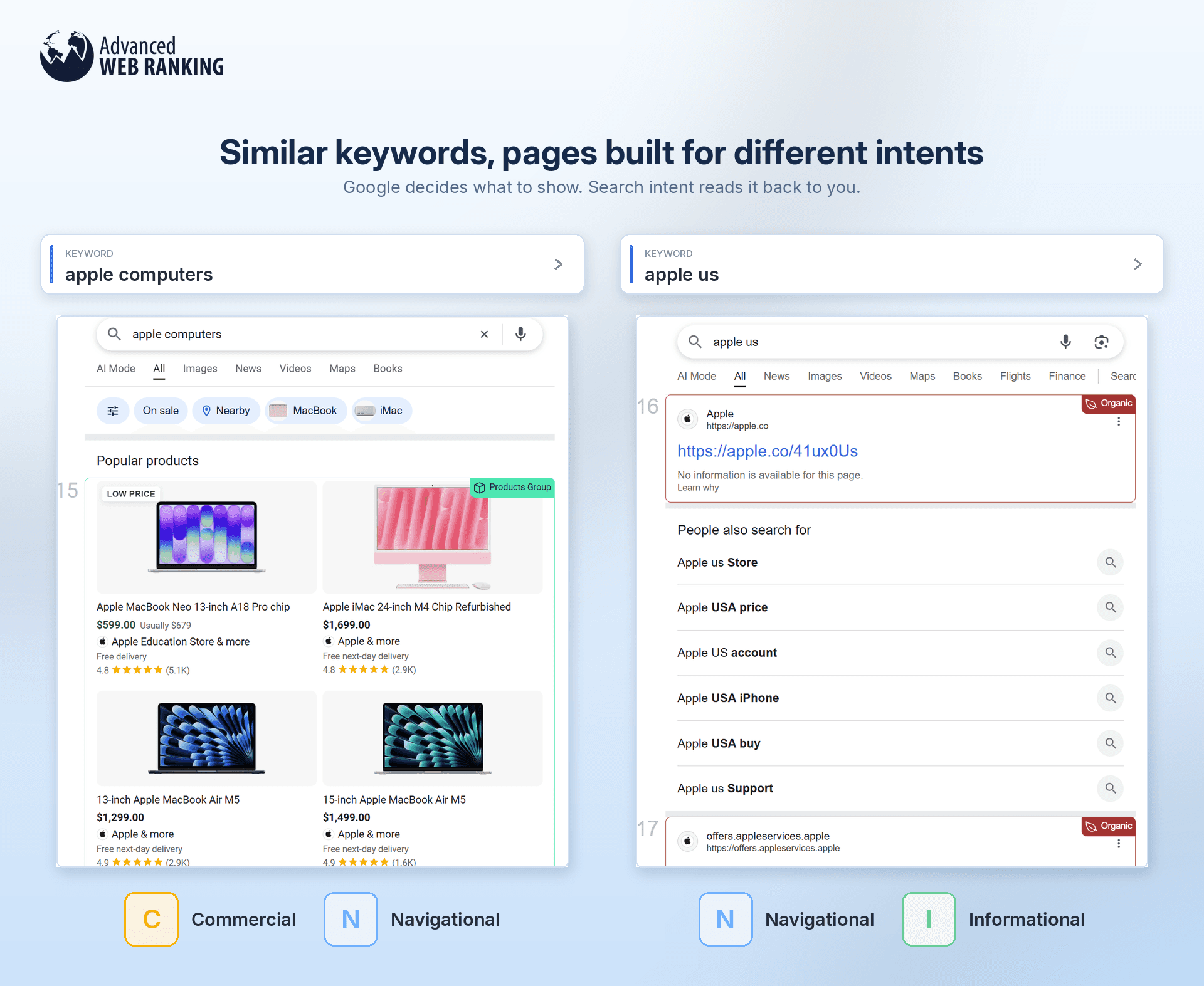
It seems "apple computers" is pushing you toward Apple's own site and toward products to compare. "apple us" is pushing you toward Apple's site and toward an answer to a question.
So what exactly makes that difference?
Google builds a different results page for each keyword and intent follows the page rather than the phrase. One page is built to route you to Apple and help you compare what they sell. The other routes you to Apple and answers a question.
That's the check every SEO already does by hand, opening a SERP and reading what Google ranks before deciding what page to build. AWR has rebuilt how it does the same thing across your whole keyword list.
TL;DR: What Search Intent tells you at a glance
Keywords give you clues about what people want to find, but the SERP adds the context. AWR looks at both to show what people searching for your client’s website are actually trying to do.
Knowing the intent adds context to your rankings. Two keywords can rank at the same position but have very different traffic potential depending on what Google shows around them.
Keywords with an intent that does not match your client’s usual content are not necessarily ones to drop. They can still bring visibility and reveal opportunities for new content, such as reviews, comparisons or buying guides.
When a keyword has two intents, it means the SERP is serving more than one need. Your client’s content may need to account for both.
Search Intent helps you understand not just where your client ranks, but what their potential customers want and what each ranking can actually do for their website.
How does AWR work out a keyword’s intent?
AWR looks beyond the keyword itself. It reads the page Google shows, including AI Overviews, forum discussions, buying guides and People also ask, all in the language of the searcher’s market.
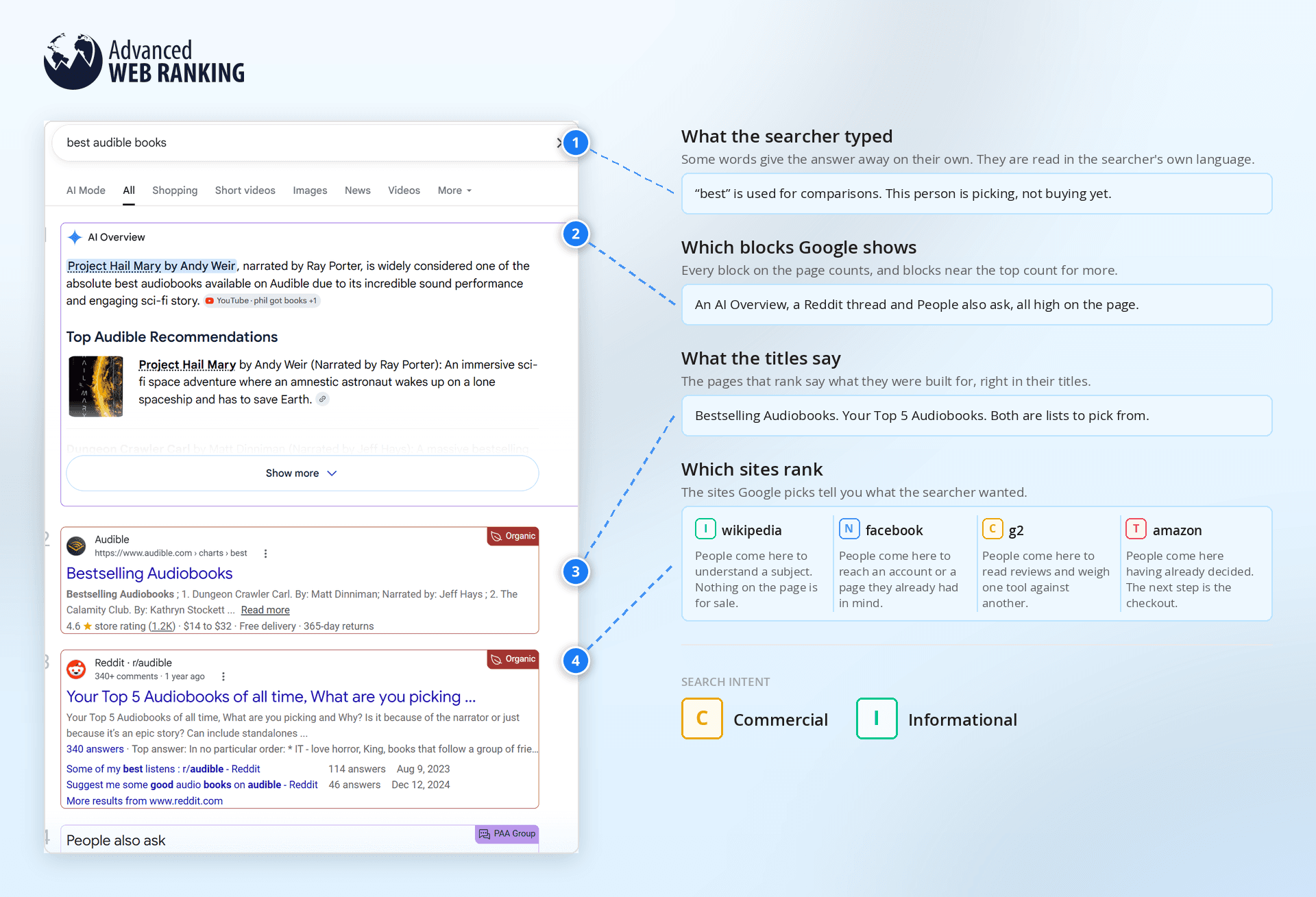
Take “best audible books.” Google might show an AI Overview, Audible’s bestseller list, a Reddit discussion and People also ask. Together, these reveal what the searcher is trying to do.
AWR looks at four things: the words in the keyword, the SERP features Google shows, the titles of ranking pages and the types of sites that rank.
Each signal is scored, with results higher on the page carrying more weight. The strongest intent wins and a close second is shown too.
For this keyword, that means Commercial with Informational alongside it. The searcher is comparing options and researching before making a choice.
Search Intent is missing for some of my keywords in other tools. How does AWR fill the gap?
The main difference is where ranking data comes from.
Tools like Semrush and Ahrefs rely on keyword databases. If a keyword has not been processed yet, which is more common with newer, niche, long tail or location specific searches, there may simply be no intent data available.
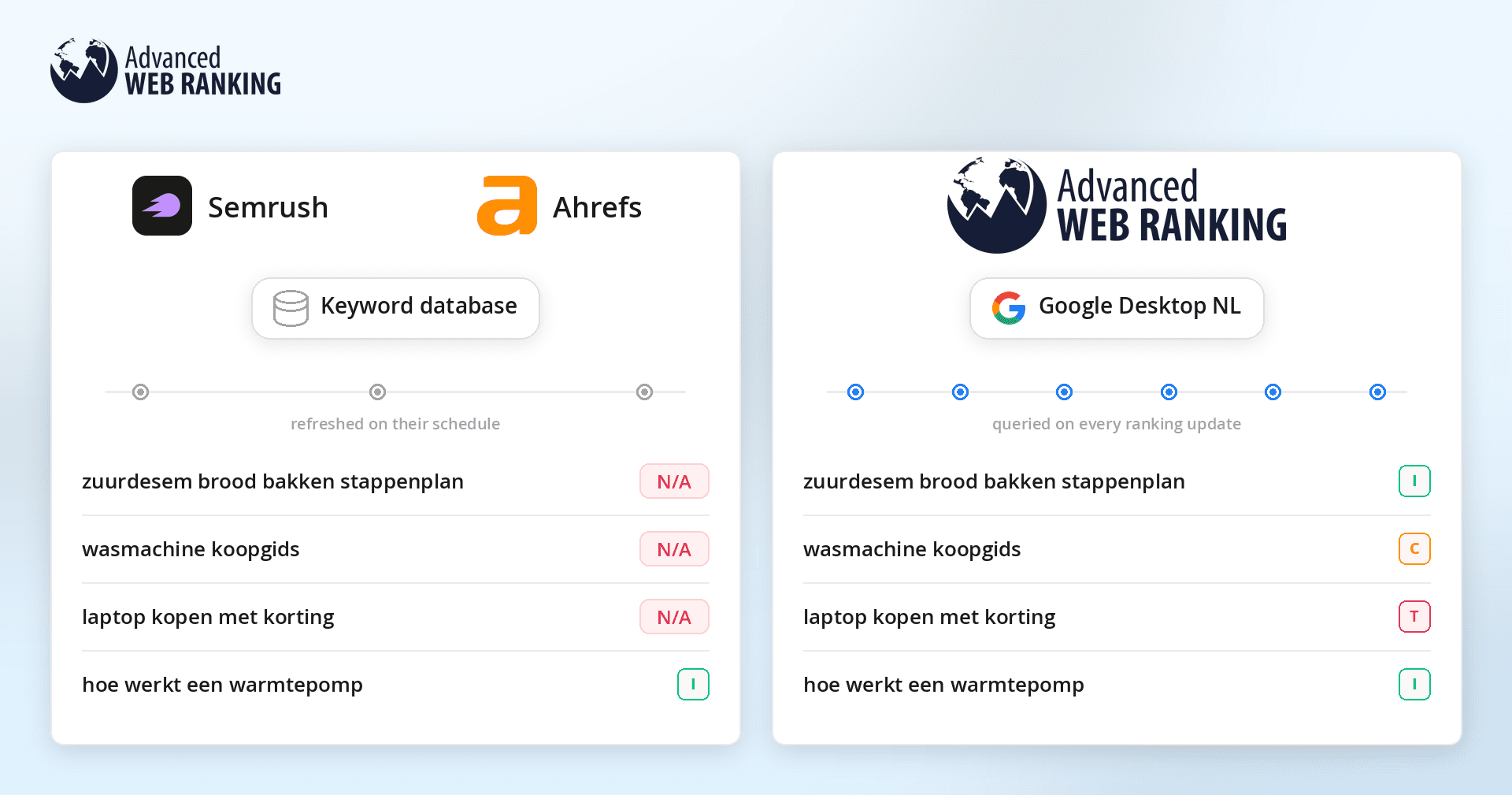
AWR works differently. When a ranking update runs, it sends a live query to the search engine, checks the results and determines the intent directly from the SERP. This means the keyword does not need to already exist in a database.
It also means the intent matches what you’re actually tracking, including the search engine, location and device, rather than relying on a general country-level classification.
What does knowing the intent actually get your client?
Start by sorting your keyword list by the intents that matter most to your website. If your client is Allrecipes and most keywords are Informational, that makes sense. People come for recipes, cooking ideas and food advice, so the real opportunities may be in other intents.
To find them, go to the Keyword Ranking report, click “Add filters”, select “Search Intent”, then choose an intent your website would not normally target.
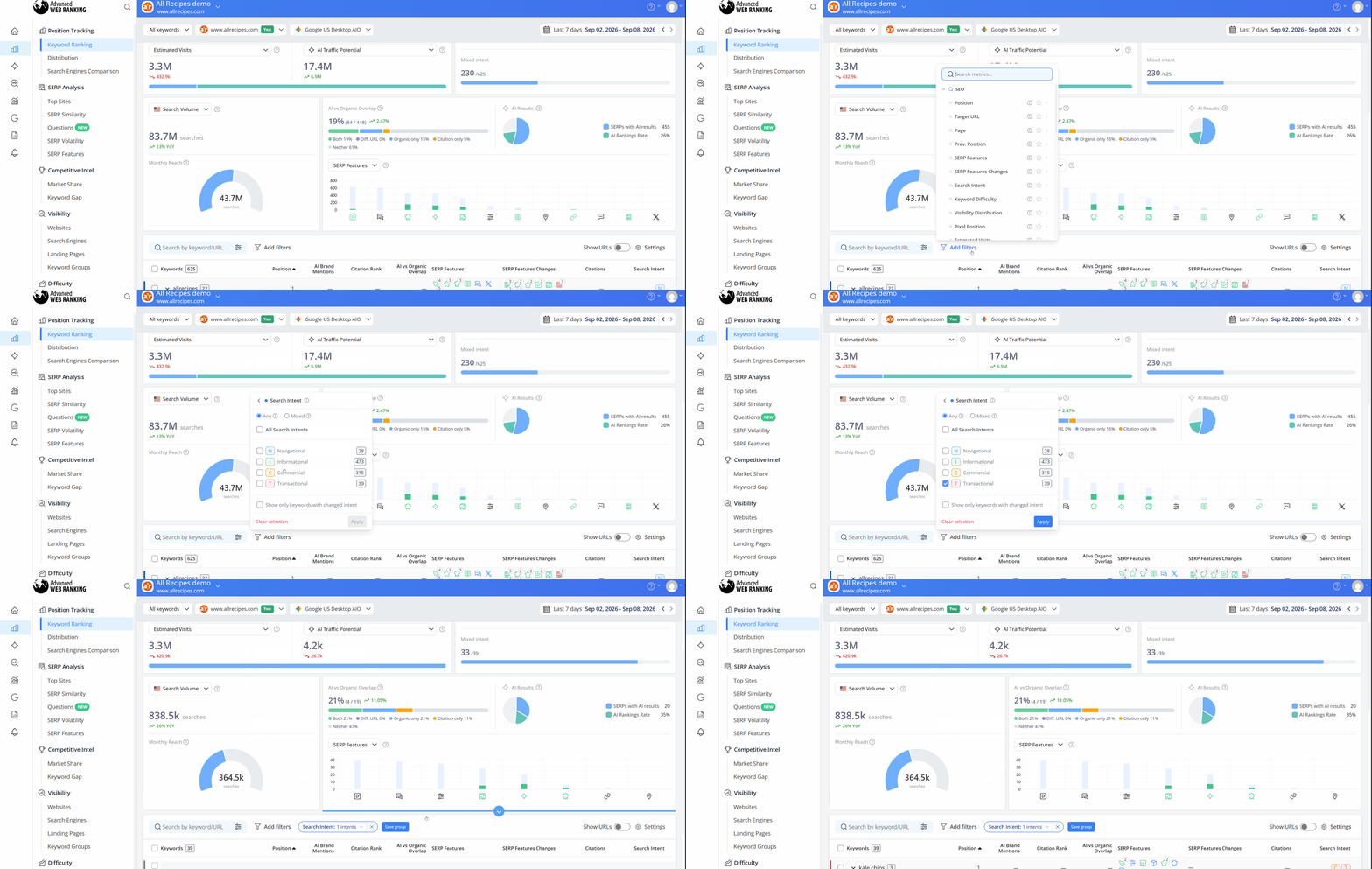
For Allrecipes, for example, we selected Transactional. This quickly surfaces keywords worth a closer look.
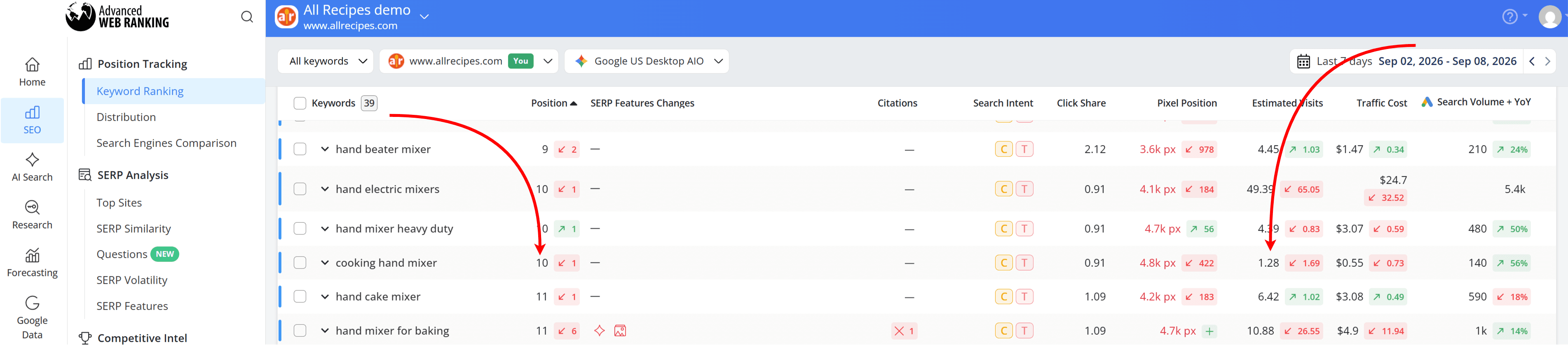
The keyword “cooking hand mixer” has Transactional intent and Allrecipes ranks at position 10 with its “Best Hand Mixers” page.
The SERP is heavily focused on shopping, with products, prices, ratings and retailers appearing above the organic results. This tells us that Google sees many searchers as ready to buy.

That intent also affects how much traffic Allrecipes can realistically expect. Even at position 10, AWR estimates only 1.28 visits per month from this keyword. Shopping results and other SERP features take up much of the page and attract clicks before users reach the organic listing.
So position alone does not tell the full story. Search Intent helps explain how much traffic a ranking can actually bring.
Most of my keywords have the wrong intent for my website’s content. Now what?
That does not mean you should stop tracking them. A keyword with a different intent can still tell you something useful about where your website shows up and what Google considers it relevant for.
Using the SERP Similarity report, we compared two Allrecipes keywords on the same date, both ranking at position 10: “stuffing recipe” on the left and “cooking hand mixer” on the right.
For “stuffing recipe”, the SERP is full of recipes, exactly where you would expect Allrecipes to appear.
For “cooking hand mixer”: Google shows a large shopping section before the organic results. Allrecipes still ranks at position 10, but that position is much less likely to bring the same amount of traffic.
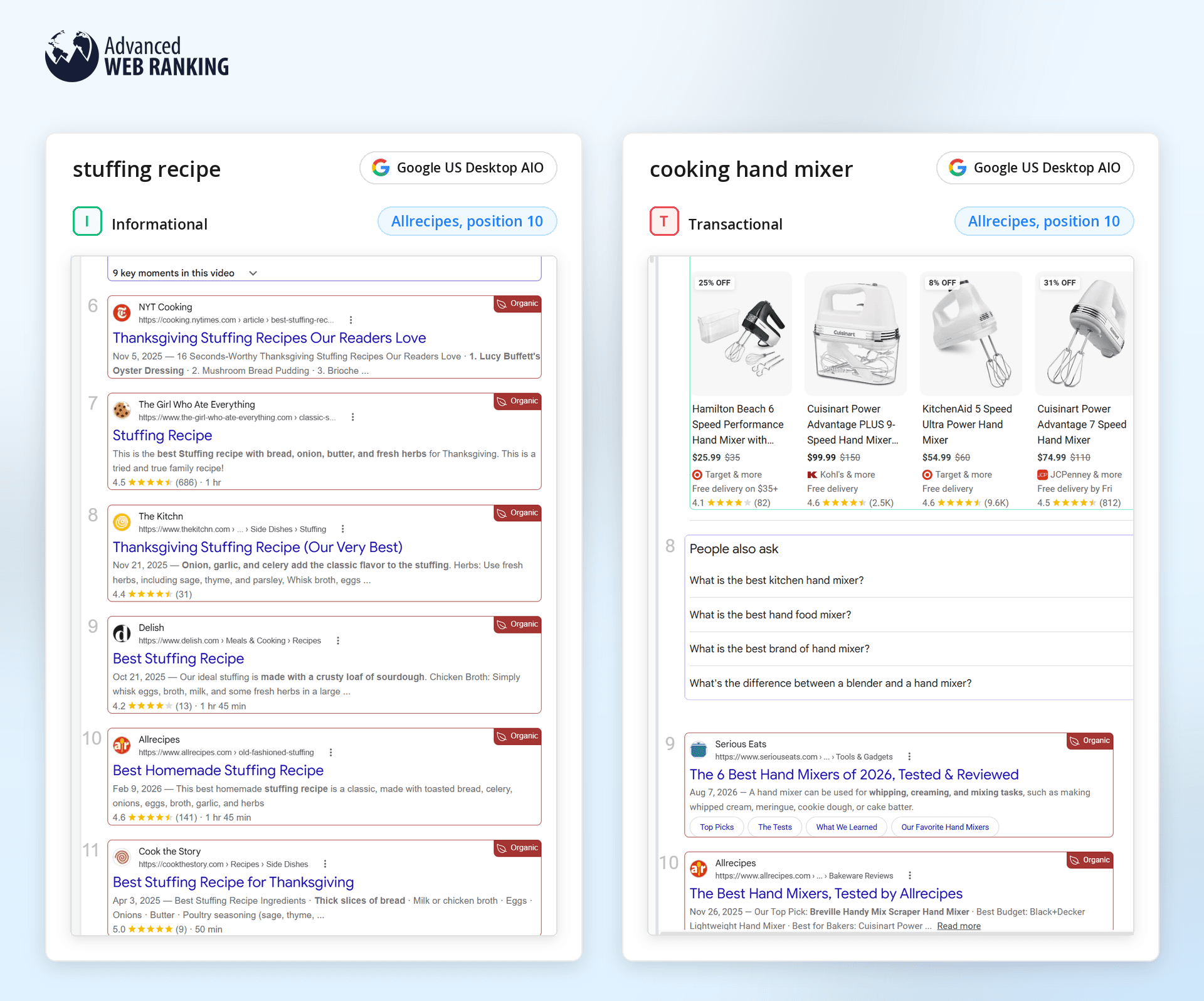
That is why both keywords are worth tracking. One can bring traffic, while the other can give Allrecipes visibility when people are researching products and reveal opportunities for new content, such as product reviews, comparisons or buying guides.
This is where intent adds context to your rankings, helping you understand what each keyword can actually do for the website.
Some of my keywords have two search intents. How does that happen?
Some searches simply have more than one purpose. Google may show results that help people compare their options while also helping them make a purchase.
AWR scores all four intents based on the same SERP. The strongest becomes the primary intent. If another intent scores close enough, it is shown as a secondary intent.
“frozen blueberry pie” is a good example. AWR shows both Commercial and Transactional intent.
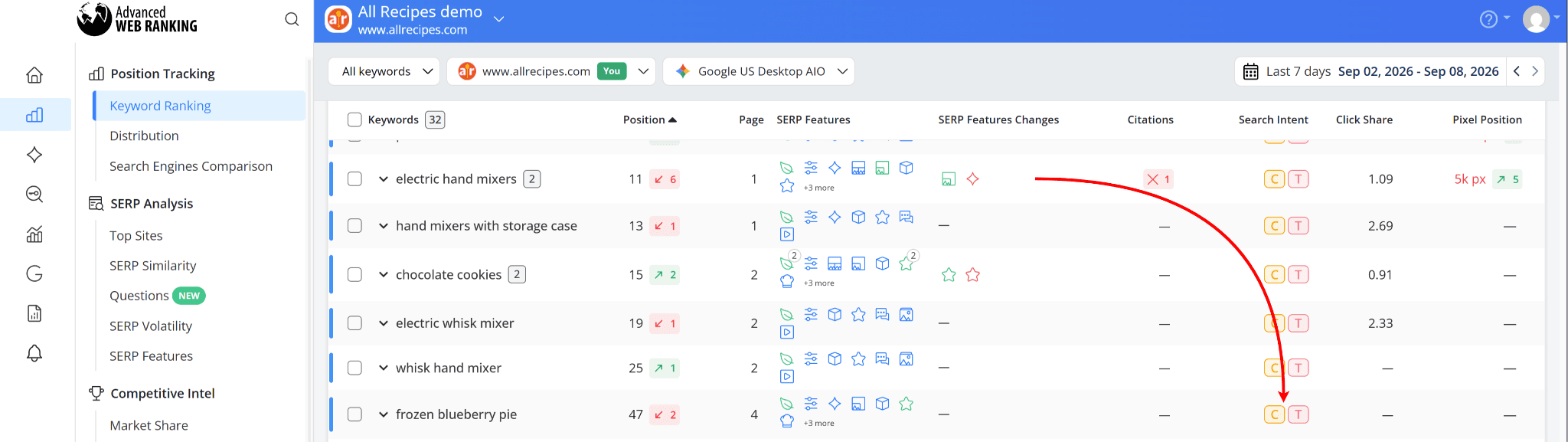
Some people searching for it are still comparing options, while others are ready to buy.
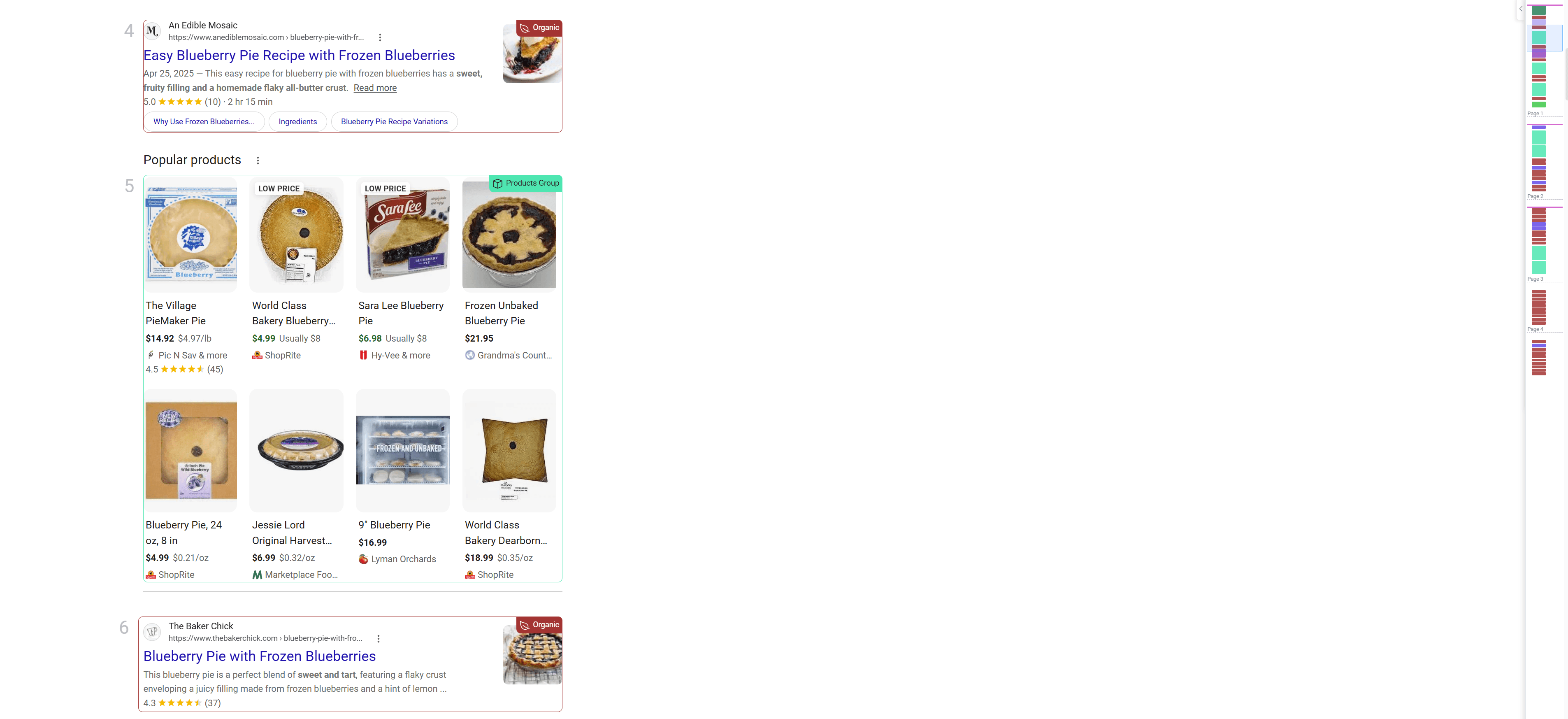
For Allrecipes, this means a recipe page may still be relevant, but it is competing with pages built for people looking to purchase a frozen blueberry pie.
When two intents appear, the SERP is serving two different needs. Your content may need to account for both or you may need to adjust your expectations for how that keyword will perform.
Do you have any questions? Don’t hesitate to get in touch and we will keep building the FAQ.
Frequently Asked Questions
What's the difference between Commercial and Transactional intent?
Does Search Intent work for languages other than English?
Does the same keyword have the same intent in every country?
stay in the loop