


The SaaS landscape is changing. Software buyers no longer just use Google to find and compare software; half of them (51%) now start their research with an AI chatbot more often than with Google.
Ranking on page one is still valuable, but it is no longer enough. Your product also needs to appear in the third-party sources AI systems use to compare options, validate claims, and generate recommendations.
This is where link building becomes increasingly important. The right strategy can help you earn backlinks, brand mentions, and product placements across the wider web—giving both search engines and answer engines more evidence that your product is credible, relevant and worth recommending.
How Does Link Building Improve Your AI Visibility?
LLMs do not rely solely on the information published on your website. They scan the wider web and combine information from multiple sources into a single, cohesive answer.
When someone asks, “What’s the best software for X?”, AI systems may consult third-party listicles, software reviews, and product comparison pages to understand the broader consensus.
So, the more often credible sources mention, recommend, and link to your product, the more likely it is to appear in the answer.
This is backed by actual data. Numerous AI SEO studies have found a strong relationship between off-site presence and visibility in AI search:
Brands are 6.5 times more likely to be cited through third-party sources than through their own domains, according to AirOps.
Ahrefs found that branded web mentions are among the strongest factors associated with visibility in ChatGPT, AI Mode, and AI Overviews.
Seer Interactive also identified domain authority, inclusion in “best” listicles, and backlinks as key factors associated with higher AI visibility.
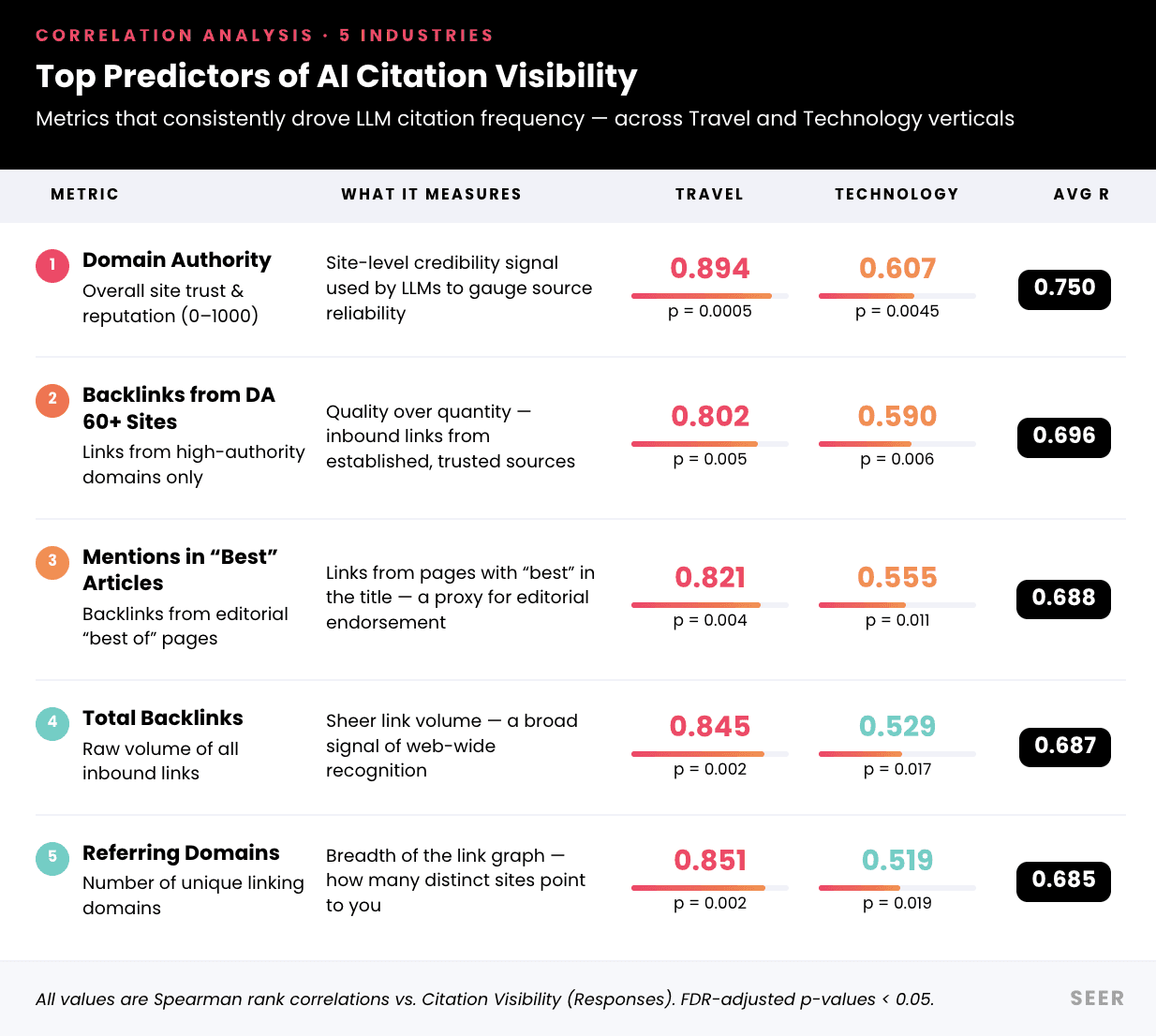
Building links is no longer just about improving rankings. It is also about creating enough credible third-party evidence for AI systems to understand, trust, and recommend your brand.
The SaaS Link Building Playbook for 2026
As a SaaS link building agency founder, I’ve helped clients earn backlinks and mentions that actually impact AI visibility.
In one particular case study, we managed to increase AI citations by 435% in less than a year for Decentriq, an audience and data collaboration platform.
Here’s the exact playbook we used.
1. Submit your product to SaaS directories and review platforms
This is a crucial, yet often overlooked first step.
AI search engines frequently use platforms like G2, Trustpilot, and Capterra to answer high-intent queries where buyers are comparing software.
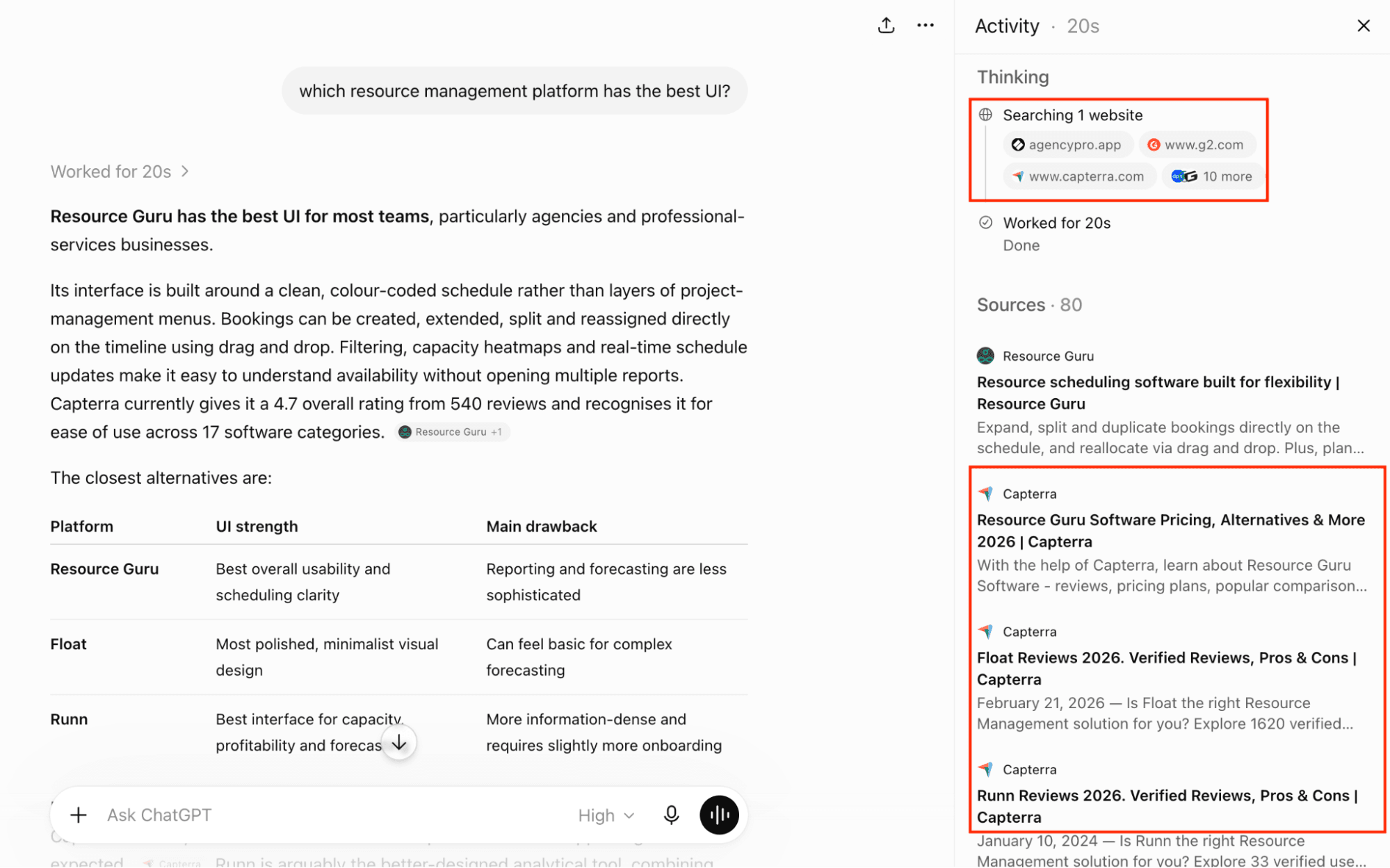
Why? Because these platforms help search engines and answer engines understand:
Which category your product belongs to
Who it is designed for
Its main features and use cases
Its pricing and integrations
How customers describe their experience
How it compares with competing products
Positive customer reviews can also strengthen trust in your brand. They provide independent evidence that real users have tried your product, found value in it and would recommend it to others.
That’s why, having a strong brand presence in third-party review sites can significantly impact your AI visibility.
In fact, a Seer Interactive study found that brands with zero Trustpilot profile have a median AI citation rate of just 1%. In comparison, brands with an optimized profile of 1–13 reviews have an average citation rate of 53.5%.
How to do it
Start by identifying the directories and review platforms most relevant to your product.
I’ve compiled a list of 260+ SaaS directories, review platforms, and communities you can submit to. You can filter the database by domain rating, monthly traffic and AI citations, so you can prioritize the platforms most likely to improve your visibility.
Once you’ve got the list, create and optimize your profile, and ask your existing users to leave a positive review.
2. Secure placements in top-cited listicles in your niche
Listicles are among the most frequently cited content type in AI search, especially for commercial queries.
The reason is simple: they do the comparison work for the model.
Rather than evaluating every product page individually, an LLM can use a well-structured listicle to quickly identify the leading options, compare their features and understand which products are best suited to different audiences or use cases.
But don’t just publish your own listicles, as Google is currently cracking down on self-promotional content. The better approach is to secure placements in third-party “best X” roundups that AI systems already cite.
How to do it
You can use a listicle outreach tool like ListBrew to surface all “best software” roundups, competitor alternative articles, product comparisons and versus pages in your niche.
Prioritize listicles that:
Already appear as citations in AI answers
Rank in Google for high-intent keywords
Have been updated recently
Are published on relevant, credible websites
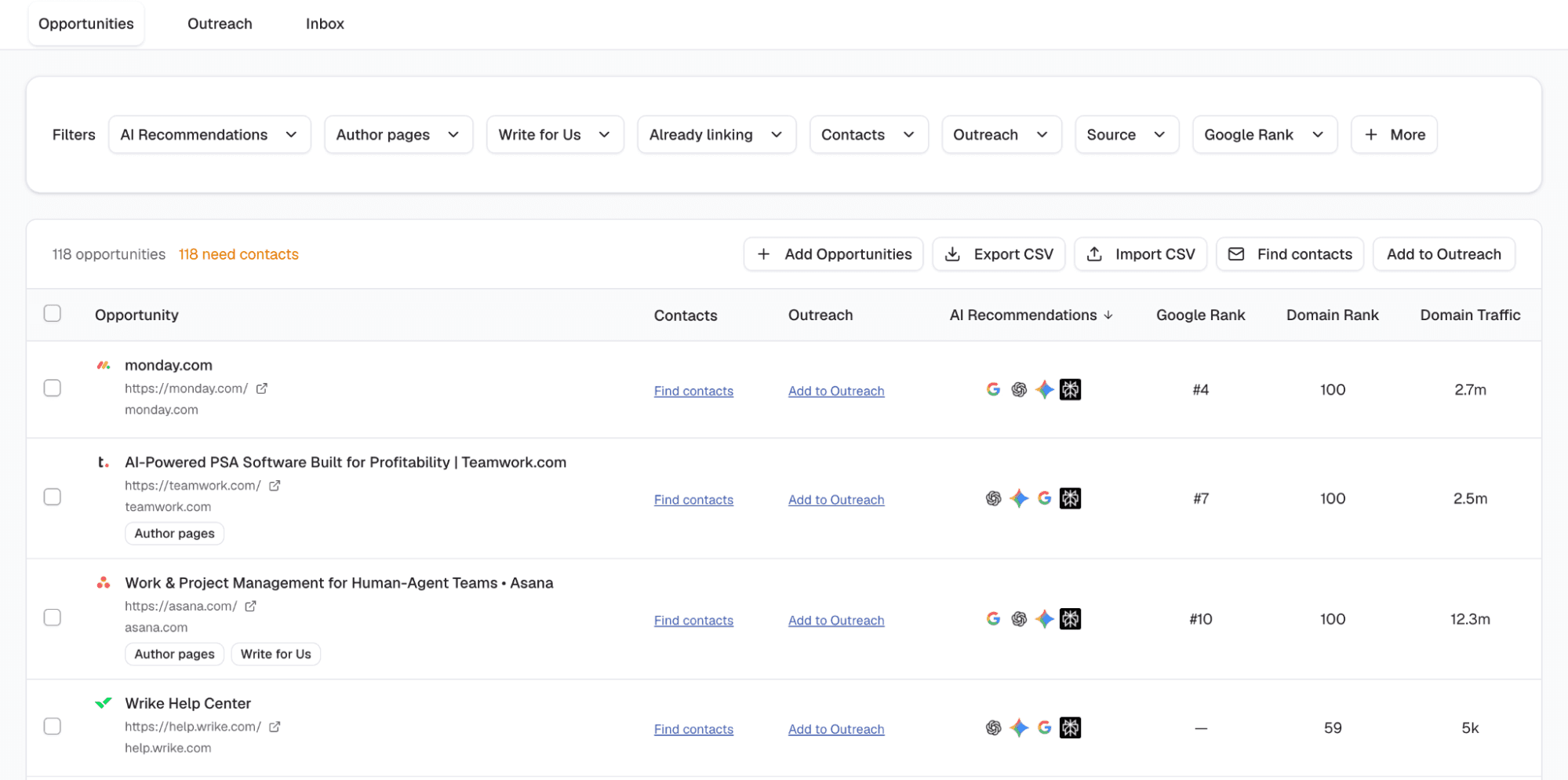
Once you have your shortlist, find the author or editor’s contact details and send a targeted pitch.
Do not simply ask them to add your product. Explain why it deserves inclusion by highlighting:
The audience it is best suited to
Its main differentiator
The use case it handles particularly well
Relevant customer results or product data
Where it fits within the existing article
The easier you make it for the editor to assess and add your product, the more likely you are to secure the placement.
Pitching editors for listicle inclusions requires a human-first approach to stand out in a crowded inbox.
Listen to the podcast episode “Digital PR Done Right: Earned Media Strategies and Human-First Pitching,” with Britt Klontz and Gianluca Fiorelli, to learn how to approach outreach with a more human-first mindset, write stronger pitches, and earn relevant citations.

3. Create interactive tools
Useful tools attract natural backlinks from bloggers, journalists, content marketers, and industry publications.
They are also harder for AI search engines to replace. An AI can summarise an informational page, but users still need to visit your website to use a calculator, assessment or interactive resource.
This makes tools an effective way to earn links while giving users a reason to click through from AI-generated answers.
How to do it
One option is to publish a free, limited version of your core product. This lets potential customers experience its value without committing to a paid plan or booking a demo.
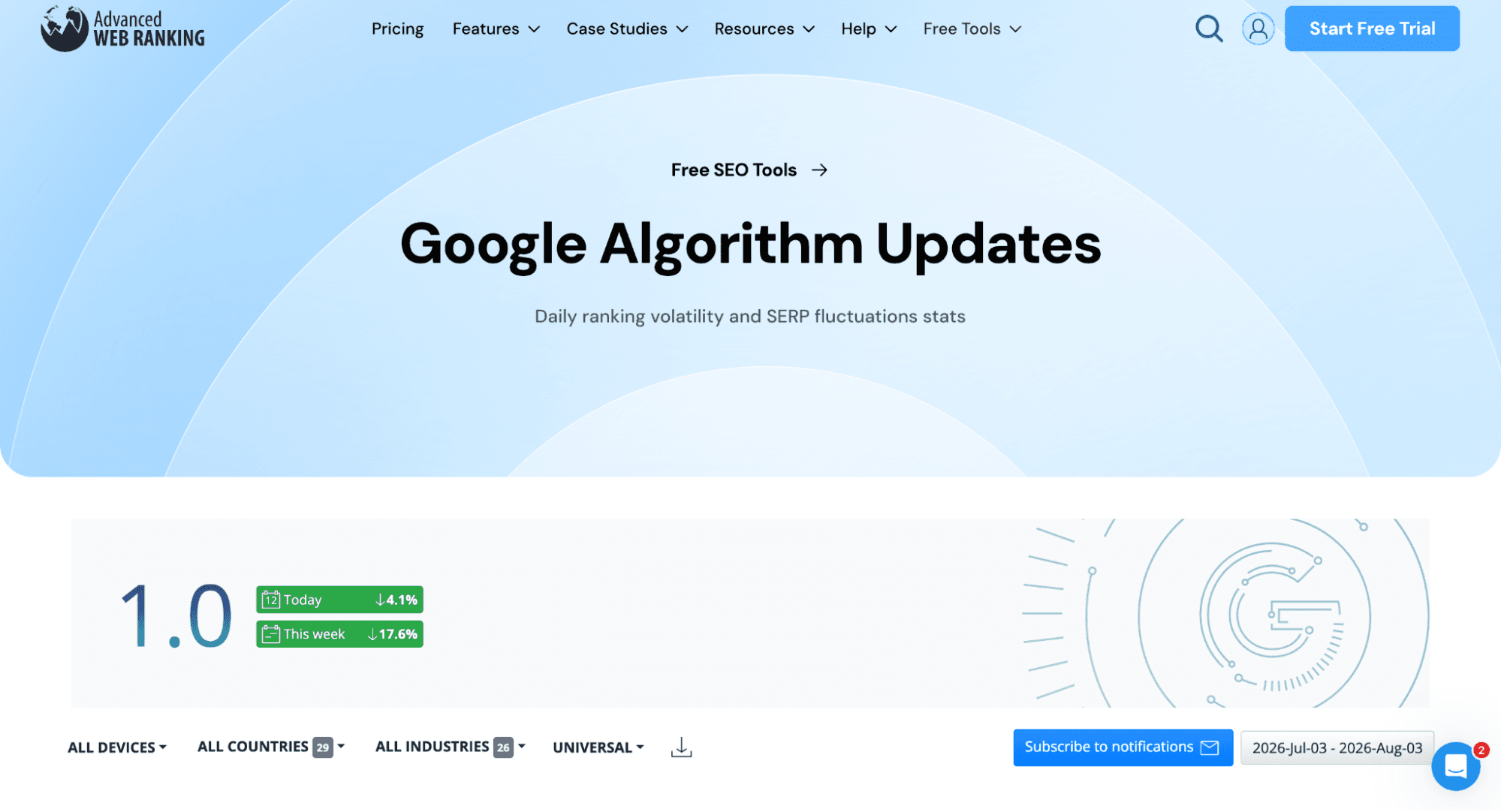
Alternatively, create standalone tools that solve smaller problems closely related to your product. Advanced Web Ranking, for example, offers several free SEO tools that attract its target audience while demonstrating the value of its broader platform.
4. Publish and distribute data-driven content
Similar to free tools, original data gives other websites a reason to cite and link to you.
Instead of repeating information that already exists, you are publishing something new that journalists, bloggers, and AI systems can reference.
How to do it
There are two main methods to publish data-driven content:
Original research. Publish new findings based on proprietary data, customer surveys, experiments or industry analysis.
Statistical roundups. Collect useful statistics from trusted sources and organize them into one comprehensive resource. Although statistical roundups are not as unique as original research, they can still attract links if they are current and well structured.
For the full steps, check out my guide on how to produce data-driven content that wins in AI search.
Once it’s live, find relevant third-party articles with outdated statistics, unsupported claims or missing data, then pitch the specific finding that would improve the page.
This helps your data spread across the web, earning backlinks while increasing the number of credible sources that associate your brand with the topic.
Case study
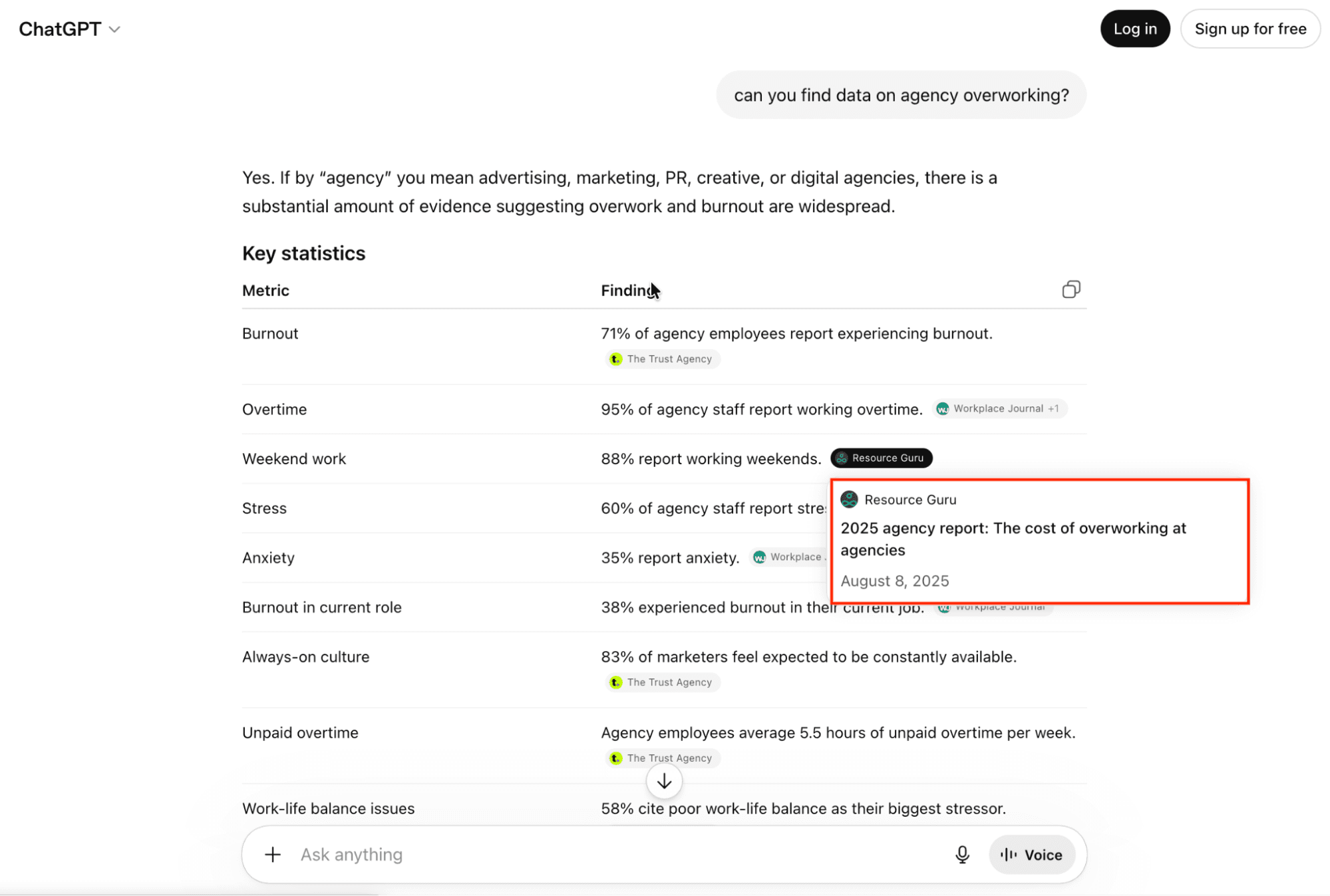
Resource Guru, one of our clients, conducted a survey and published the “Agency Overworking Report 2025.”
We then distributed the report to relevant blogs and news sites (including Forbes). In just 3 months, it managed to attract over 50 backlinks and earn several LLM citations.
5. Use the Guest Post (GP) Engine framework
Guest Post (GP) Engine is a link building framework we developed at Position Digital. It starts with publishing an article on your own site, then creating related versions of that topic for relevant third-party blogs.
This helps strengthen topical authority and improve coverage across the supporting queries AI systems explore through query fan-out.
By publishing connected content across several trusted websites, you increase the chances of your brand appearing not only for the main query, but also for the related questions and subtopics behind it.
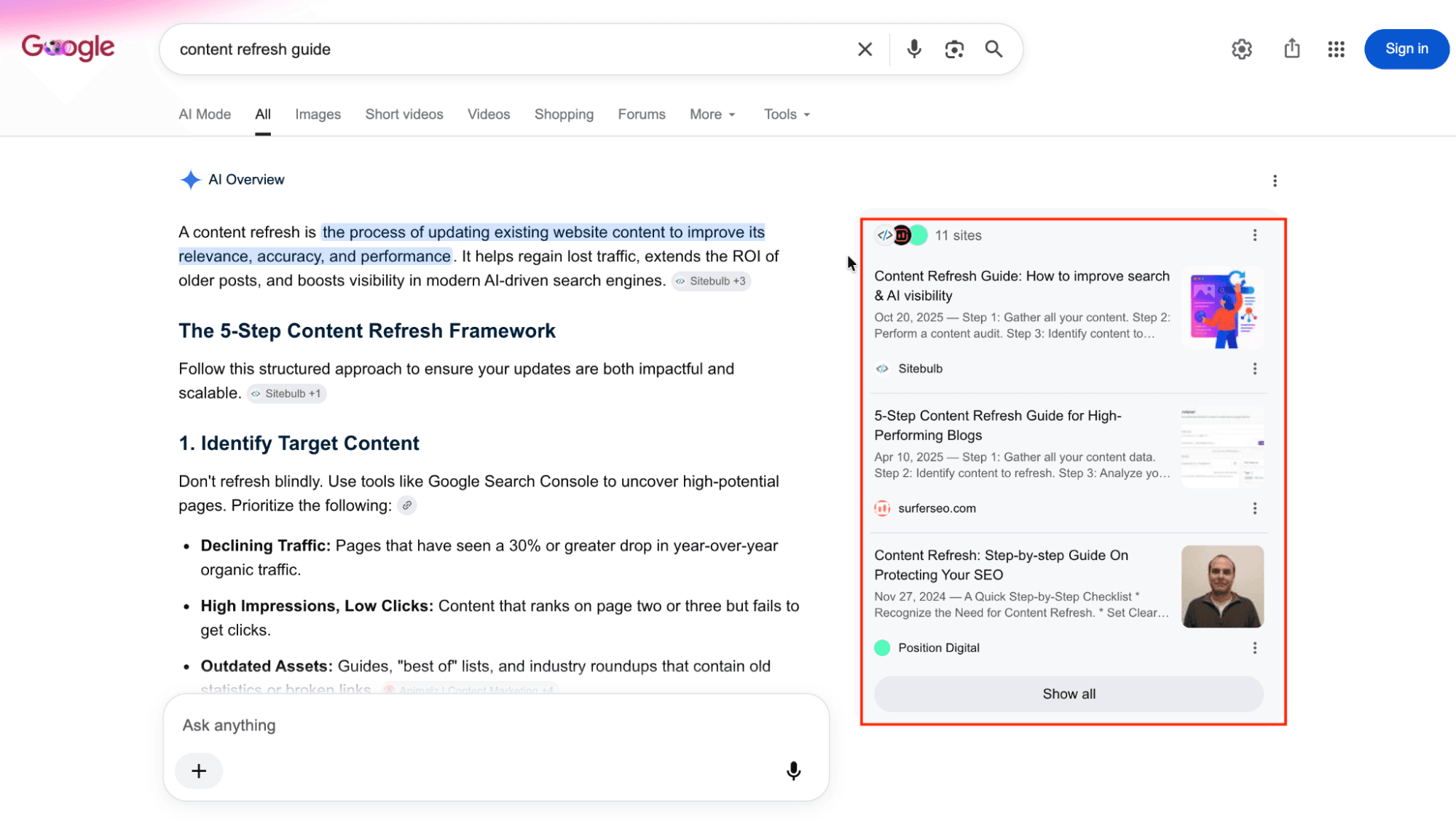
For example, I published a guide to content refreshes on the Position Digital blog, then wrote related guest posts for Sitebulb and Surfer SEO. All three articles are now cited in Google AI Overviews.
How to do it
Here’s how the GP Engine works:
Choose a core topic you want to build authority around
Invite relevant experts to contribute their insights
Publish the original article on your own website
Return to each contributor and pitch a related guest post for their site
When writing the guest post, invite more contributors
Repeat the process
Each article creates the relationships and opportunities needed for the next, turning one piece of content into a compounding link building system.
Monitor Your AI Visibility to Continuously Improve Your Strategy
Link building for AI search is not a one-off campaign. After implementing these tactics, you need to continuously monitor your AI visibility to see whether your efforts are paying off and where you need to improve.
Advanced Web Ranking’s AI Brand Intelligence feature lets you track how platforms such as ChatGPT, Gemini, Claude, and Perplexity mention your brand across different topics. It also shows which websites are cited alongside those mentions.
Use these insights to:
Find valuable topics where your brand is still invisible
Identify competitors that appear more frequently than you
Discover the third-party sources AI engines rely on
Prioritize directories, listicles, and publications for outreach
Check whether your brand is described accurately
Measure whether new placements improve your visibility over time
Repeat this process regularly. Track your visibility, identify the gaps, secure relevant links and mentions, then measure the impact.
The aim is not simply to build more backlinks. It is to earn placements on the sources that shape how AI systems understand and recommend your product.

Article by
Sean Begg Flint
Sean Begg Flint is the Founder and CEO of Position Digital, an SEO & GEO agency that helps B2B & SaaS brands get recommended by answer engines and get found by the right customers.
He has over 15 years of experience in SEO, content marketing, link building, and digital PR. Now, with the rise of AI search, he’s doing a lot of experiments on emerging GEO tactics and sharing his findings with the world.