


Peak trading runs to a fixed date, but authority doesn't.
Demand can spike overnight. The reputation, content and product evidence that decide whether an AI assistant recommends you accumulate over months, so by the time the offers go live, most of that work has either been done or missed.
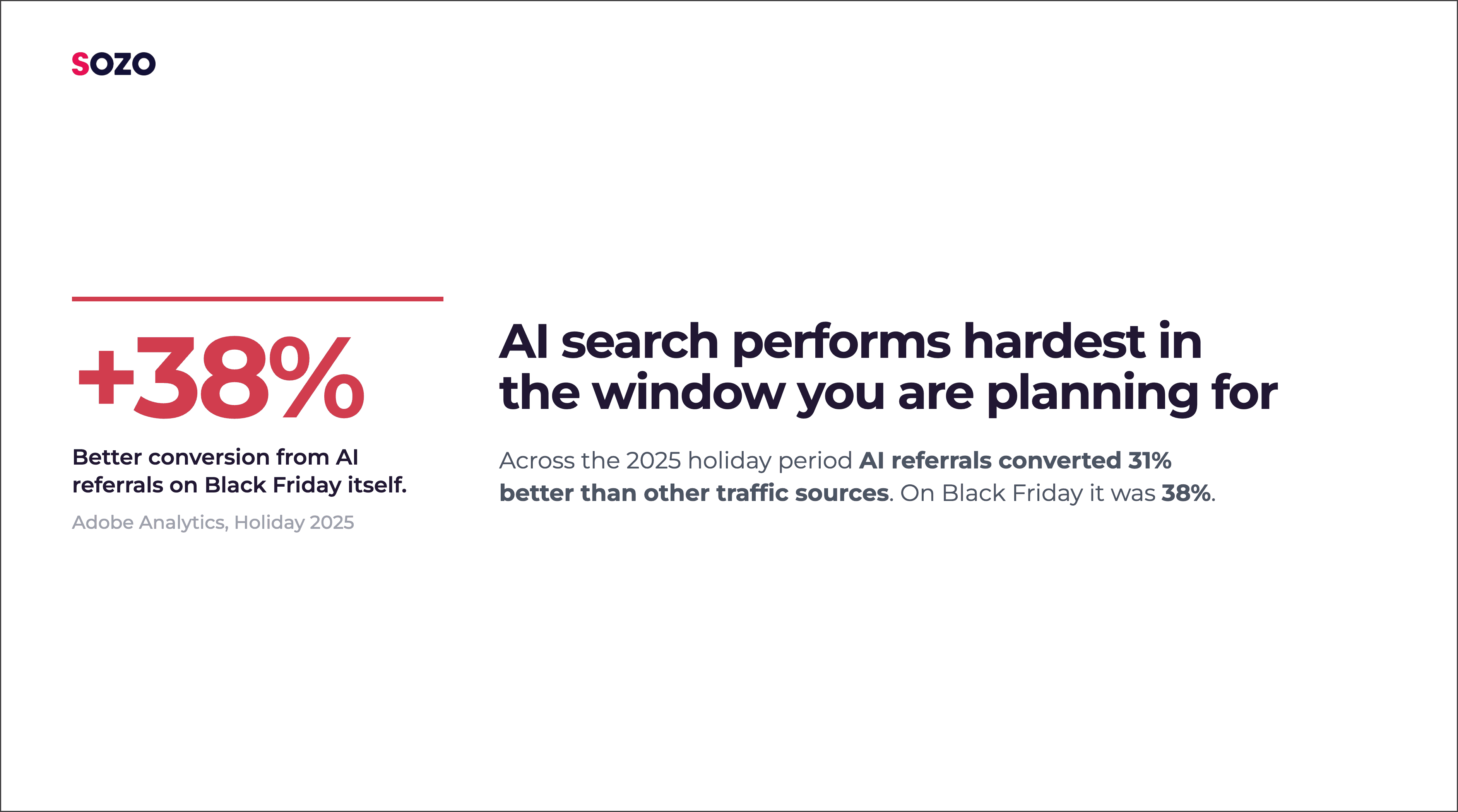
The commercial case for caring about this has moved on quite a bit in the last year. Adobe found that across the 2025 holiday period, AI referrals converted 31% better than other traffic sources, and on Black Friday itself the gap widened to 38%. By March 2026 AI traffic was converting 42% better than other channels, a record high at the time, with an engagement rate 12% higher once those visitors arrived on a retail site.
At SOZO we track the ecommerce brands we work with in AWR, and for peak that tracking starts months before the offers go live. It's how we see early where a brand is visible, where AI search is surfacing a competitor instead, and which terms carry far more November demand than their averages suggest, so there's still time to act on the gaps and opportunities it shows. This article walks through how we do that on a live Black Friday project, with four short walkthroughs in AWR, and what I'd want any brand to have in place before peak.
AI Converts More Than It Gets Credit For
Small volumes, but the highest-intent visitors most retailers get, and it's the pattern I keep seeing in client accounts too. The catch is that most of it never shows up as AI traffic in reporting.
On one account, GA4 attributes just 0.5% of users to AI assistants, but they convert at 1.88% against a site average of 0.64%, with an average purchase of £179.77 against £120.03. That's only the traffic GA4 can see. On the same site, 28% of revenue sits in Direct and another 11.55% in Unassigned, which is where AI visits usually end up when they arrive without a referrer.
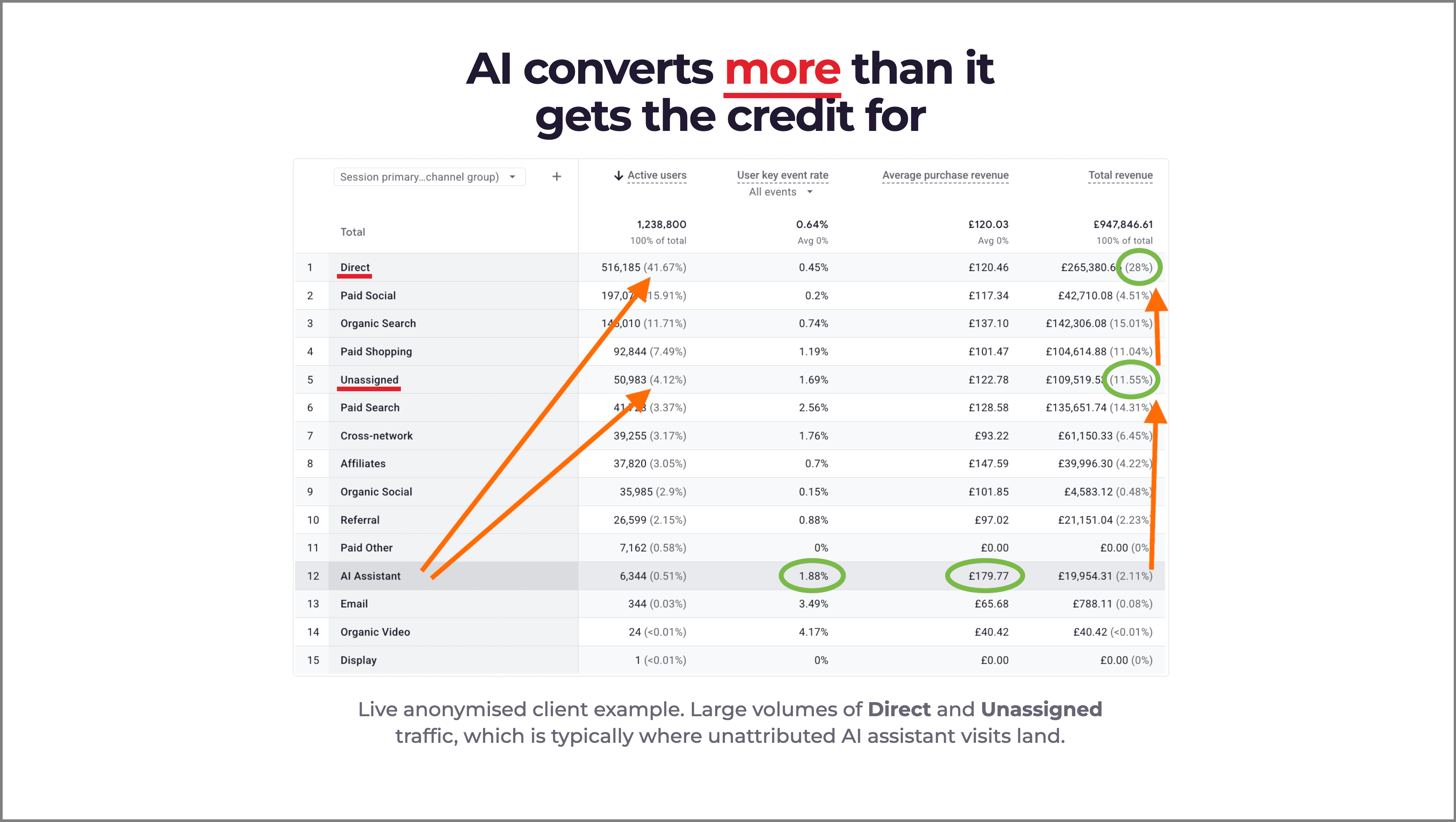
AI assistants convert at nearly three times the site average, while much of their traffic hides in Direct and Unassigned.
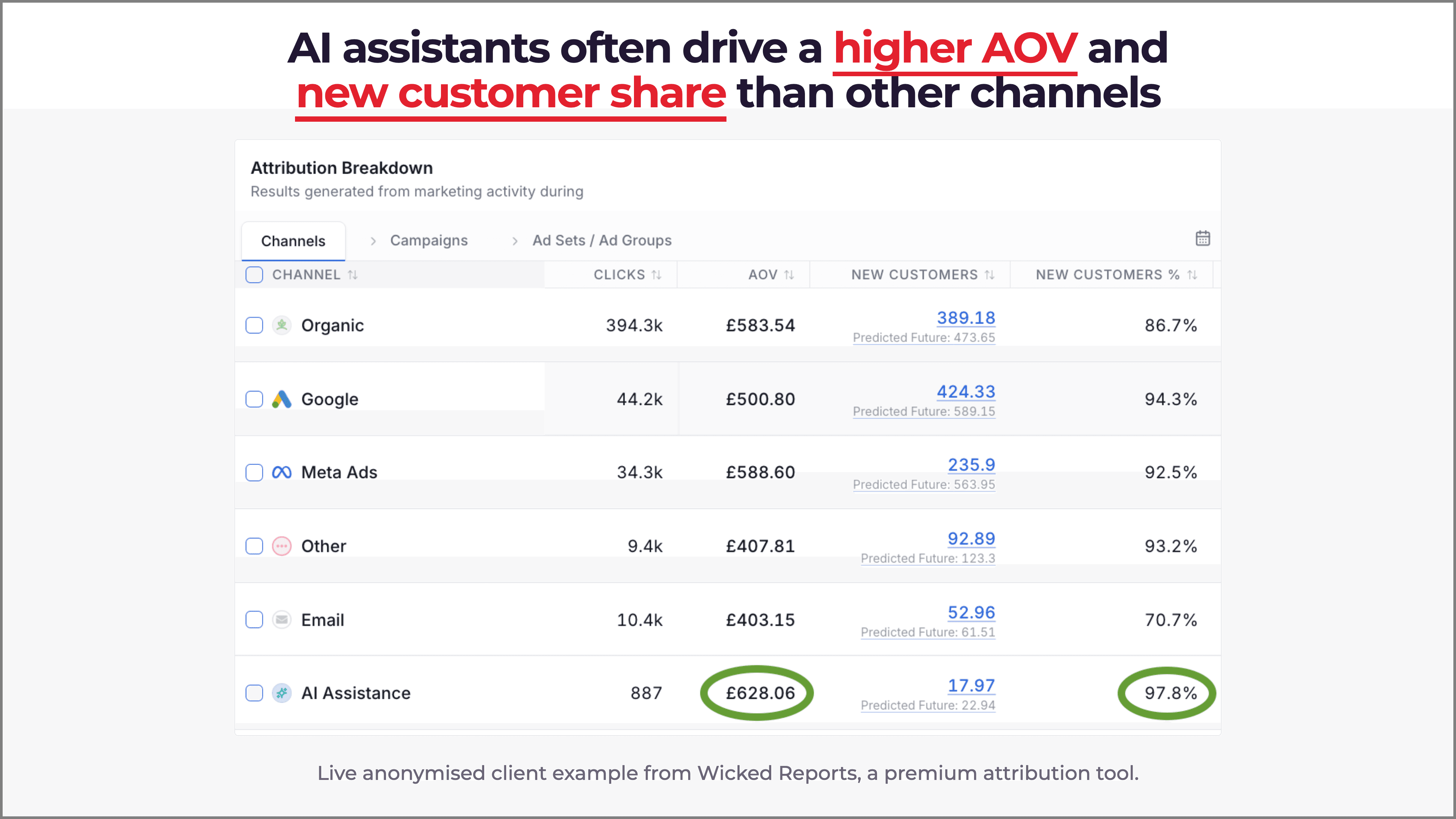
A premium attribution tool shows the same pattern on another account. In Wicked Reports, AI assistance drives an average order of £628.06, higher than organic, Google or Meta, and 97.8% of those customers are new to the brand.
The Surface You're Competing on Has Changed
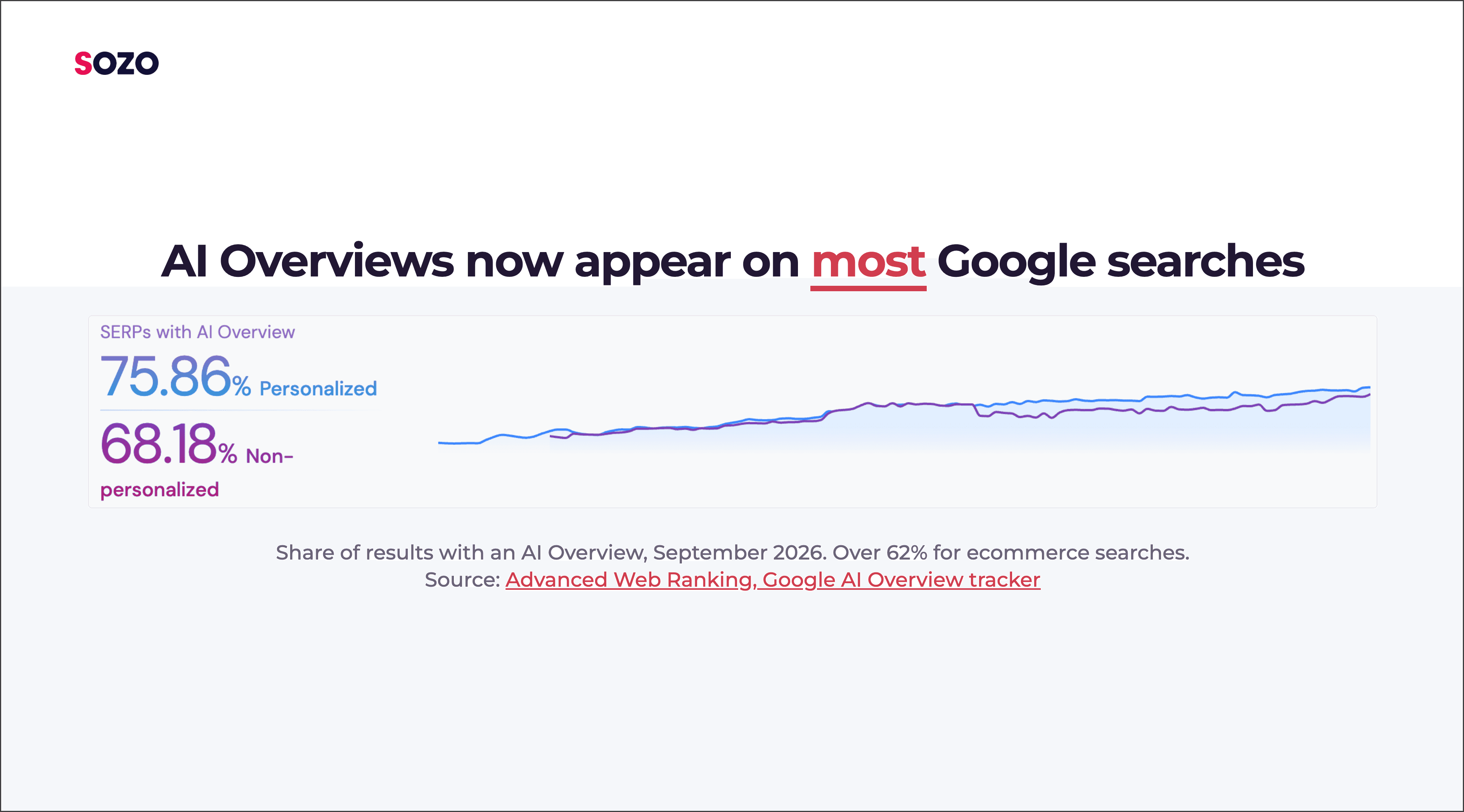
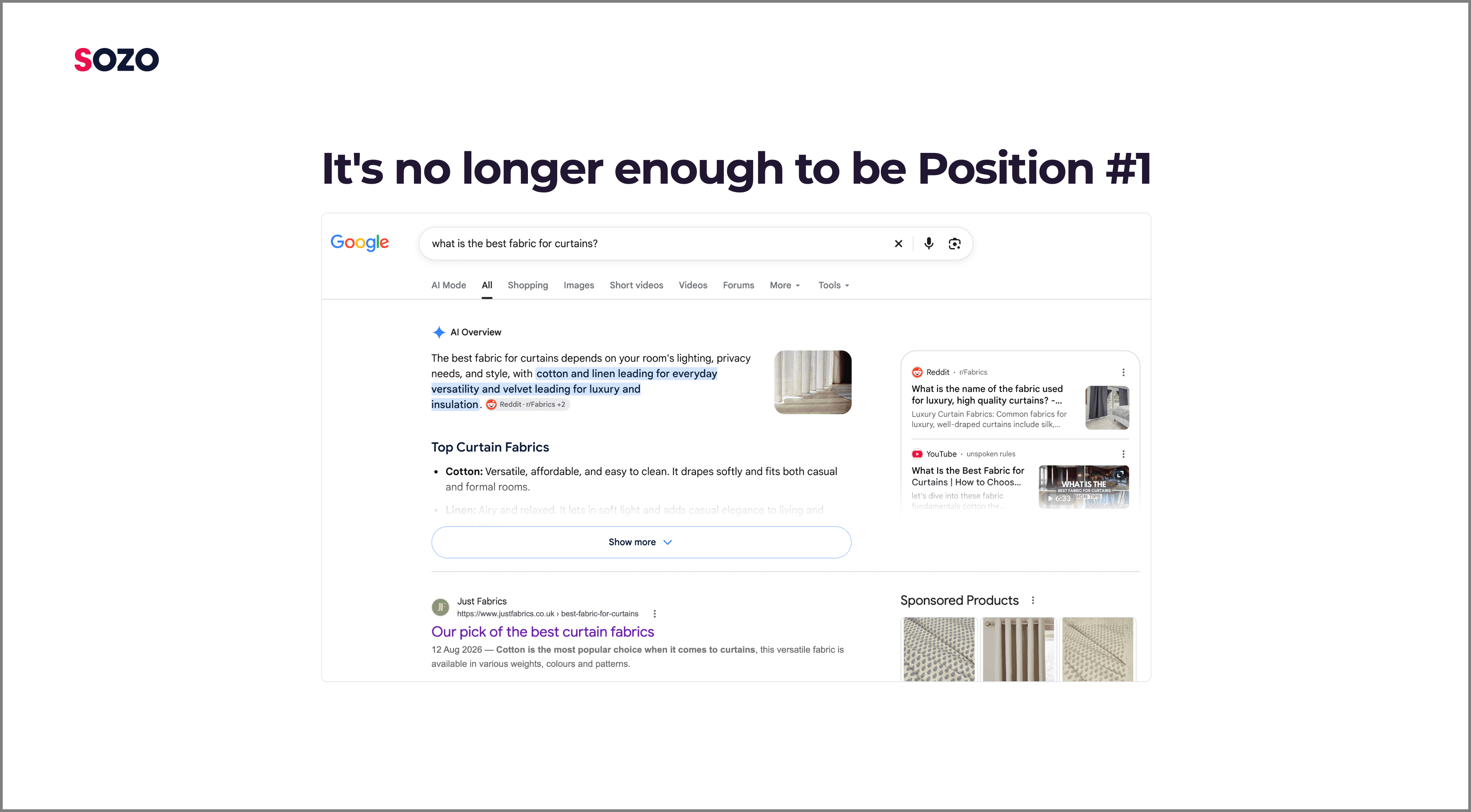
Advanced Web Ranking's own AI Overview tracker had AI Overviews appearing on over 62% of ecommerce search results as of September 2026. Separately, SparkToro and Similarweb found 69.5% of UK Google searches ended without a click, the highest of the six countries they analysed.
So on most commercial queries there's now an answer sitting above the results, and most UK searches end without a click at all.
This is why position alone has stopped being a sufficient measure through peak. You can hold position 1 on a commercial term, sit inside the AI Overview for it, and still lose the customer to whichever brand the assistant recommends more warmly.
Being in the Answer Isn't the Same as Being the Answer
Working with Writesonic, we tracked three UK ecommerce brands across 216 prompts between September and December 2025, covering 162,239 answers. The typical response named three to five brands, and 15% named nobody at all.
Fifth on a list of five is visible, but it isn't a recommendation.
I ran a live example of this in early September. Smart Home Sounds held position 1 organically on a peak query, were cited inside the AI Overview, and were running heavily in paid shopping ahead of peak, which is strong by any traditional read.
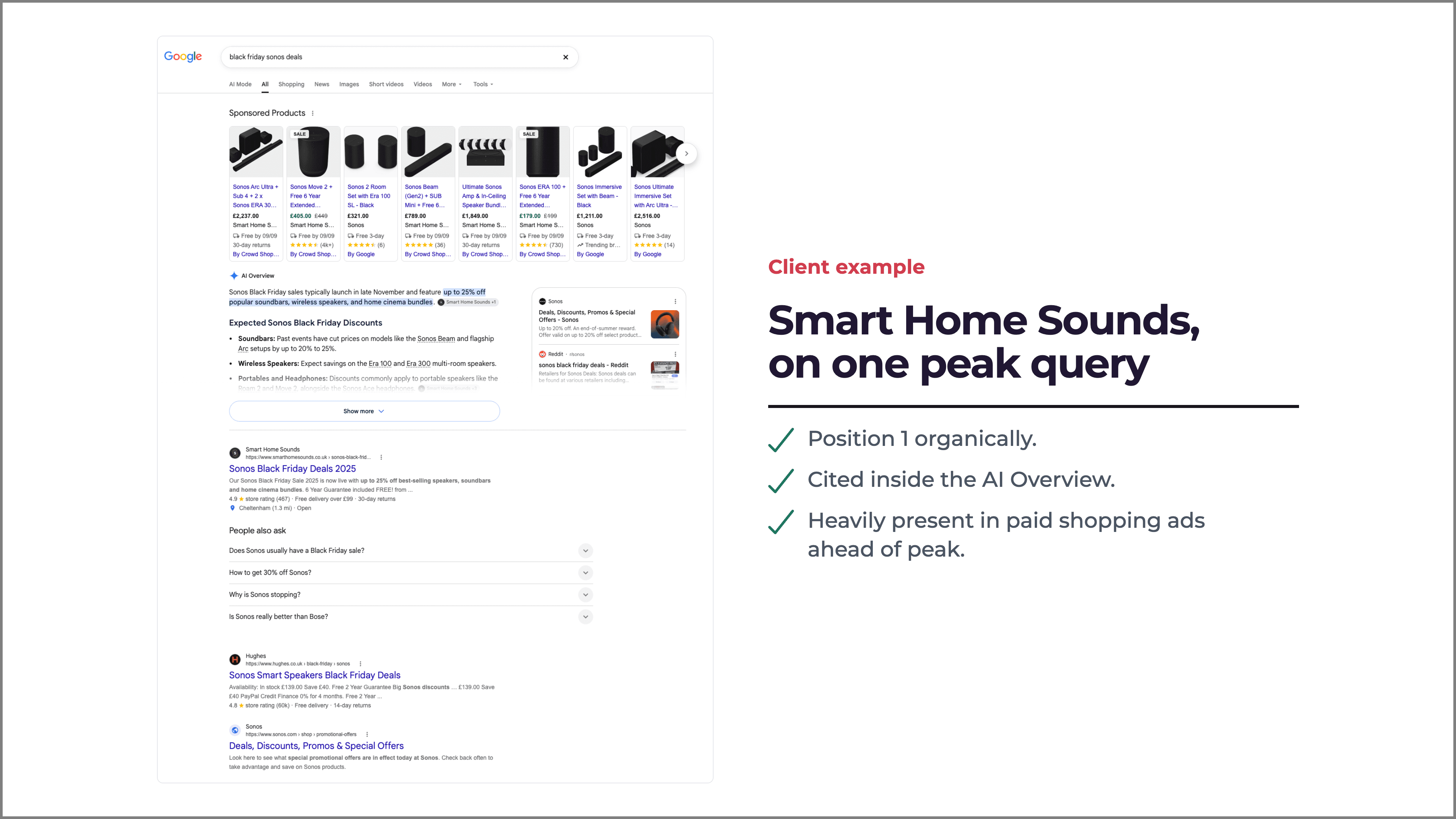
Ask ChatGPT where to find the best Sonos deals for Black Friday and they appear fifth, behind John Lewis, Amazon, Richer Sounds and AV.com.
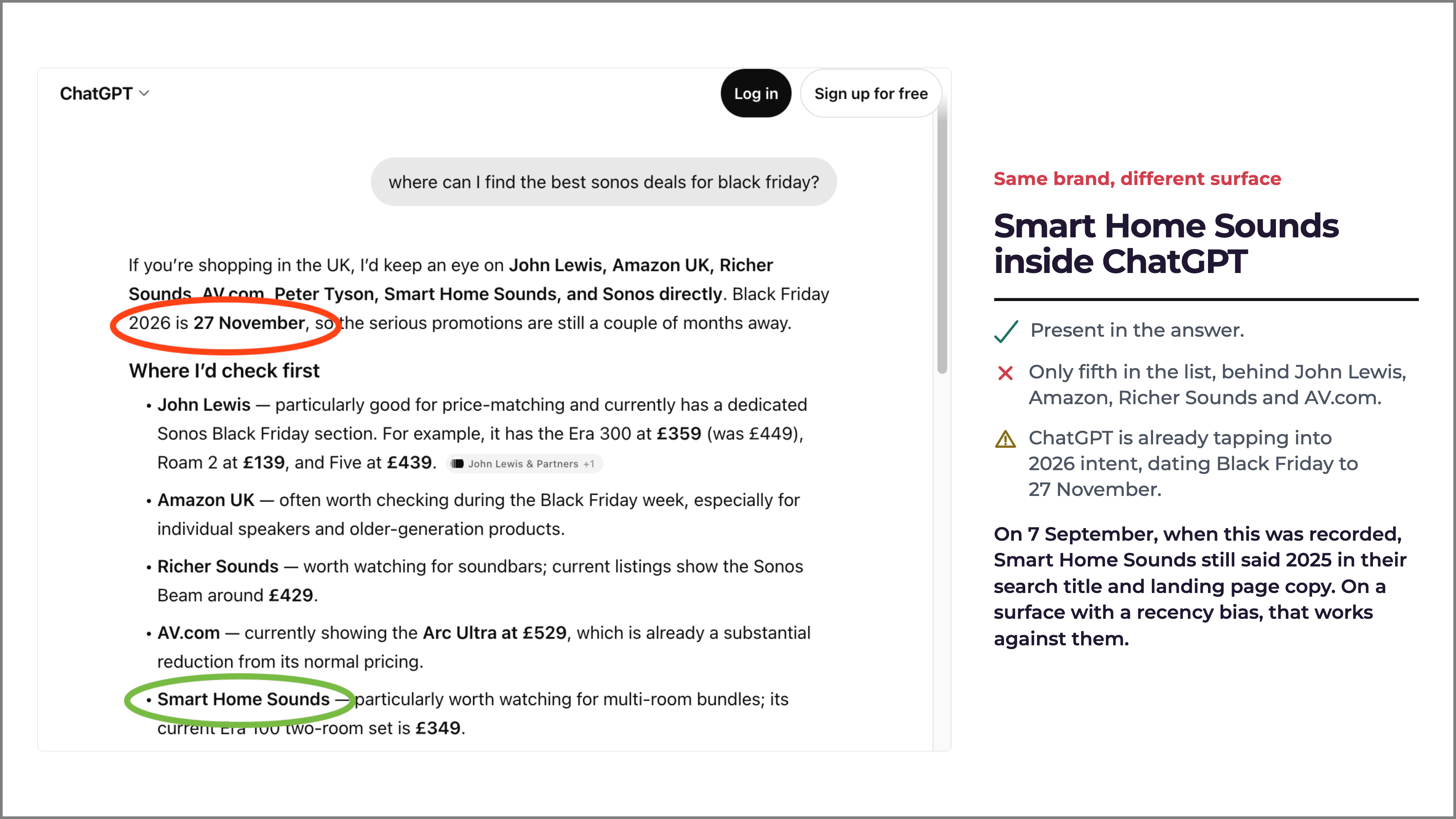
The same check turned up something else. ChatGPT was already working to 2026 intent and dating Black Friday to 27 November, while on 7 September the brand's search title and landing page copy still said 2025. On a surface with a recency bias, that works against you.
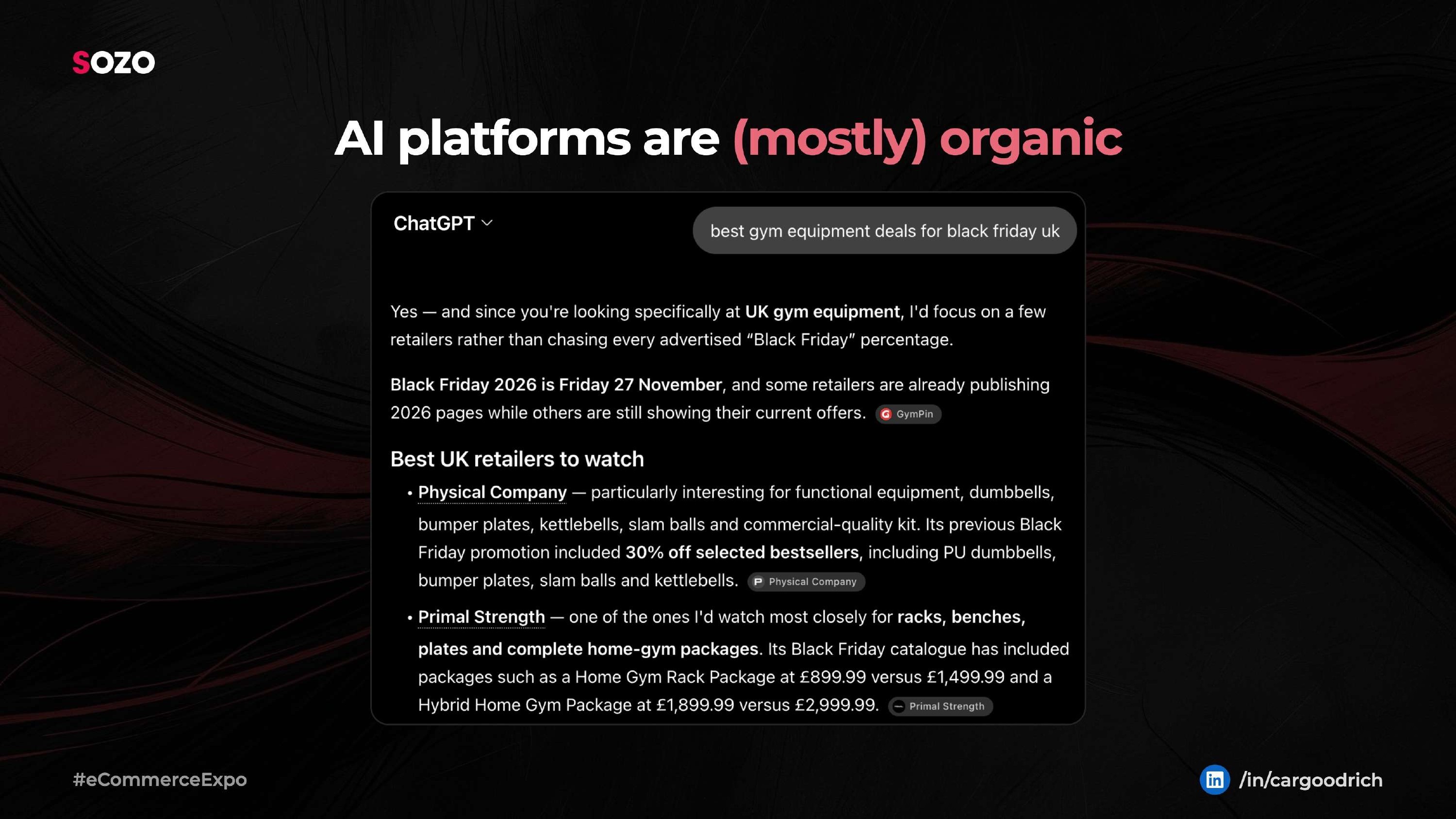
It isn't always that way round. Ask ChatGPT for the best gym equipment deals for Black Friday in the UK, and Physical Company comes first on its list of retailers to watch, with the answer citing their own site.
You Can't Buy Your Way into the Answer
ChatGPT Ads reached the UK this summer, with a pilot starting in June and OpenAI confirming it live on 11 August 2026. It's reasonable to ask whether that changes anything, and for now it doesn't change who gets recommended.
OpenAI states that ads don't influence answers and are visually separated from them, so there's a paid surface below the answer but no paid route into the answer itself. The recommendation remains organic, and it goes to whoever earned the trust first.
That's unusual, and it won't stay this way forever. It also means peak-season research has moved upstream into a space where budget can't rescue a brand that hasn't done the groundwork.
Why November Is Too Late to Start
A discount can go live in an afternoon, but citations can't.
Content has to be discovered, crawled and processed before it can inform an answer. Reviews accumulate at whatever rate your customers leave them. Third-party coverage happens on somebody else's schedule.
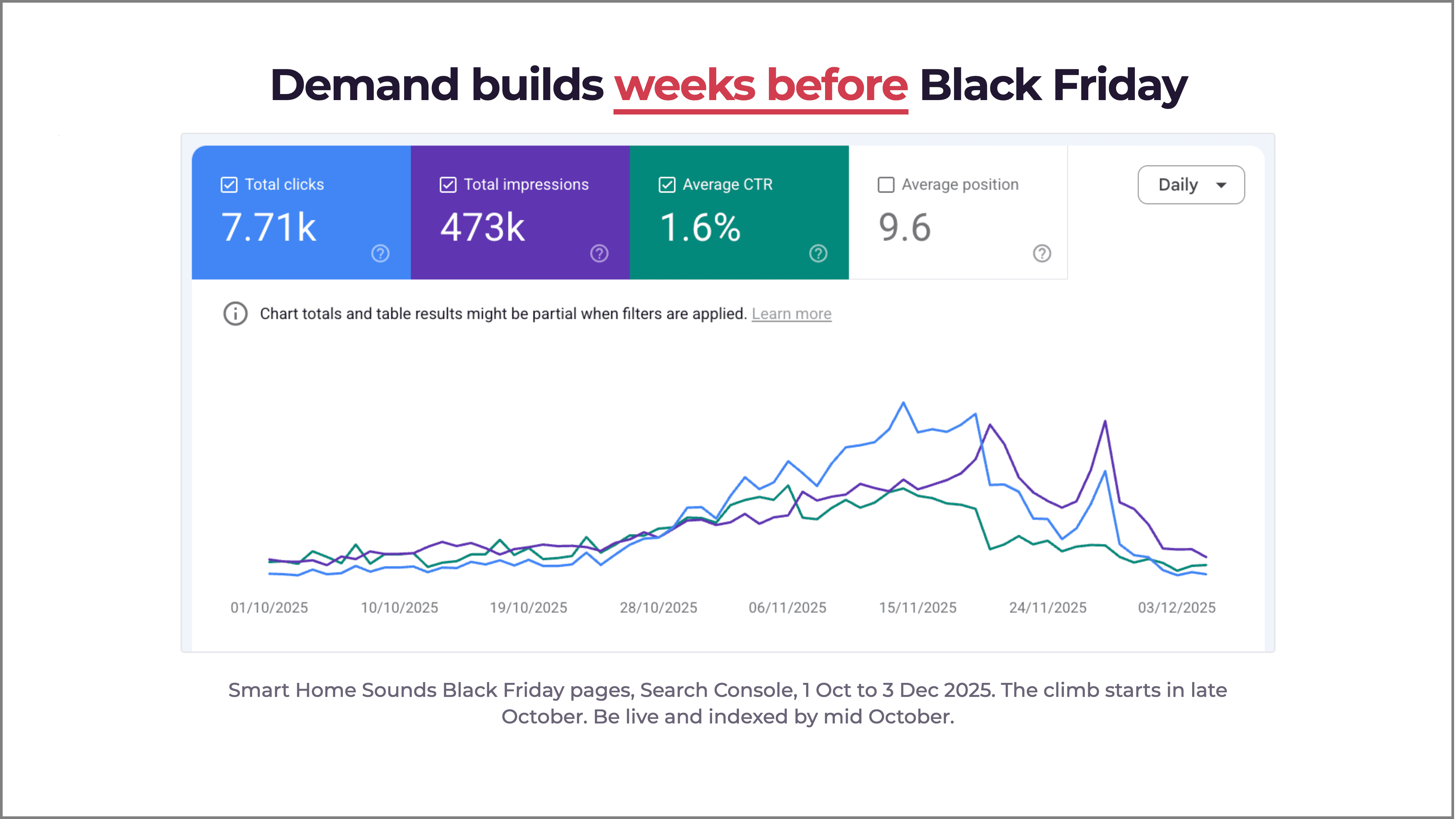
The Search Console data backs up how early this needs to happen. Looking at Smart Home Sounds' Black Friday pages from 1 October to 3 December 2025, the climb in impressions starts in late October, well before anyone is thinking about the day itself. If the pages aren't live and indexed by mid-October, you're building during the climb rather than ahead of it.
There's a measurement version of the same problem, and it's the one teams regret most. If you start tracking AI and SERP visibility in November, you have nothing to compare it against. You'll see where you rank during the busiest fortnight of your year with no idea whether that's better or worse than September, and no way to tell whether the autumn work made any difference.
A baseline is only useful if it exists before the thing you want to measure.
Specific Beats Generic, and It's Where Smaller Brands Win
Three lessons came out of the peak work that apply directly to AI search.
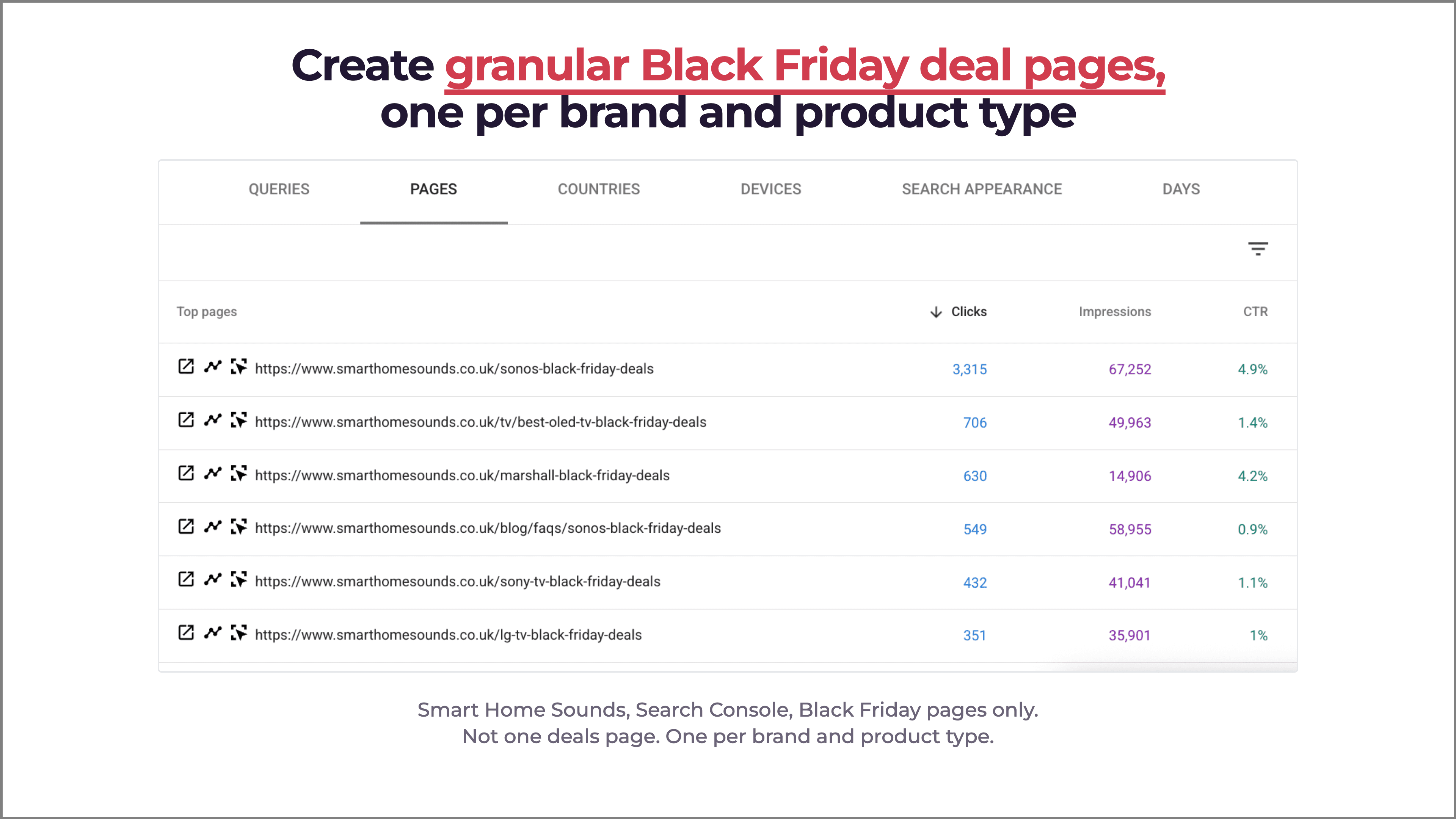
Specific beats generic. Pages built for priority brands and product types won; the catch-all deals page didn't. Peak comes in phases, so the build-up, the day itself and Cyber Monday each need their own plan. And where fewer people were talking about a brand, budget couldn't fix it.
The practical version is to stop at one deals page only if you're happy to be invisible. Build a Black Friday page for every brand and product type your customers search for, one brand to one page with its own URL, dated for the year, live before peak, with the buying guide and trust signals at the top. Then submit each one in Search Console so it's indexed in days rather than weeks.
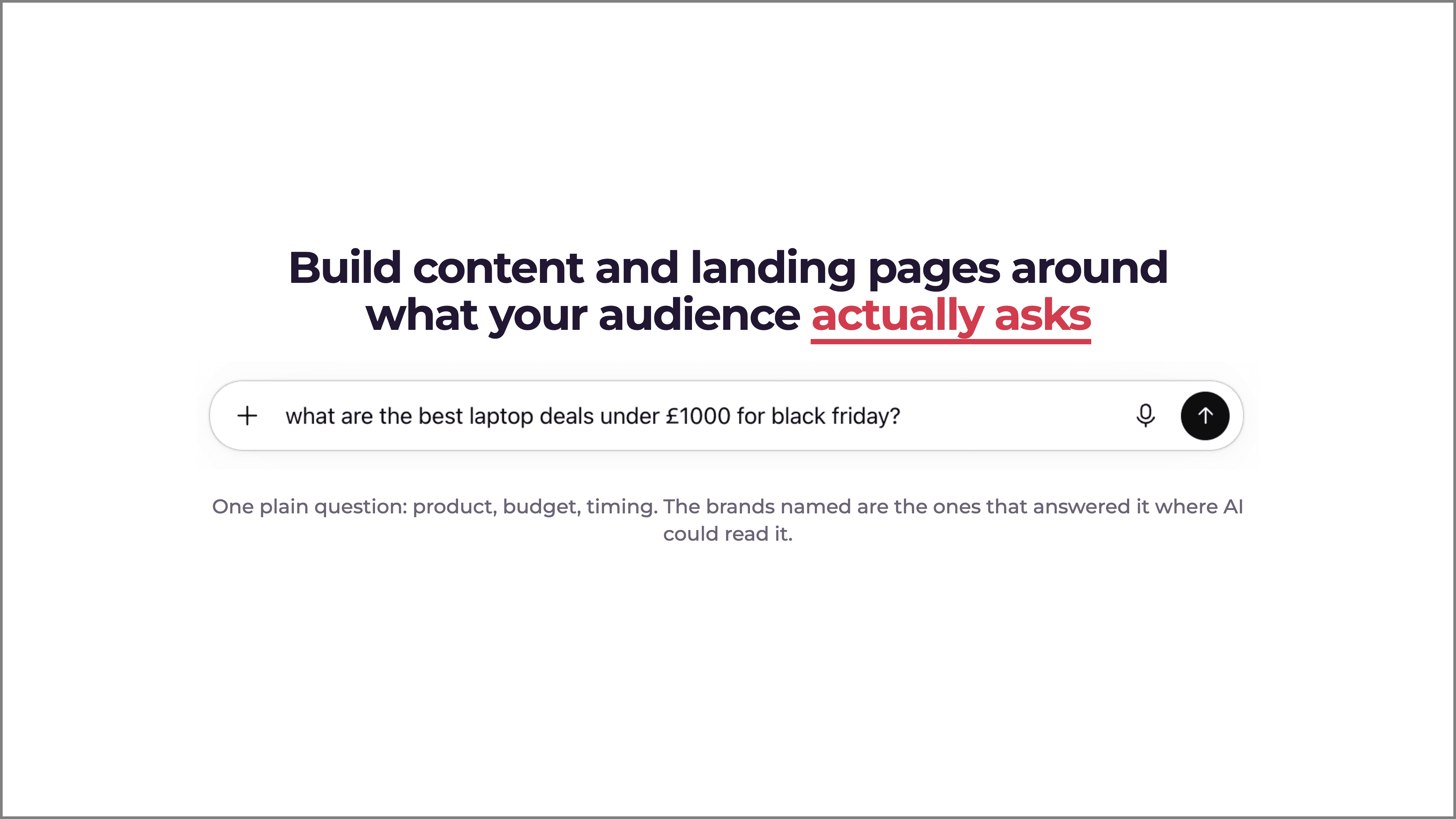
This is where independent retailers gain ground on household names. Specific buying questions have far fewer big-budget competitors than head terms do, and an assistant answering a narrow question needs a source that answers it properly.
While you're in there, hunt down every last-year reference. A site:yourdomain.com search will find pages still carrying 2025 in titles, copy and structured data. Update them, then resubmit through Search Console.
Most of the Evidence Sits Off Your Site
Your site needs clear product information, technically accessible content and pages that answer real pre-purchase questions. It can't carry all the evidence by itself.
Across 28 brands we analysed at SOZO, 18% of the citations behind AI answers came from the brand's own site, and 82% came from external sources: reviews, YouTube, forums and trade press. Writesonic sees the same pattern across billions of AI conversations, and Muck Rack's analysis of more than 25 million links cited by ChatGPT, Claude and Gemini in May 2026 came out close to it, with earned media accounting for 84% of AI citations.
Ask of any claim you're making why a customer, Google or an AI assistant should believe it. If the answer's thin, you've found the gap.
The version I'd act on this week is narrower: find the five places assistants already quote for your category, and work out how to be on them.
In AWR, the citations report lists the domains an assistant leans on for a topic, and on the Sonos speaker prompts we track in ChatGPT, What Hi-Fi? sat at the top of that list. That's a far more useful brief for a digital PR or reviews push than a generic list of high-authority sites.

How We Track Peak in AWR
I'll declare an interest. SOZO have tracked client rankings in AWR for over 18 years, back when it was still a desktop application. I first started using it myself at 15, and introduced it to the agency, so a fair bit of how I think about measuring search has been shaped by watching the same data over a long period.
That length of view is the point, because most of what's useful about rank tracking only shows up over months, and peak is the clearest example of it. Here's the setup we use for the ecommerce brands we work with, shown on Smart Home Sounds' Black Friday keyword group.
1. Give Peak Its Own Keyword Group
Track the peak keyword set as its own group well before demand arrives, separated from always-on tracking, then break it down the same way you've built your deal pages. For Smart Home Sounds that's a Black Friday group of 68 keywords, with brand subgroups such as Sonos and Marshall underneath it.
Across all keywords, the project shows 74.5% visibility and an AI visibility score of 21. Filter to the Black Friday group and those become 92.2% and 51. The blended figure would have understated how well placed they are for peak, and on another account it could just as easily hide a problem. Either way, you want the peak number on its own.
2. Look at November, Not the Annual Average
Headline search volume is an average across the year, which is a sensible default but the wrong number for peak planning. Hover over the trend in AWR and you get each month on its own, with last year's alongside it.
On these terms the gap is roughly tenfold. "sonos era 100 black friday" averages 90 searches a month and hit 880 last November. "sonos black friday" averages 720 and hit 8,100, which means that one month accounts for almost the entire year's demand. A keyword that looks marginal on its average can be one of the most valuable terms you track in the window that counts.
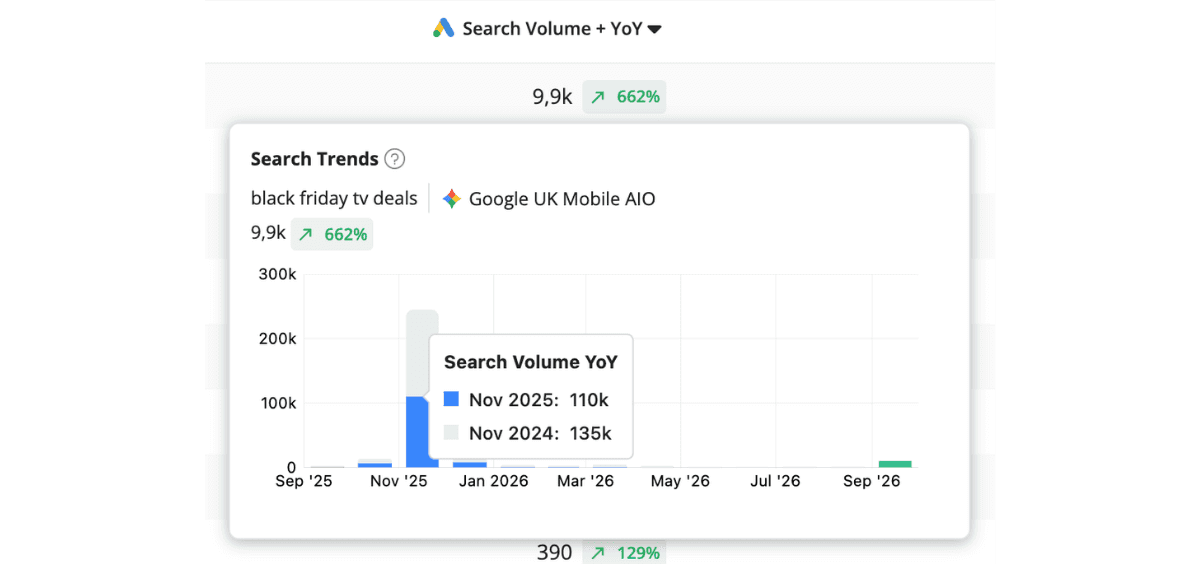
Having both Novembers side by side is useful for forecasting too. "black friday tv deals" averages 9,900 searches a month, hit 110,000 last November, and was down from 135,000 the year before. Anyone building a peak target on last year's traffic needs to factor that in.
It works the same way outside consumer tech. For Physical Company, "black friday gym deals" averages 260 searches a month and hit 2,900 last November, while their Black Friday gym equipment guide was ranking 15th for it when I checked this month. That's the kind of gap this view is for: a term that looks minor on its average, carries more than ten times the demand in November, and still has room to climb before peak.
3. Track SERP Features, and AI Overviews in Particular
The rankings view shows which keywords have moved up or down, which you've gained or dropped, and alongside that, the SERP features you hold and how they've changed. Any SEO worth their fee should be reading all of it, because position on its own describes less of the page every year, and with AI Overviews on over 62% of ecommerce results, that's the feature I'd watch most closely.
For "sonos black friday", AWR shows three Smart Home Sounds URLs appearing in the AI Overview, all newly gained: their main Sonos Black Friday deals page, its second page and a Black Friday FAQ on the blog. The position column only shows a one-place move to first. The bigger change, three pages now inside the AI Overview, sits in the SERP features columns.
4. Read Position Alongside Pixel Position
This is one of my favourite metrics in AWR, and I think it's more useful in 2026 than it's ever been. Position tells you where you rank. Pixel position tells you how far down the page that ranking sits once the ads, shopping units and AI Overview above it are accounted for.
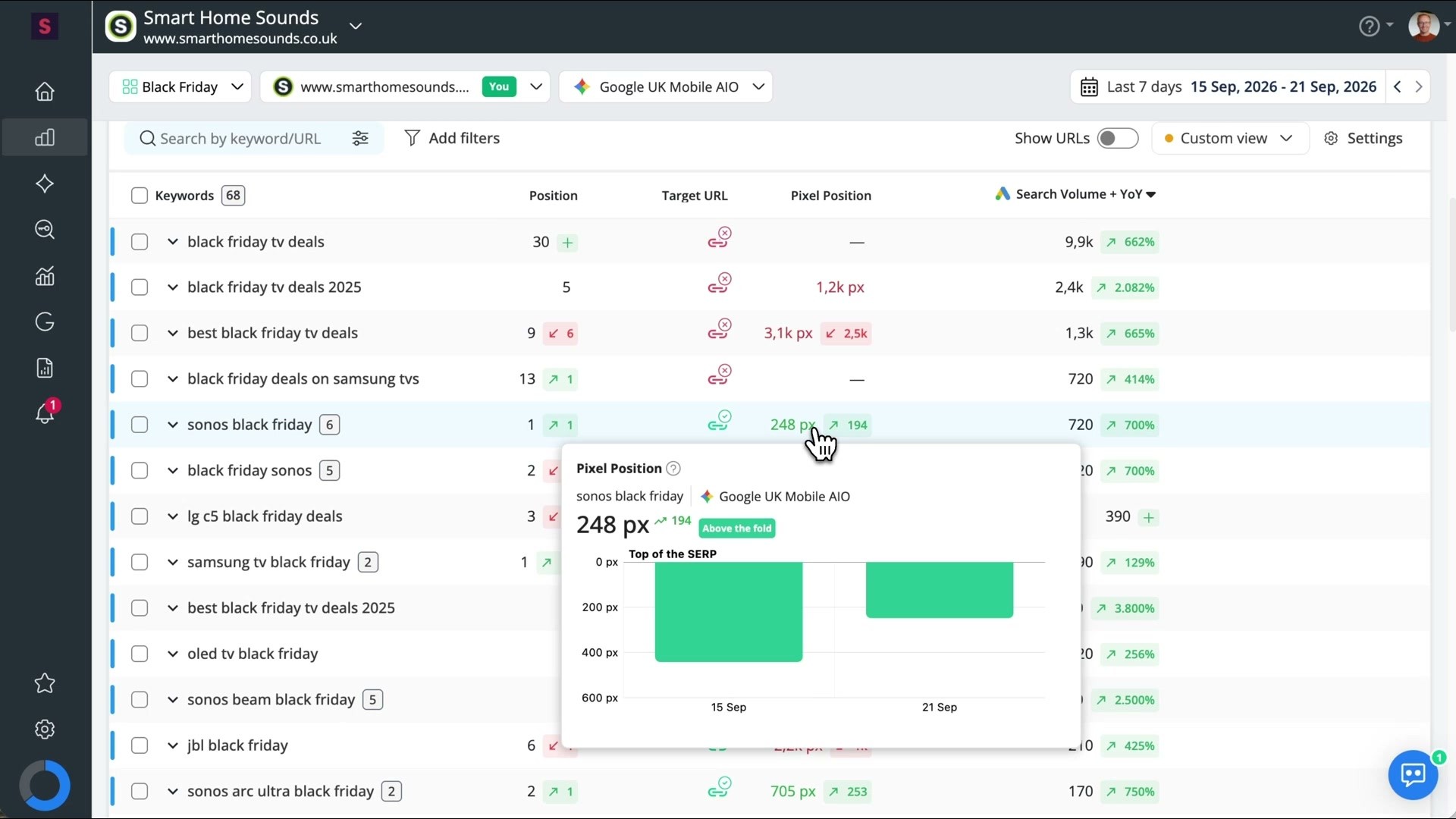
On a single project, "black friday sonos" and "sonos arc ultra black friday" both rank second, but sit at 517 and 705 pixels respectively. "sonos black friday" ranks first at 248 pixels, while "jbl black friday" ranks sixth at 2,200 pixels, well out of view on a phone.
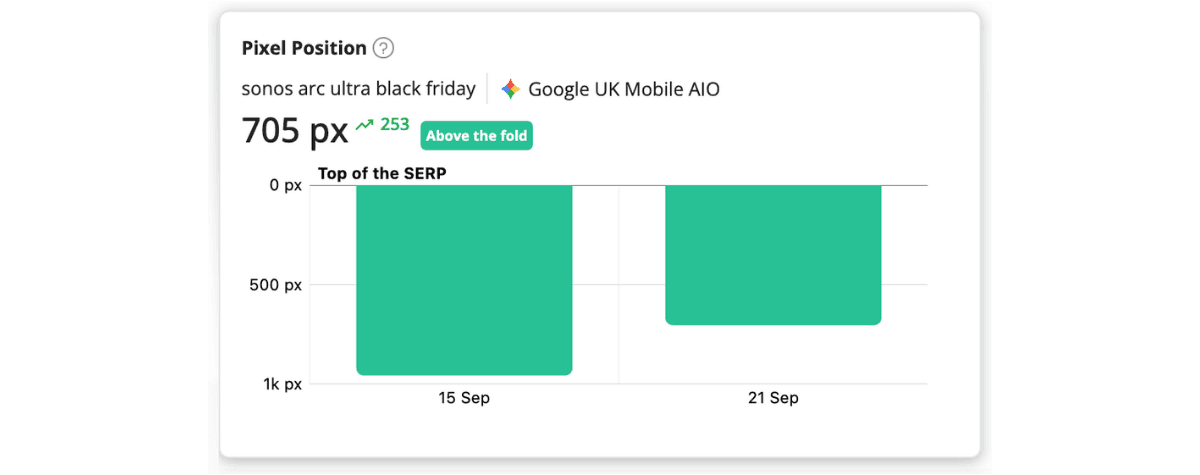
It's also the metric I reach for when a brand asks why a keyword is sending less traffic when they've held the same position. More often than not something new has arrived above them, and pixel position shows exactly how far they've been pushed down.
Add your genuine peak competitors to the same project too. Not the brands you compare yourself to in a strategy deck, but the ones appearing on the queries that drive your revenue. Those two lists are rarely identical, and the gap between them is usually instructive. Then leave it running, because the value of this setup is entirely in the comparison it gives you later.
What I Watch Once Peak Arrives
Through the peak window itself, three things tell me most.
Movement in AI Overview and SERP feature presence on the priority set, because that's where visibility is won or lost before anyone reaches a product page. Share of voice against the competitor set, which is more honest than tracking your own positions in isolation, since everybody's rankings move during peak. And which of your URLs are being surfaced, because it's often not the pages the team optimised. AWR flags when the ranking URL isn't the target page you've set, which is exactly the check you want once there's a deal page for every brand.

What I'd avoid is reacting to daily movement during the busiest trading fortnight of the year. Positions are volatile during peak, and the urge to change something in response to a single day's data is strong and usually wrong. The baseline exists so you can read the trend, not so you can panic at it.
Alongside the rank data, check what assistants are telling shoppers, and do it weekly rather than once. Ask ChatGPT, Gemini and Perplexity what you sell, who it's for and what the downsides are, in a private window so your own history doesn't skew the answer. Read it as a shopper would, because the negatives are the reasons you might not get recommended. Checking once in November is reading one roll of the dice.
Six Things Worth Starting on Monday
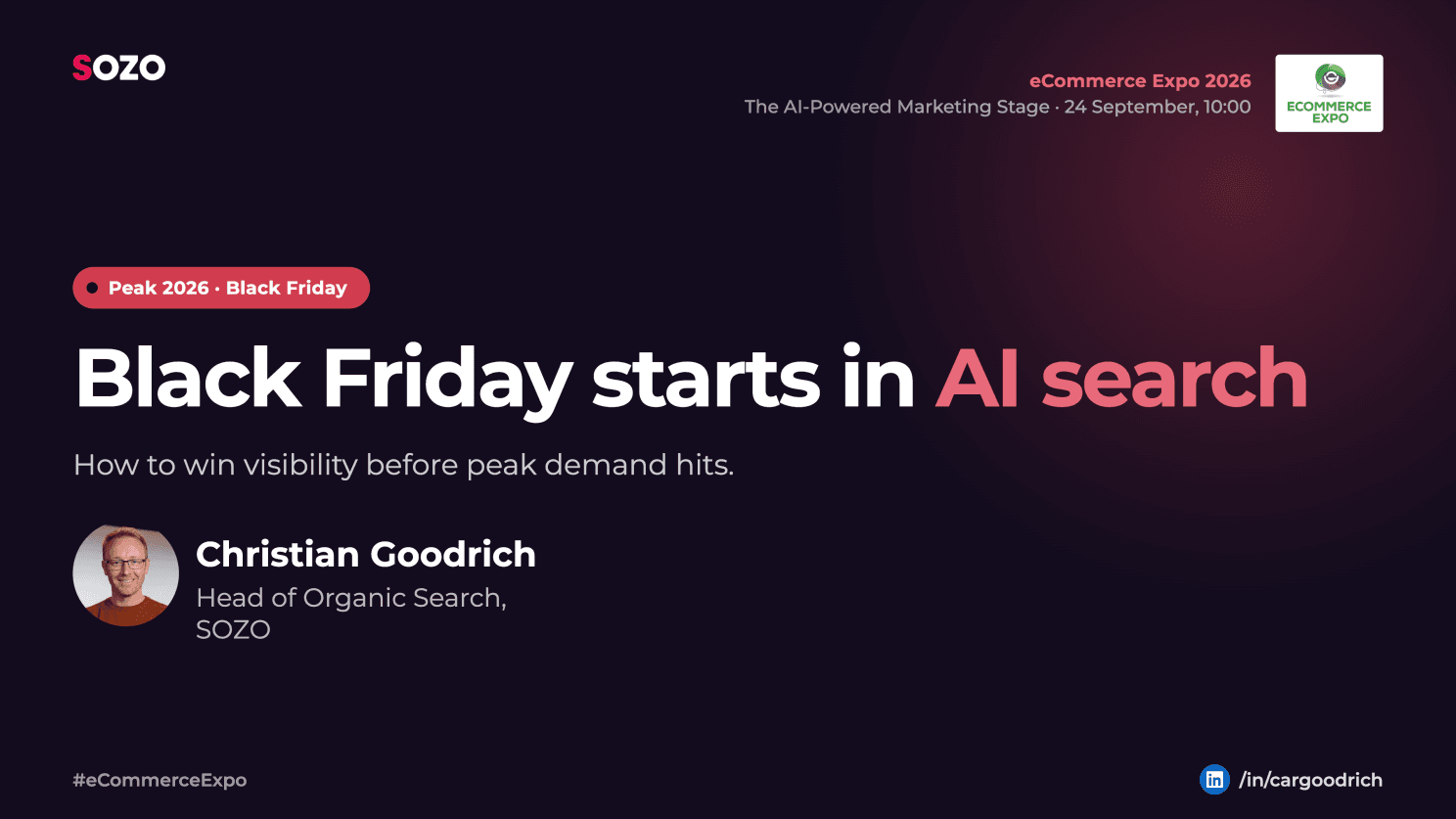
I closed my session at eCommerce Expo on 24 September with six things worth starting straight away, and they apply just as well here.
Fix anything on your site that still says 2025, then resubmit it in Search Console.
Build a Black Friday page for every brand and product type, and submit each one.
Ask ChatGPT, Gemini and Perplexity what you sell and what the downsides are.
Make it obvious who you are: same name and description across your site, listings and socials, with delivery, returns, reviews and location on every page.
Check your 20 best sellers. Price, stock, delivery and returns written down clearly, and matching everywhere.
Write down the 10 questions your customers ask most, and see who gets named today.
This article sticks to the organic and AI search side of peak. For the paid search and CRO side, I've brought my Black Friday talks, videos and articles together on one Black Friday SEO and PPC page, where you can also pick up my Black Friday planning framework for 2026, a Google Sheet I've updated this year with more on PPC strategy and AI-driven search.
If you'd rather watch than read, I talked through Black Friday prep for AI-driven search on the Search With Sean live stream earlier this month.
Peak Visibility Is Earned in the Quiet Months
Black Friday puts a fixed date against something worth working on all year.
Publish through October, corroborate in the first weeks of November, and spend peak protecting what you built rather than trying to construct it under pressure. For brands expecting November to carry a sizeable share of annual revenue, the products you need to win on, the evidence supporting them and what AI currently says about you all need another look now, while there's still time for any of it to take effect.
Set the baseline while there's still something to compare it to.

Article by
Christian Goodrich
Christian Goodrich is Head of Organic Search at SOZO, where he works with ecommerce and lead-generation brands on search-led commercial growth across SEO, AI search and paid. He also writes about SEO, AI search and PPC on his own site, goodrich.digital. You can connect with Christian on LinkedIn.


