

When Google rolls out a core update, volatility is expected. The hard part is figuring out what that volatility means for your sites.
Some projects lose visibility and recover quickly. Others keep sliding. Sometimes the drop is isolated to a specific group of keywords. Sometimes the SERPs themselves have shifted.
And if you manage dozens of SEO projects, checking all of that manually can turn an update into a full afternoon of report pulling and spreadsheet work.
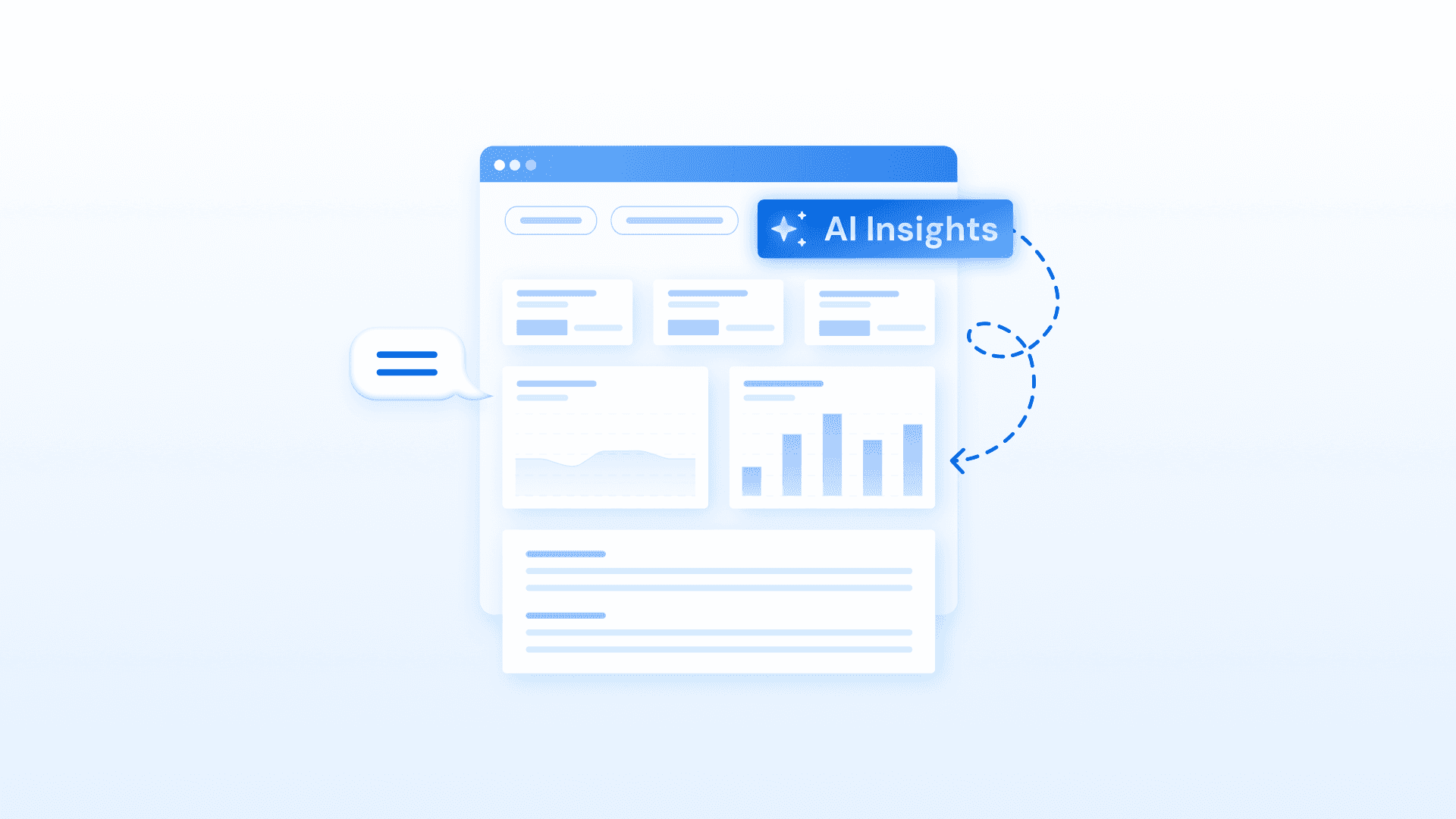
AWR AI Insights can handle much of that first-pass investigation for you.
I’ll show you how it works, starting with a portfolio-level view and then drilling down into individual ranking drops, SERP volatility, and competitor movement.
What is AWR Insights?
AWR Insights is the built-in AI assistant in Advanced Web Ranking. It analyzes your project data and helps you understand what changed, without you having to pull the analysis together yourself.
You’ll find it in five AWR dashboards: Home, Keyword Ranking, Distribution, Websites, and AI Search Performance. Each one comes with pre-built prompts, plus a free-form question box if you want to ask something more specific.
Behind each prompt, AWR runs a multi-step analysis using the relevant project data.
Find the projects affected by the update
If you have dozens of projects in AWR, the first problem is simply knowing where to look.
Instead of opening each project and checking its visibility manually, you can run the default [Summary] prompt in AI Insights from the Home Dashboard.
AWR analyzes your projects and quickly shows what changed, pointing you toward the projects that need attention.

That gives you an update triage layer across your portfolio: rather than starting with 50 projects and trying to work out which ones were affected, you get a much shorter list of projects showing meaningful changes.
From there, AI Insights can take the investigation a step further.
Run the default [What’s the root cause of my declining projects?] prompt from the Home Dashboard, and AI Insights analyzes the projects that are losing visibility.
It lists the underperforming projects, shows their visibility changes, and attaches a primary diagnosis to each one.

For each declining project, you can then see a more detailed analysis with a root-cause assessment and suggested areas to investigate.
This is useful because you’re not just getting a list of projects that went down. AWR is already looking through the project data and organizing the evidence around each decline.
Of course, the diagnosis is still something I’d validate. An AI-generated explanation is a starting point, not proof that Google changed something specific about your site.
Investigate the ranking drop
Once AI Insights identifies a project that needs attention, you can move straight into the Keyword Ranking dashboard.
There, run the [Ranking Drop Diagnosis] default prompt.
AWR analyzes the ranking changes and summarizes what happened, including which areas of your keyword set contributed to the decline.
AWR looks at what changed in your rankings and summarizes the drop, including the keywords and ranking movements behind it.
But there’s another useful bit here: it also looks at SERP stability.

That helps answer a question that’s easy to overlook when you’re staring at your own data:
Did my site drop, or did the SERP change around me?
Those are two very different situations.
If your rankings dropped while the rest of the SERP stayed fairly stable, you’ll probably want to investigate your own site more closely.
If the whole SERP is moving around, though, that’s useful context. You may be looking at broader search-result changes rather than a problem that’s unique to your site.
AWR brings that context into the same analysis, so you don’t have to manually connect the dots between ranking changes and SERP stability.
Dig into SERP volatility
Sometimes the ranking analysis shows that the SERPs themselves have been unusually volatile.
When that happens, AWR can take you another level down through the Distribution dashboard.
Run [Distribution Volatility Analysis], and AI Insights looks into the keywords and SERPs where the biggest changes are happening.
The analysis shows different patterns behind the volatility, including:
SERP feature volatility — features appearing or disappearing from the results
Positive keyword momentum — keywords gaining visibility even while the project is declining overall
Competitive mismatch — cases where the sites now ranking for your keywords look quite different from the previous SERP
Ranking distribution changes — shifts across groups of keywords that might not be obvious from an overall visibility number

This matters because “visibility dropped” is rarely enough information to explain an update impact.
AWR breaks that broad movement into the patterns behind it, so you can see whether the decline comes from a particular keyword group, SERP behavior, or competitive shift.

Instead of manually comparing distribution reports and hunting for anomalies, you get the analysis in one place.
And then there’s the obvious question: who gained?
The next piece of the puzzle is competition.
If your rankings dropped, did competitors gain those positions?
AI Insights looks at competitor movement alongside your ranking changes, so you can see what happened in the wider SERP.
Maybe the same two or three competitors gained across a whole group of affected keywords. Maybe a different type of page started showing up more often. Maybe the SERP changed enough that your previous competitors aren’t even the main players anymore.

Those patterns are much more interesting than a list of individual keywords that dropped.
And again, AWR isn’t going to tell you, with absolute certainty, why Google decided to rank one competitor above another. That’s where your SEO expertise comes in.
What it can do is get the relevant data in front of you much faster.
From update panic to a focused investigation
That’s the real role I see for AI Insights during a core update.
It doesn’t replace an SEO audit, and it shouldn’t pretend to. What it does is take the first, most time-consuming part of the investigation off your plate.
It can go from:
“Which projects changed?”
to:
“Which ones are actually declining?”
to:
“What happened to their rankings?”
to:
“Were the SERPs unusually volatile?”
to:
“Which keywords and competitors are behind the movement?”
And it does that without you having to build the investigation from scratch every time.
You still need to look at the actual SERPs. You still need Search Console, your site data, and your own understanding of the business. And you still need to decide what, if anything, you want to change.
But by the time you get there, AWR has already done a lot of the sorting and pattern-finding.
That’s the part that makes AI Insights useful during an update: it gets you past the “what happened?” stage much faster, so you can spend more time working out what to do about it.
One thing to keep in mind
There is one important caveat.
AI Insights is designed to make analysis faster, not to make SEO judgment obsolete.
The prompts use predefined skills and AWR project data to produce structured analyses, but the output is still AI-generated. It can make mistakes, particularly when it moves from describing what happened to suggesting why it happened or what you should change.
I recommend treating the diagnosis and recommendations as investigation leads. Validate important findings against the actual SERPs, your site data, Search Console, and your own understanding of the site.
That keeps the useful part of AI - speed and scale, without handing over the final decision.
How much does it use?
AI Insights uses its own credits, separate from your regular AWR tracking units.
You get 1,000 free AI Insights credits each month with any paid plan, which works out to roughly 7–10 full sessions.
If you need more, add-on tiers start at $10/month for 10,000 credits.
And if you’ve ever spent half a day after a Google update pulling reports, comparing visibility changes, checking rankings, and trying to figure out what changed, the time saving is probably the more interesting number.
Google will keep rolling out core updates. You’ll still need to work out what they mean for your sites.
But with AWR AI Insights, you don’t have to start that investigation from an empty report.
AWR can do the first pass for you — finding the projects that moved, analyzing the ranking changes, putting SERP volatility into context, and surfacing competitive patterns — so you can get to the actual SEO work faster.
If you haven’t tried it on your own site yet, book a demo and see what AI Insights finds when the next update hits.

Article by
Success Olagboye
Success Olagboye is a content strategist and writer who helps SaaS brands increase their organic traffic and revenue through customer-focused content. He has created successful content assets for leading European and American SaaS brands.
Success loves to explore nature when he is not working.