

Advice and answers from the Advanced Web Ranking Team
Search for articles
>
>
Seeing google.com/goto Instead of Your Client's URL in Google? See How AWR Adapted
Google wrapped every result link in a redirect. Your reporting tools show something different. Here's what changed and how AWR handled it.

You are doing what you do most mornings: a manual check on a client's main term before their call. Incognito, right location, scanning for their listing.
You find it in Position 3. You hover over the result to check which landing page Google is ranking this week, but something looks strange. The URL doesn’t show the client’s domain. In fact, it doesn’t look like a normal website URL at all.
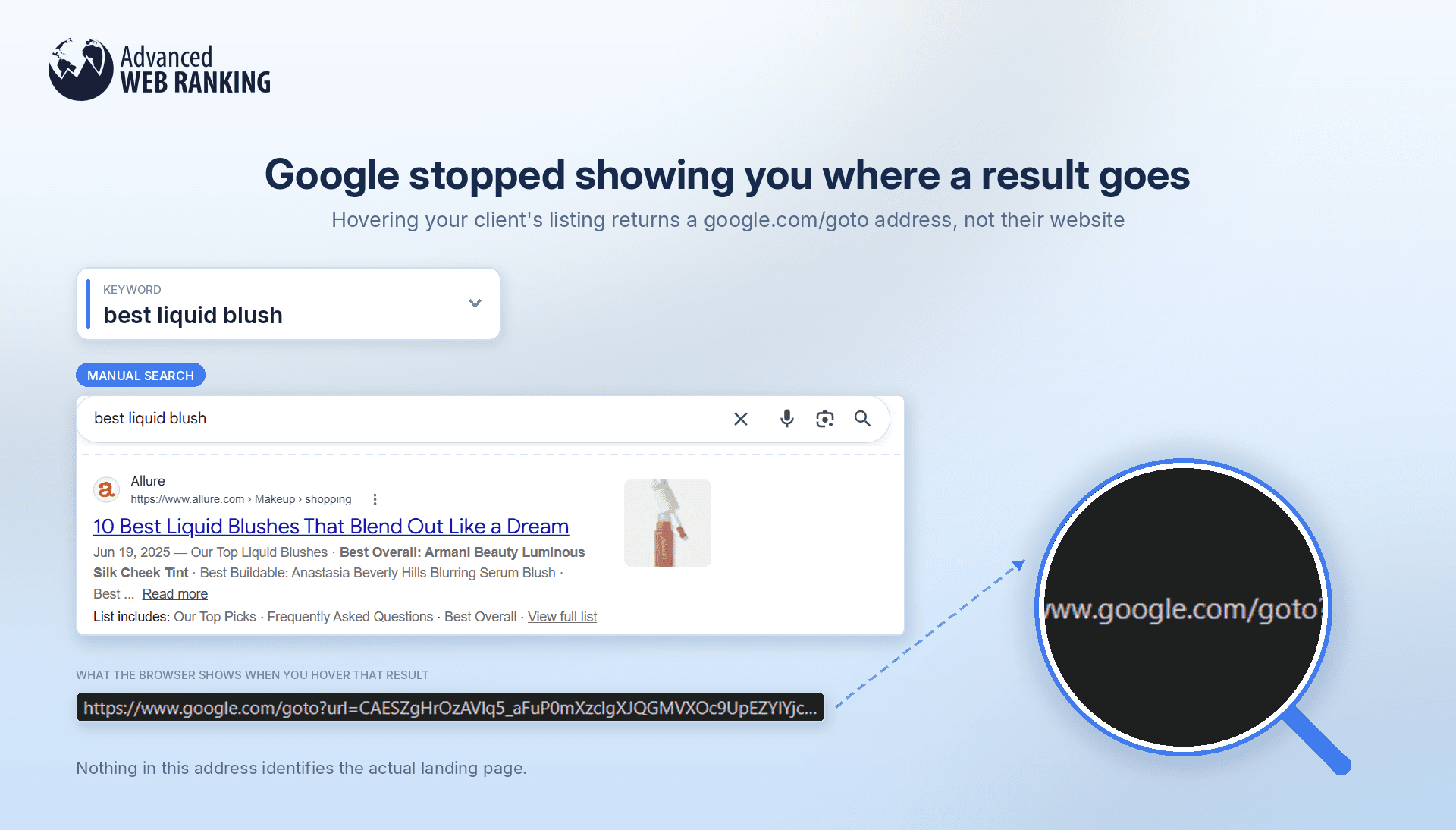
Your first thought is probably: What is my rank tracker seeing? And did this affect the report I sent to the client?
Google simply changed the way links behind search results work. Instead of linking directly to the landing page, Google started wrapping those links in its own “goto” redirect.
So the website is still ranking exactly where you see it. The problem is that some SEO and rank-tracking tools started picking up Google’s redirect URL instead of the actual landing page.
TL;DR: Google changed the URLs, not your rankings. Here’s how to keep reporting to your clients
Google changed search result links by wrapping them in google.com/goto redirects. Your website’s position in the SERP did not change, but some rank trackers failed to identify the real landing pages and report rankings correctly.
AWR detected the change back in January and adapted before it affected customer data. Not sure how your current tool handled it? Try AWR with your own keywords and see the difference for yourself.
How long has this been going on and was AWR affected?
This change has actually been around for longer than the recent discussions might suggest and AWR was not affected.
The first public reports appeared on 23 June 2026. At the time, the change was inconsistent. Some users could see it, while others couldn't.
Search Engine Roundtable covered it on 8 July, noting that most searches still looked normal and that even Barry Schwartz couldn't reproduce it at first. This continued for around two months, until Google officially confirmed the rollout on 26 August.
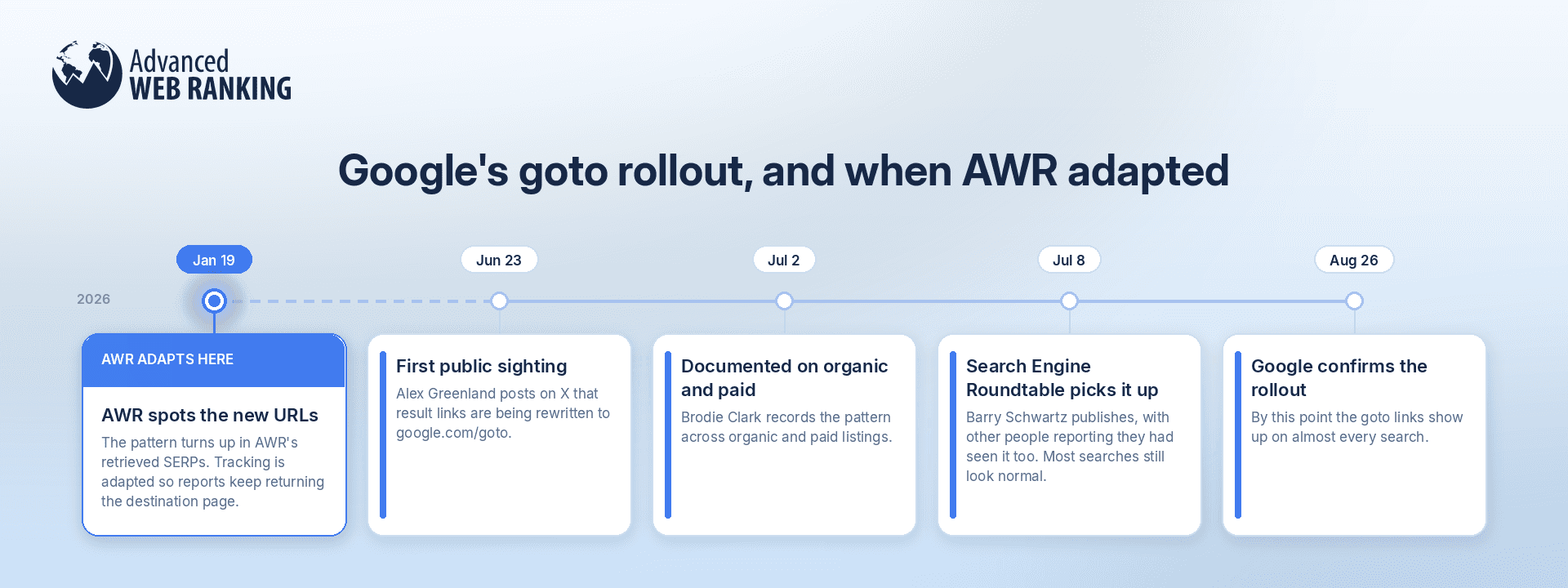
AWR had already detected the change on 19 January, while Google was still testing it on a small number of searches.
AWR's tracking was adapted as soon as the change was detected. This meant ranking reports continued to show the actual destination page instead of Google's redirect URL.
The ranking data itself was never affected and AWR clients continued to receive accurate data.
So, by the time other rank trackers started struggling with the change at the end of August and into early September, AWR had already been handling it for months.
What should you check in your own reporting?
Start with your latest ranking reports, including anything you send through Data Studio, scheduled PDFs to clients, or other integrations. If you see Google redirect URLs instead of the actual ranking pages, your rank tracker may have been slow to adapt to the change.
And it is not just a URL problem. If a tracker cannot resolve Google’s redirect back to the actual destination, it may also fail to recognize your client’s website in the SERP and accurately report where it ranks.
Then ask your tool two simple questions: Did you guys detect the change? Were you able to fix it?
Some rank trackers rely on databases that are refreshed on their own schedule, so smaller Google changes can take longer to surface.

With AWR, ranking updates are performed when our customers request them. This gives us a continuous view of what is happening in the SERPs and helps us spot changes like this early.
We handled the new google.com/goto redirects with no additional costs or changes to our plans, keyword unit limits, or update frequency.
If your current tracker still hasn't caught up, feel free to try AWR at no cost. Add your own keywords and use the Top Sites report to see all the URLs ranking in the SERP, so you can easily compare the results for yourself.

What do you tell a client who has already seen it?
Keep it simple: their rankings did not change.
Google changed the URLs behind its search results and some rank trackers started seeing Google’s redirect instead of the actual website URL. Because of this, some tools may not recognize your client’s website correctly or report its ranking accurately.
There is nothing wrong with the client’s website and nothing they need to fix. The issue is with how the rank tracker reads and reports Google’s results.
But once that incorrect data reaches a client report, whether through a PDF, Looker Studio, or another integration, you are the one who has to explain it.
If you're seeing the redirect URLs in your current rank tracker, there's no need to keep your clients waiting for accurate data. Switch to AWR and:
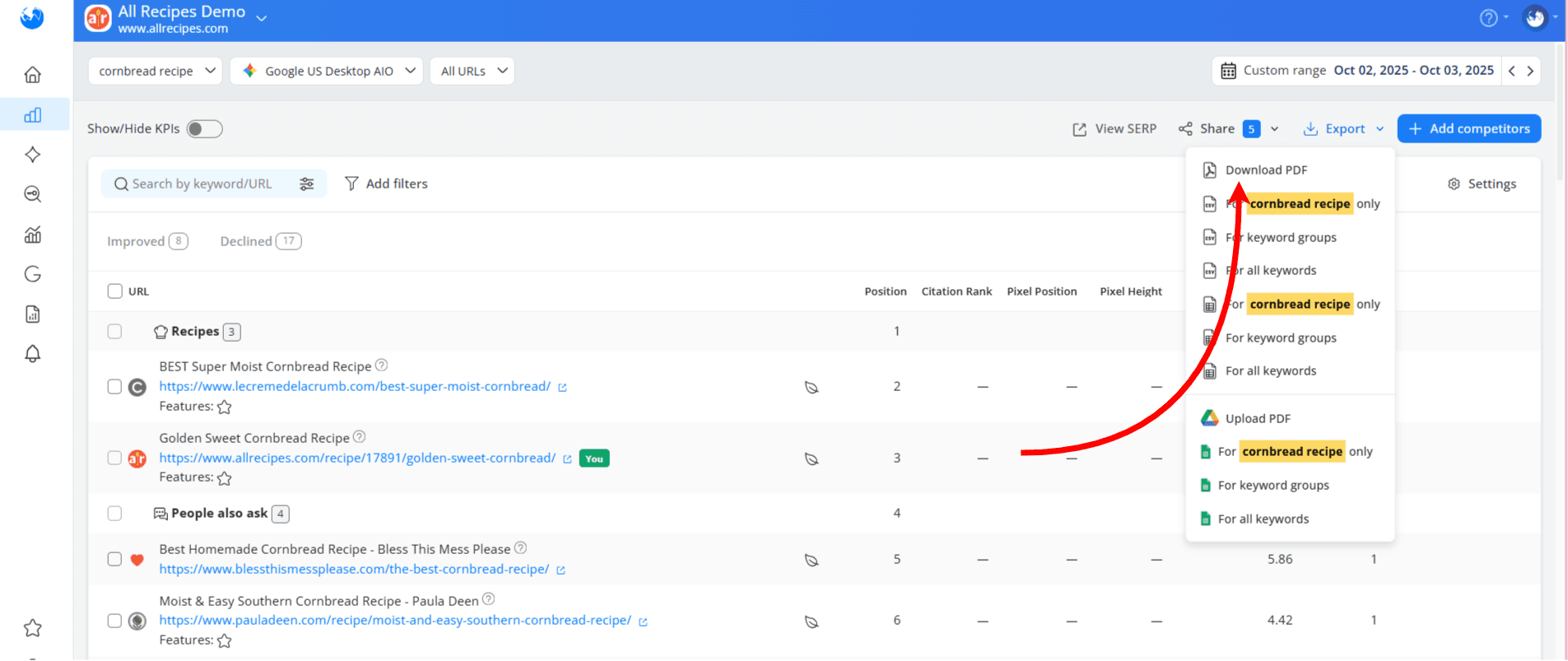
Export AWR reports directly as PDFs by clicking “Export” and selecting “Download PDF”
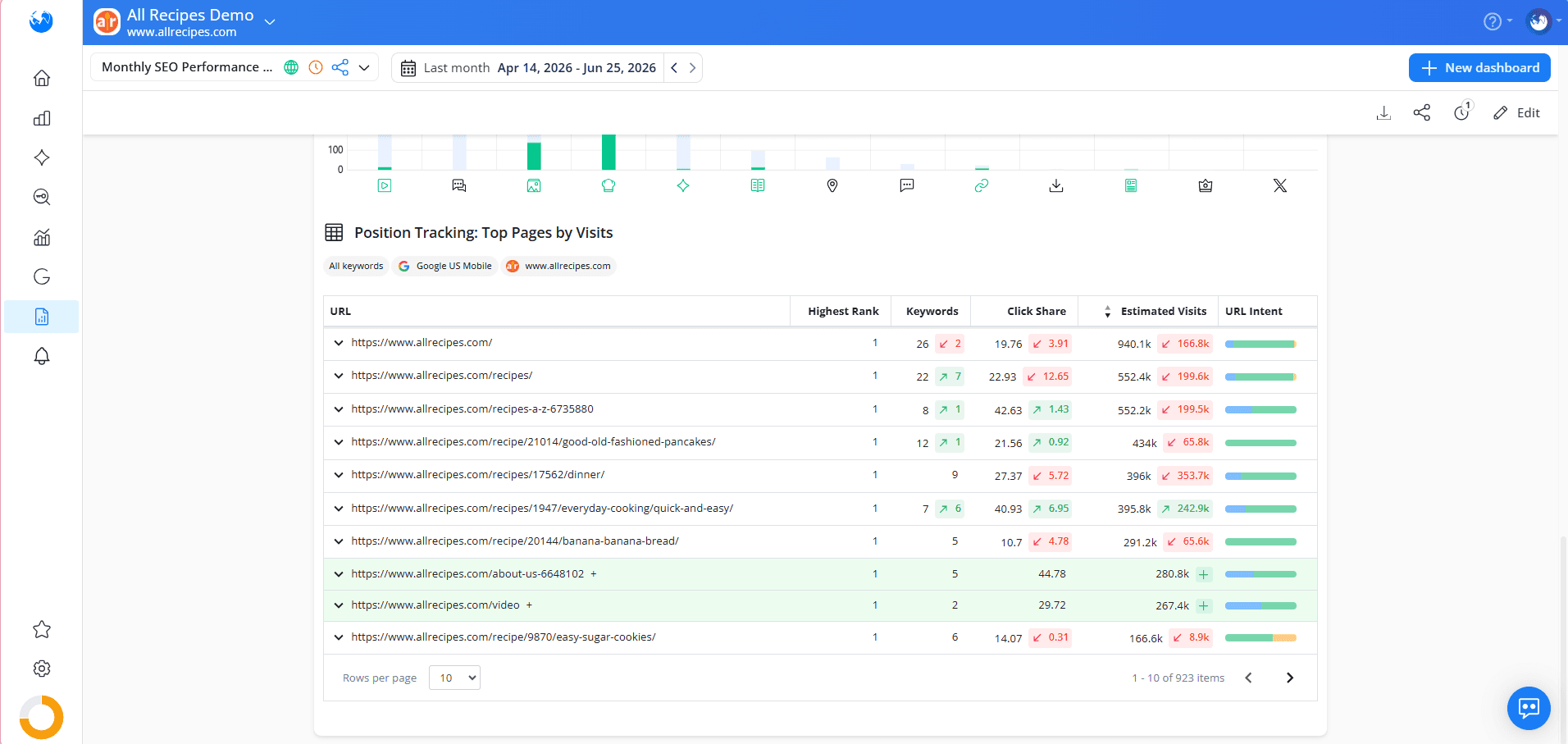
Use Dashboards to create custom PDF reports with your own widgets and data, and automatically send them to your clients
Connect AWR to Data Studio to keep accurate ranking data flowing into your existing reports.
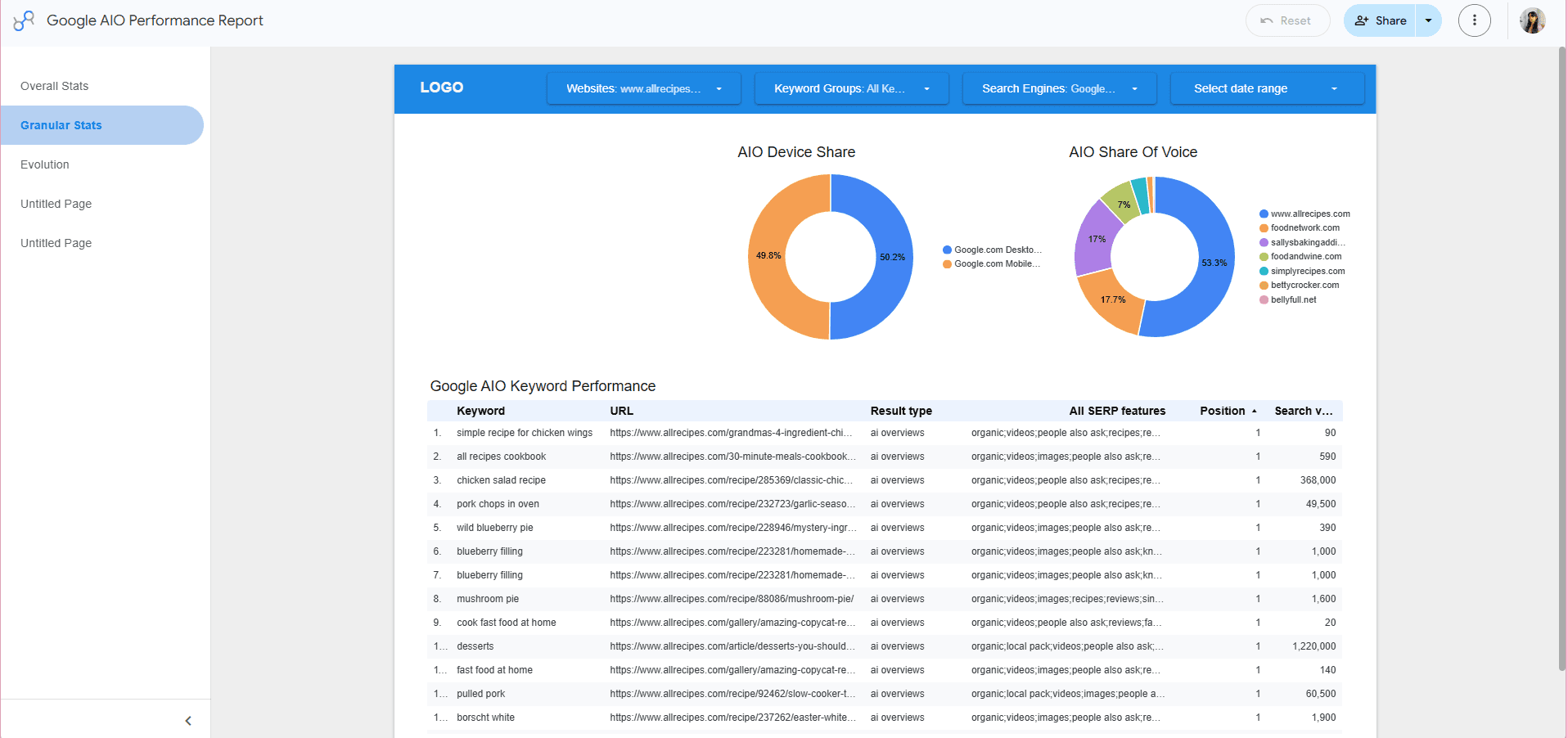
The sooner you switch, the sooner you can get back to reporting with confidence and avoid turning a tracking issue into a client trust issue.
In the end, it comes down to how quickly you can adapt. The faster your rank tracker responds to changes like this, the faster you can keep accurate data flowing to your clients without disrupting their reports or their trust.
Do you have any questions? Don’t hesitate to get in touch and we will keep building the FAQ.
Frequently Asked Questions
My rankings dropped in another rank tracker around the same time. Is that related?
Do google.com/goto URLs appear in SERP Features too?
Will this make rank tracking more expensive?
stay in the loop