

It's great to have you back on The Search Session. I’m Gianluca Fiorelli, and in this episode, I’m joined by Silvia Martin, a Spanish SEO consultant based in England.
Our conversation explores how SEO, branding, and business strategy come together in the search everywhere era, from the ideas behind her book SEO for Branding to the framework she created to help business owners build stronger visibility.
We also discuss brand measurement, LLM reputation monitoring, explaining technical SEO in simple terms, omnichannel collaboration, and the role of community in shaping more inclusive careers in search.
What You’ll Take Away
How to stay grounded in a fast-changing SEO landscape: instead of panicking over every update, focus on the fundamentals, evaluate what truly affects your work, and adapt with perspective.
Why SEO for Branding matters now: Silvia Martin explains what inspired her to create a practical book for business owners that connects SEO, branding, and visibility in the search everywhere era.
How the Brand SEO Visibility Loop works: Silvia's six-step framework for non-SEOs: brand clarity, platform selection, auditing visibility, shaping strategy, amplifying content, and refining results.
Why SEO must stay tied to business goals: strategy and measurement should focus on the outcomes that matter, not just rankings, clicks, or isolated attribution.
Why and how to perform constant LLM reputation monitoring: inaccurate or manipulated information can shape perception, so audit your brand in AI search regularly, always in incognito mode.
How to explain schema without overwhelming clients: keep the focus on what it is, why it matters, and leave the technical implementation to the SEO and development teams.
Why SEO must work across channels: an omnichannel approach connects SEO, social media, email, and AI discovery to improve brand visibility and business impact.
How the SEO community supports women in the industry: initiatives like Women in Tech SEO create visibility, support, and opportunities in a field that is more inclusive than before, but still not fully equal.
Don't miss this episode! Silvia shares the exact framework, mindset, and tactics business owners need to build brand visibility today.
Topics covered: SEO for Branding · brand visibility · Brand SEO Visibility Loop · LLM reputation monitoring · Personal branding · Business-aligned SEO · Omnichannel strategy · Schema for clients
About the Guest
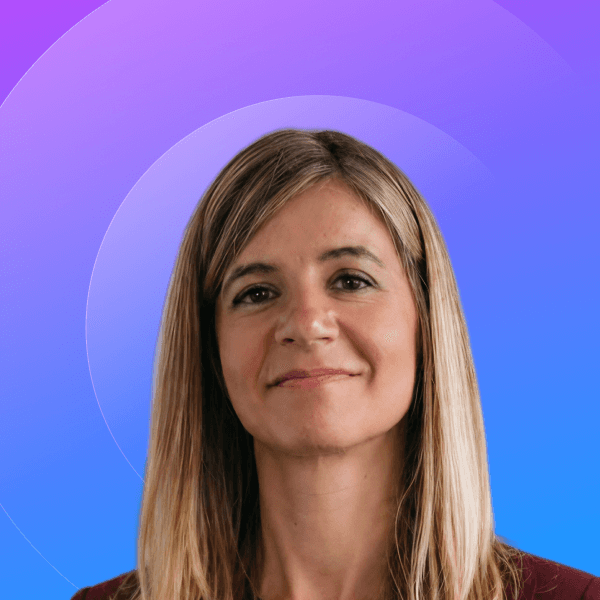
Silvia Martin Palacio
Digital Marketing Consultant (SEO) and Founder of Trebole
Working in SEO since 2013, Silvia Martin Palacio has built her experience across in-house roles, agencies, and independent consulting, giving her a broad perspective on how search strategy supports different business needs.
Since founding Trebole in 2020, she has offered strategic SEO consultancy to help businesses strengthen their visibility, authority, and growth in search.
She is also the author of the book SEO for Branding: How to Boost Visibility and Authority for Personal and Business Brands, published in 2026.
Silvia also collaborates with Women in Tech SEO and serves as a judge for the European Search Awards and UK Search Awards.
Video Chapters
Transcript
Full conversation between Gianluca Fiorelli and Silvia Martin.
Gianluca Fiorelli: Hi, I'm Gianluca Fiorelli, and welcome back to The Search Session. Today, we are going to have a dear friend as a guest. She is an independent SEO consultant and founder of Trebole; I don't know if to pronounce it in Spanish or in English.
With more than a decade of experience in SEO, both in-house, in an agency, and as a consultant. Actually, right now she is a consultant. And our guest recently published a very interesting book, SEO for Branding, and we are going to talk a lot about this book today because not only is the topic that I really like, brand and SEO, but also she wrote it with a specific public in her mind, not SEOs like us, but business owners.
And trilingual. She speaks Spanish natively; English, as she lives in the UK, and French. Our guest today is Silvia Martin. How are you doing?
Silvia Martin: Hi. Hello. Thank you for having me.
Gianluca Fiorelli: So, before, off the record, we were talking about the crazy, the crazy weather in the UK. So, for how many years have you been living there?
Silvia Martin: Yes, like 13 years. So it's been a while since I've been here in London.
Gianluca Fiorelli: Wow. Actually, this is a conversation between expats. I, an Italian living in Spain, and you, a Spanish living in England.
Navigating Constant SEO Change Without Panicking
Gianluca Fiorelli: So let's start with a classic question I always ask. So, how is SEO treating you lately?
Silvia Martin: Well, SEO is treating me well; I love SEO, you know. I always try to learn more. We are in this amazing time now that things are changing, so there are a lot of things to catch up. My Monday ritual is SEOFOMO, the news. I check what's going on because if you work in SEO, you need to always keep up to date. So many things are changing, so many different news. So yes, that's one of the things I try to do. I have always done it since my beginnings in SEO, like more than 10 years ago, 12 years ago, so that's the greatest start of the week.
Then, after that, I plan the week, and I work on clients. Now that I'm independent, I'm the one who needs to organize everything and do everything. And yes, basically that's it, my SEO life.
Gianluca Fiorelli: Well, it's a life that so many people can find similar. And yes, news. So much news during these past, let's say, 18 months. Have you ever felt overwhelmed by all the news? So much news is popping up in our search engine world.
Because there are people who, with so many changes and with so much news that can pop up every moment, get their cortisol to the top, become super stressed, and somehow block themselves. What about you?
Silvia Martin: No. You know, at the beginning, when I started my career, I was a bit like that, right? Because I didn't understand well how things work and then all these big changes all the time, I was a bit overwhelmed. But now, after so many years, the thing about SEO being dead—we've heard it so many times. So it doesn't overwhelm me.
And other kinds of news about changes like algorithm changes, whatever it is they change, like FAQs that are now deprecated, and all of these different changes. I'm so used to it. I think that most of us SEOs, we should be used to it to survive. So I treat them just with a pinch of salt, you know, because everything is big news, a big change.
But at the end of the day, all the basics, all the fundamentals, are still the same. So that's what I think when I hear all of these things. It's like, okay, maybe something has changed, but the SEO basics are always there, the foundations. And then we will go, and we will evolve. And as SEOs, I think we are all used to doing that, to evolve.
You need to adapt quickly, and especially don't panic, right? I remember at the beginning, when I was starting fresh in SEO, and it was like an algorithm update. Oh my God, I was just investigating, checking, shaking. Oh my God, what can I do?
Now it's not the same. Now, after years, you treat it in a different way because it will be changing all the time. You cannot control all of these things. You just need to see when it's really something that is really impacting your clients or your websites, or when it's just news happening, and you need to see little by little how you can adapt to it. That's my take now.
Gianluca Fiorelli: It's a safe take. I mean, it's totally the correct way. Sometimes, in my case, my problem is that, especially when new things are coming out, I put myself to trying to understand and to study, and then all of a sudden that new thing is not new anymore. Sometimes I decide that, okay, I need to organize the way I do my own studies, and let's maybe not write everything down.
Just try to understand if something that is written is really worth writing at all or not, and try to prioritize the official news coming directly from big tech, from Google, OpenAI, or Anthropic, and don't lose too much time on the commentary. Eventually, the commentary, if I see that this new thing is really important, then eventually I dig into it more quietly during the weekend when I have more time to do it.
Silvia Martin: About what you are doing, what is really, really important also is the sources, because there's a lot of misinformation also out there. So, as you said, the more official the sources, when there are changes or big things, it's better to follow those kinds of news than all random news, right?
Gianluca Fiorelli: Yes, totally. Because sometimes you can see that the commentary is totally misunderstood by the original sources. So you are substantially spending time on something that is wrong or biased. And for instance, when it comes to studies, I tend to prefer independent studies over vendor studies.
Not because studies done by vendors are bad. Many times, they are great studies. But if they don't open and declare the methodology or offer the data eventually, sometimes I know you cannot offer the data, but at least present to us very clearly what the methodology is. I don't really like to trust that.
This is a problem, maybe because I come from the academic world. There are a lot of studies, but very few peer reviews. Let's say Profound is doing this study. Why are these vendors not peer reviewing, making these studies peer-reviewed?
For instance, here at Advanced Web Ranking, our guest, we are considering doing studies in the future. And surely this is a particular specification that I would like to implement in any potential new studies that are going to be done by Advanced Web Ranking. Because if not, we must accept it, and maybe it's not correct.
Writing SEO for Branding for Non-SEOs
Gianluca Fiorelli: But coming to you, you were very busy in the last month, and I know you have it there with you. As I was saying in the introduction, you just published a book, SEO for Branding, which is a very cool topic and very mainstream right now. And I was also saying that it's interesting, the idea you had to write this book not for a public of SEOs but for a public of business owners.
So my question is, what sparked your “crazy idea” to commit yourself for many months to writing a book? And why did you decide to write it for that specific type of public?
Silvia Martin: A very interesting question. So first, I would like to share the book, as you mentioned, I have it here with me. Yes. I'm so happy that I finally have the physical edition with me. So yes, very exciting. And as you said, I spent several months working hard on it. It’s a very interesting project.
If you had asked me a few years ago if I would ever write a book, it was not in my plans. You know? It is not something that I had in me, like, "Oh, I want to write a book." No. But then the idea came to me. I saw other people that I know publishing books. And I think that it's still nowadays—even with AI and all of the podcasts and all that kind of information—I love books, and books are still a tool people can use for a specific reason, right? I'm talking about business books.
So I thought when I saw all this, especially AI taking over, being everywhere, people feeling overwhelmed, talking about overwhelm, about AI. And then, I know that there are a lot of people, thanks to AI, who are creating new businesses. There are a lot of solopreneurs out there, not only entrepreneurs who have businesses but also people who maybe have ideas right now.
I thought, you know, I can help them with my SEO knowledge to give them the basics they can do to not only survive but also thrive in this new search everywhere AI era. And as you said, branding and brands are a very important topic since the beginning of SEO and business, right? Having a brand always helps with reaching more customers, if you have a good brand, obviously.
So I had this feeling; I was thinking about how I can help all these people who are already doing it: entrepreneurs, companies, and people who want to create their own companies, and how they can have some basis with AI and help them connect SEO with branding.
Because I think that, as I was saying, brands are very important, and nowadays SEO has evolved more, and entities are very important. Brands are entities. I tried not to overcomplicate it. I tried to keep it down to earth to help people who are not SEOs, who don't understand SEO, maybe who have never done SEO, understand how they can use it and combine it with branding to have more visibility in this search everywhere era.
SEO and Branding in the AI Era
Gianluca Fiorelli: Indeed, and I'm sure that this book also came out because of all the questions about brand and SEO, and the relationship between the two. You have been asked about and answered during your career. So, considering this, and surely you are answering this question in your book, what are the most common questions brand and business owners are asking you about this relationship?
Silvia Martin: Between SEO and branding?
Gianluca Fiorelli: Exactly.
Silvia Martin: Well, there are different questions. So one thing is people, and that is the main thing about the book also, consider SEO a traffic source. They don't think about branding and SEO, right? They think more about topics, entities, and how they can drive traffic.
But nowadays, as you were saying, especially in the SEO world, we're talking about how important it is to be a recognized brand, to be chosen, because now it's not about traffic as it was before. There's still traffic, but things have changed, especially with all of these new AI search engines, more social media, and people's search behaviors also changing.
So being a brand and being chosen is very important. That's why I try to help them see it: okay, you are doing SEO, or maybe you are not doing SEO, but you need to start doing it, and then connect it with branding to be more visible and more unique, to stand out, right? It's not about just ranking for random keywords. You need to have a strategy and something that connects to your brand.
Also, the public is more savvy nowadays. People want to know what a brand stands for and what kind of products they do, and all of this SEO can help with. And then some people, they never thought about how I can use SEO for branding. They only thought, how can I use SEO to drive traffic? And sometimes it was not qualified traffic. That was the worst part of it. Ranking for things that are not related to your brand, or not related to your services, or to your values.
The Brand SEO Loop Framework
Gianluca Fiorelli: Yes. And in the book, you introduce the concept of the Brand SEO Loop, a framework, Brand SEO Loop. Can you explain it to me and to the people listening to us? What is this Brand SEO Loop?
Silvia Martin: Yes. When I was writing the book, I wanted to create something valuable for people. And then I thought, okay, if I were a business owner or a business leader and I don't have this SEO background, how can I apply it in an easy way?
So I came up with this idea of helping them create the structure to start applying SEO for branding. So it's like six steps that they can do. It's about reflection, right? Creating the strategy, reflection, and what they can do. This is something that they can do. It's the same as SEO. It's not done once and then forgotten. It's something that they can keep going and keep doing. It's kind of like a structure that I wanted to give to the readers.
It starts with clarity. They need to clarify their brand, their values, and what they stand for, and reflect on it.
Then, another step for this Brand SEO Visibility Loop is to select the platforms. Because, as I was saying, nowadays, it's not only about Google; even if it's still the biggest search engine out there, things are changing. So this is also to help people prepare for this change. Traffic, as we were discussing before, is declining a little bit because there are more platforms, and there are more places where people search, and they do different online behaviors, right? So the second step is about selecting the platforms. Not only Google. Maybe they want to be visible on some kind of social media, or maybe if it's a B2B brand, LinkedIn is very important for them. So that will be the second step.
And then the third step—once you have clarity about what your brand is, your values, and what you try to convey with your brand, and you have the platforms—is you do an audit.
And also, the good thing about this is that it's about personal brands and business brands. You can apply it to both, so you just need to think about one at a time, right? The steps are similar.
So then they audit the brand presence. Like, for example, imagine that this is personal branding. It's someone who works for a big company. So first, they need to clarify what they want to do, what their values are, and what they want people to know them for. Then select the platforms. Imagine that they say, "Okay, LinkedIn, in this case." Then they audit the person. “What have I done so far? If you look at Google and at every one of the platforms, what can you find about me?” Check competitors, right? The other people who are doing the same or similar things.
Then, once you have an idea of what your brand presence is, you can start creating the Brand SEO strategy based on all of these gaps that you identify or things that you would like to cover. You create your strategy.
And then another step is to amplify, because as I was saying, nowadays it's not only Google, so you need to check, “This message, on which platforms am I going to publish it? How frequently?” The same, right? It's continuing with the strategy, but amplified with a more diversified distribution. Where are you going to publish all your content, or about your brand and the themes that are important for your brand?
Then the last step is to monitor and refine. Check how you are doing and what things are working and what things are not working. I also give some tools that they can use for monitoring, and it is not an easy task because, you know, the same, right?
Gianluca Fiorelli: Yes.
Measuring Brand Visibility Across Platforms
Silvia Martin: Traditional SEO is easier to track, like monitoring the keywords’ performance, but with branding, it's not the same. It's a bit...
Gianluca Fiorelli: Yes, with branding, the problem is always in the attribution.
Silvia Martin: Yes.
Gianluca Fiorelli: To what can we attribute the leverage for this increased brand visibility? Because we usually see just the last step. We don't see the passage in between, before the last step. And sometimes that is problematic because it's obviously making us think that maybe we had success because of organic search and organic branded search.
But maybe the secret is that we are increasing in branded searches on Google because we had a wonderful strategy on LinkedIn or a wonderful strategy on TikTok, and so on and so on.
Because you can monitor many things, and you were saying it's diversifying, it's not only one platform. And the same idea, I think, is for us SEOs also. As an SEO, for monitoring this thing, it's starting to put our nose also in analytics platforms where we are not used to looking, like TikTok analytics, LinkedIn analytics, and all these kinds of things. Because we know that these are the things that maybe are fueling the traffic from Google or, for what can be monitored and measured, the traffic from LLMs, for instance.
Silvia Martin: Yes. It is challenging, but as you say, it's about opening it up, not only concentrating on Google alone, but also trying to see other platforms. And at the end, sometimes maybe you don't know where the impact is coming from, but if you are doing different things on different platforms, and if you are having positive results, that's the main thing, right?
Sometimes you don't really need to know, “Okay, is it specifically this action?” I've done five actions, and I have a positive result. And also, you can check your goals. What are your goals with branding?
And for example, in the case of personal branding, it's very difficult too, right? But maybe you are getting more followers, or maybe what you're getting is more leads. Maybe you want to speak at conferences, and posting about a specific theme is helping you with that, right?
So also, what you measure has to be related to your goals, and with the first step about clarity, what do you want to achieve, if it's a personal brand or if it's a business brand, right?
Online Reputation Management in the LLM Era
Gianluca Fiorelli: Indeed, indeed. And talking about personal branding, but also business and branding, what are the constantly recurring mistakes businesses or people make when it comes to defending their branding or trying to amplify their branding?
Silvia Martin: I would say that the main common thing is that people who want to work on branding, especially personal branding, don't know how. Or maybe sometimes it's the bosses who are telling them that they need to work on personal branding. The same: first, they don't have the time, and second, they don't know how to do it.
They don't give them the tools for how to do it. That's why this is related to the book, why I wrote it, because I've heard a lot of people say they wanted to work on it, but they didn't know where to start, right? Sometimes it's just as basic as that.
Because nowadays, there are a lot of people who try AI, let's say ChatGPT. “Okay, I want to do this.” But if you don't have someone who knows how to do it, how do you know that the recommendations are the right ones? This is something that surprises me a lot, like when people are saying, “Oh, ChatGPT or Claude or all of this is going to replace SEOs.” I don't think it's going to replace SEOs or other kinds of jobs, but it's a tool that you really need to understand how to use as a coworker. Still, you need to know what the output or the goal is that you want, and you need to understand what a good strategy or a bad strategy is.
So I think that's what is important: to do these things not only by yourself, but to have a little bit of structure and guidance from someone who knows how to do it and how it works.
Gianluca Fiorelli: Indeed, indeed. And I was thinking, because you cited ChatGPT and Claude as a tool, but also as a platform, as a medium for branding.
In the past, a specific vertical of SEO was online reputation management. And so the classic tactic was pushing, filling the web with pages and content that were going to stand for all your branded searches, so that potentially negative search results would be hidden in the dead space from page two forward.
But now the problem is that LLMs ingest everything, even things that have been forgotten, that were published 15 years ago, forgotten, and never deleted. So they pick them up and, like zombies, they resurface because of the probabilistic nature of LLMs.
So, how important is it for businesses, and also for people, if they are public persons or public figures—maybe not them directly—to have someone who is monitoring the online reputation that is presented by the LLMs because of this nature of the LLMs, and what can you eventually do in order to do online reputation management in this situation?
Silvia Martin: Yes, I know. I think it's very important. Some of the brands never do that unless something happens, right? And that is when they start trying to say, "Okay, let's see what's going on. What's our reputation?"
So I think that the first thing is to do it often, at least once a quarter or once every six months. It depends on the kind of company or personal brand that you have, right? There are some that have more risk than others, but I think that it's important to monitor online reputation.
Check what the main results are about your brand, but—and this is something that I explain in the book—you need to do it in an anonymous way. Because Google and even LLMs have all your data, so if you ask them things, it's not the real reality. It's personalized with your data. So you need to check all of these things with privacy mode to see what a random person far away, knowing your location, will find about you. And that's something that I think a lot of companies are still not doing, and they should do often.
And then once they identify something that they need to work on, they need to see how to address it, right? If they can, like, take it down. Sometimes you can ask Google to take some things down or contact the publisher. Other times, as you said, try to publish other kinds of things related to that topic to counteract it.
And one thing regarding this that I found super interesting was last year at the Barcelona International Search Summit Conference, where you were there as a speaker too. There was this lady, I forgot the name right now, but she was talking about how nowadays there is a kind of attack where people are feeding LLMs with all of this data, like misinformation and wrong data about companies.
So it was an attack, and she was mentioning ratios for every, I don't know if it was like 20 articles or something like that. Very, very interesting how she was presenting all the data about this new form of attack on the reputation of a company. So I really recommend that companies check it constantly.
AI-powered search introduces a new reputation challenge: brands must now monitor not only what ranks, but also what AI systems “understand” about them.
Manual incognito checks across ChatGPT, Gemini, Perplexity, and Google AI Mode give you a snapshot, but not a trend.
Advanced Web Ranking's AI Brand Visibility tracks brand mentions, citation presence, and topic associations across LLMs on a recurring basis, so you have structured, comparable reputation data to show clients.
Gianluca Fiorelli: Yes, and it's also coming out to a word that is more common eventually in the tech and development world, or less in the SEO world, which is governance. A lot of SEO, especially when it comes to LLMs, is becoming governance, so monitoring, as Dixon Jones would say, "what AI really knows about you.”
And this is interesting because, for instance, not because I'm citing Dixon, but sometimes using Waikay, or just an anonymous search on ChatGPT, Gemini, or Claude and asking, "What do you know about brand X or person Y?" you can see, and it happened to me, how the LLM was presenting information that wasn't incorrect, actually. It wasn't even negative; it was simply that the business name or the person's name was, for the LLM, not a unique entity. So it was merging the information of the entities of the business or person you were asking about with the information about entities with maybe the same name or a very similar name.
That's a clear indicator that you have to then do all that kind of SEO stuff that usually hasn't been paid so much attention to in the past, like really defining who you are as an entity, really defining, as you were saying in the beginning, what are the things that are related to your entity and what are the things that are not related to your entity.
Entities, Schema, and AI Understanding
Gianluca Fiorelli: So, establishing exactly, and it seems a recurring topic in these last weeks, around Schema.org and vocabulary, and using the Organization schema well, using the Person schema well, and so on and so on. So, we are also trying to educate and guide the machines to understand...
Silvia Martin: The narrative about you.
Gianluca Fiorelli: Yes, exactly. I did some experiments with some clients of mine and, for instance, there are properties in schema, usually simply because they are not suggested or indicated by Google in the structured data guidelines, like "about," "mentions," “known for" (for Person), or "alias" (for Person), or specific properties for the Organization, especially when the organization is very complex.
I'm actually working with a company that is really a delirium in terms of organization because it's in Italy, but it also has a branch in the UK. But the plants are different companies in the UK, different from the UK one, and so it's super complicated.
And usually, you have things that are confusing for me, a human being who can think, think deeply, and put all my neurons into this stuff. I cannot imagine how it can be for a machine, even for AI. So there are many things that can be done that are very technical, sometimes very complicated to explain.
But, and this is a recommendation from you to me, nobody is listening. Because at the end of the day, it's not complicated to define Schema to someone using the correct metaphor. But in practical terms, how can you explain these kinds of things that sound so abstract and so technical to someone who does not have any knowledge of SEO, because it's not their duty to understand or to know these things?
Silvia Martin: Yes. I think it's more about simplifying it, you know? That's the thing. They don't need to know all the small details, all the little schema properties, IDs, or other things that they can do. They just need to understand that there's a thing called schema, right? That also helps bots understand what the page is about, understand the entities, and understand the topics, and then you are the one who needs to tell them what to add.
So my advice would be like that: just present it to them in the simplest way, but then you do the work to help them implement it with the developers in the technical way. They only need to understand what it is and why it's important.
It's like a tech audit or whatever you do in SEO. I always try to talk to my clients and explain why it's important. So, what it is first, why it's important, and then how they can implement it. But that is more for the technical team, not for the main stakeholder or CEO.
Gianluca Fiorelli: It’s something that I started to do a few years ago. I started doing this with my clients, especially when I start with a client, to interview them about the company and about how it is organized. To explain to me in the easiest way the organization of the company, the people who we want to highlight for the brand, the person of the brand, and so on and so on.
One, it's easier for us also because, in terms of operation, we can understand who to contact for asking something to be done. But then, for this kind of work, it's great because it's giving us a structure that we can then replicate in the schema, in the Person type, in the Organization type.
Even if it's a brick-and-mortar client in the LocalBusiness type, and so on and so on. And it's also a way—especially, for instance, in the case of this client—to make the client trust you because you are asking about them, not just telling them what to do with some strange jargon.
We're asking about them, how they work, what their business is, and what their problems are. Sometimes, with a few clients, there are very few succession-type attributes between the company and subsidiaries. So we have to create this because this is a family business, so we have to create a divide, and I say, "I don't care about this, but if you are happy telling me all these things, okay.”
Because you are also creating this trust between you and the client, which is really needed to then ship the things that must be shipped.
Silvia Martin: Yes, it’s important. And it’s also important to understand the business, right? Because, as we know, SEO is not one size fits all. It's not. It depends on what the main goals of the company are. You will do things in a different way.
And also, for example, maybe they have a big product that they sell a lot, but actually they don't want to sell that product. They want to sell another. So if you have all of this information, you can help them too, right?
Because it's the same as connecting branding with SEO, but you also need to connect the business with SEO. It's not doing SEO for the sake of SEO. It's doing it to help the business reach its goals. So it's very important to understand that.
Gianluca Fiorelli: Yes. It's funny you talk about the example of "I don't want to sell this product; I want to sell this other product.” Because I had a personal case where many years ago, for an e-commerce, it was a sort of marketplace, and he was telling me, "Now, please don't push," because in the audit, I was saying that everything related to technology, like television or all this kind of stuff, was a plan about how to improve visibility.
And he said, "I don't need more visibility for this stuff because I have a very, very small margin. Please make me more visible for mini-beamers, for all these small electrodomestic utilities, because they cost very little, but I have a huge margin. I want to sell more coffee machines and fewer TVs." Yes. So it's totally true what you're saying.
Silvia Martin: It is. It is. And then you are helping your client in the way that they need to be helped, and you are using your SEO skills to reach their goal. They want to sell more of those kinds of products, right?
So I think that's very important. It's not about just coming and saying, "Okay, I'm doing this audit. SEO works like this. Let's do this." No. As you said, it's talking about the client, understanding their needs, understanding their goals, and how you can help them with that. Totally. Yes.
Looking for more in-depth knowledge on SEO and branding? Don’t miss these standout guests on The Search Session:
Viola Eva on how B2B brands can win in AI search: becoming a trusted source for LLMs, correcting brand inaccuracies, and rethinking content strategy for the new search landscape.
Miracle Inameti-Archibong on how brand-led SEO creates lasting visibility: aligning search with brand, product, and audience trust to stand out beyond rankings.
Omnichannel SEO & Search Everywhere
Gianluca Fiorelli: And let's move a little bit out of the branding topic, but it's still related to it anyway. You were saying that you have to choose what you want to talk about and what you want to be known for, and then choose the platform, and so on.
And we know, considering the concept of search everywhere, that people are using every platform with a search bar as a search engine, substantially. It's a place where people can search or get an impression of your brand, products, and services.
So the concept of omnichannel is becoming really central in every digital marketing strategy, and I would say in every marketing strategy in general, because we can eventually also include very old and classic offline marketing tactics like advertisements on radio, advertisements on local television channels, billboards in some specific place, et cetera. And so, a classic marketing mix.
So, how much has the importance of omnichannel increased in your work as an SEO for your clients? Collaboration with, eventually, if you're not also touching something like social media, teams, or other professionals doing specific things on social media, email marketing, etc.
Silvia Martin: I think it's very important because, as we were saying, now search is everywhere, so SEO needs to talk to other departments, if there are other departments. Sometimes, just the marketing department. It depends on the company, right?
It is important to think about how you can use your SEO mindset and SEO skills for different channels. It’s not only about Google, as we were saying, or other search engines. I think SEO now goes beyond all of that, and it can help with social media and AI discovery. It's about discovery. For me, I understand SEO as discovery.
So I think it's very, very important that everything is related, especially for branding and for business goals. If you have the same goals, you can collaborate instead of just having different things that are not connected, because they are going to have less impact.
So, for example, if you know that your brand wants to have a specific goal, like there is a travel place and you have a specific destination that, for that quarter, you want to improve digital performance for, it’s great to try to collaborate all together: the SEO team with the social media team or other channels and see how you can push, for example, that destination.
Maybe SEO does some keyword research, and then they have some themes, and they have the copywriters. And then, how can you distribute that content across different platforms, omnichannel? Even as you said, with email marketing, everything can be connected. They don't need to work totally separately for visibility campaigns.
Gianluca Fiorelli: Yes, or even letting the other channel stakeholders use SEO as a tool. For instance, you were saying in this case of travel, maybe everything is telling us that, for a quick boost in visibility, the best channels are Instagram or TikTok.
So, you don’t have to create something natively on your website. You may already have your landing page, but instead of creating, for instance, a guide on your site, you can use specific content designed to perform wonderfully on Instagram and TikTok.
But you, as an SEO, because you know how people search, can eventually tell the social media team, "Hey guys, because of Google Trends and also analyzing these things that you have as TikTok trends, Instagram analytics, etc., combining all the data, maybe these are the things that you could try to test in terms of content for the platform." And not really telling them what to do, but simply giving them...
Silvia Martin: Information.
Gianluca Fiorelli: … the tools of SEO for making better social.
Silvia Martin: Definitely. And also, now there are a lot of tools that give you insights about social media and other platforms. That's something good to share. Maybe these other teams don't have access to these tools, so you can help them also with that, right?
Gianluca Fiorelli: Right.
Silvia Martin: I think that is very good when you have meetings all together, and you can talk about, "Okay, as a department, we are working on this," and then the others think about how they can help with that specific goal. I think that's a great way to collaborate and have more impact as a business.
Career Growth in SEO
Gianluca Fiorelli: Yes. And let's talk about you as a professional. In the introduction, I was saying that you have worked practically in every possible way: in-house, in an agency, and now as a consultant. What would you have liked to know already when you started? What would Silvia Martin in 2026 have suggested to Silvia Martin when she was starting out?
Silvia Martin: It's a tricky question, but I think that it's important to try different things. I think that usually the path is that people start with an agency sometimes, and then they go to a brand, and then some people become independent. I think that different people have different paths.
It will depend on your goals, your needs, and your situation. But for me, I've tried all of them, and if you had told me at the beginning, I wouldn't have known. The same. It was not something planned. I didn't say, “Okay, I'm going to work first in-house, then I'm going to move to an agency, and then I'm going to do my own consultancy as an independent.”
The path is open, and I did understand that at the beginning already—that the path was open. If you had told me that I would be an independent consultant after so many years, at that time, I think maybe I wouldn't have thought about it. No.
The beauty of it, when you start in SEO or in another career, is open to so many opportunities, but we don't see it at the beginning because we are just starting out, right?
So you don't know what is possible and what is not, and sometimes opportunities come when you are not looking for them. But then there is a situation, or you know someone, and they tell you about something. So I think it is important to be open, and I think I was open at that point, even if I didn't know my path.
That's the beauty of it. Little by little, trying things and then just finding your way, finding your career.
Gianluca Fiorelli: Yes, totally. And you are very involved in Women in Tech. When I was preparing for this episode, I saw that you recently attended an event in London. How much has this sisterhood helped you in your daily job?
Mostly not only in terms of practical work, although that too, but in terms of feeling more confident about yourself, about what you're doing professionally, that your voice matters, and that your ideas are not less important. To stand out in a world that now seems to be less male-made for, but that once was, especially until six, seven, or eight years ago, very male-dominated in the SEO industry.
Even if there was somehow a sort of sycophantic attitude by many people in the industry saying, “We are all about women,” but then always, maybe unconsciously, shadow-banning the female side of SEO. How much have Women in Tech and this unity between all of you helped bring out the value of women in SEO, especially on the technical SEO side?
Silvia Martin: I think that's an interesting question because, as you said, nowadays it's easier to be a woman here in SEO. But years ago, it was more difficult. And I don't know why, is this thing about, “Oh, if you're a woman, you cannot be technical, or you cannot be in this kind of world.” But I think that Women in Tech has helped a lot with having this safe space and people helping each other.
So I will go down to the community, but not only Women in Tech SEO. It's also other communities. They help each other, right? And they support females or males. And I think that's very important, and that's one of the things that I really love about SEO: the community.
I met so many amazing people who supported me along the way, and they were both male and female. So I think that's important, supporting each other, helping each other, sharing different things. And I think it's one of the strengths of the SEO field, the community that helps a lot with many opportunities, like speaking. Now, for example, Women in Tech has a conference and is promoting only female speakers. Even in speaking, if we go beyond just SEO, there are many men at conferences. It's still male-dominated, most of the speakers. It's changing, but it's not as easy.
And it's because, at the beginning, only men could work, right? And women came into the workforce, and then it was difficult. So now we're in this era where things are better, but it's still not perfect. Still, many women earn less than men doing the same job. There are many challenges, so that's why I think it's important, even now that things are better, to have these communities, support each other, and have these initiatives for women, too. Yes, definitely.
Soft Skills, Networking & Communication
Gianluca Fiorelli: And talking about relationships, not only for SEO but also in general, for any kind of profession, the secret of success sometimes is in how well you are using your soft skills. So I have a question for you. It could be fun, a fun question. What is the soft skill that you are really proud of? That you say, "I really excel at this thing."
On the contrary, what is the soft skill that you say, "Ah, I still have to improve this particular thing"?
Silvia Martin: Yes. I will say that the soft skill that I'm good at, or excel at, is networking, and it's because I love it. I love attending events. I love meeting new people. I'm very interested in knowing what others are doing. I find it very easy, and at the beginning, I didn't realize that it was a superpower. For me, it was normal.
And then all of these people were telling me, "Oh, you make so much effort going to a lot of events, attending conferences, and all of this." And then I realized that actually, most people don't do all of this. They just do their work, and they don't even attend conferences.
I remember once I was writing an article for an agency I was working for about events and conferences, and I was asking people; I think it was on Twitter at that time. I did this poll, and I was asking, "How many conferences or events do you attend, like industry events, per year?" And most people said one or none, and I was surprised because for me, it's more than 10. I was like, "I cannot believe this," right?
So I think that's the thing. When something is easy for you, that is also why you stay at it. So I would say that. And I think it's very important: networking, meeting other people, and learning so many things about networking. It's not only about meeting people; it's also about what you can achieve, right? When you have a group of brilliant people talking, it's very interesting. I find it fascinating.
And then one thing that I could improve, and that I'm working on because I'm aware of it, is communication. Because I think communication is super important, and especially now, even more so. With all this AI and all these things, it makes a difference when you can communicate.
It can help you with everything, like with your clients, if you speak at conferences, webinars, interviews, and all of this. It's super important to learn how to communicate well so that others understand the message and that it resonates, that it's clear, and that it's engaging.
So I'm also passionate about that, and I'm always trying to learn. I'm still going to Toastmasters. I don't know if you heard about that, but it's an international association. They work on communication and presentation skills. I think they have it in Spain too.
Gianluca Fiorelli: I don't know. I have to check it out. But yes, it's something that I heard.
Silvia Martin: Yes. So things like that, I think, it's very important to work on. Communication is a skill that is super important.
Gianluca Fiorelli: Interesting. We are already at one hour of conversation, so maybe it's time to let our listeners and watchers go do something other than listen to us. Silvia, it was a really wonderful conversation. You are from Asturias, right?
Silvia Martin: I am from Asturias, in the north of Spain.
Gianluca Fiorelli: If you were needing to sell Asturias to our listeners or to convince them to visit it, what would you say?
Silvia Martin: Asturias is an amazing place. What can I say? It's in the north of Spain. The only thing is that the weather is not great, so it's not like a holiday destination for the beach, but we have amazing nature. You can go to the beach sometimes if it's not raining or if it's not cold. But the food is amazing there. The cider, they should try the cider. There's a lot of culture. People are very welcoming, so it's totally worth going to Asturias.
Gianluca Fiorelli: Yes, it's the Spain that you don't usually expect. It's not the classic stereotypical Spain.
Silvia Martin: It’s not like the South. Yes.
Gianluca Fiorelli: Yes, Silvia, thank you. Thank you a lot for sharing an hour with us. I'm really looking forward to the opportunity to meet you at some of these many events you attend. Surely we will meet there, and maybe we will have another episode in the future with you.
Silvia Martin: Perfect. Yes, looking forward to that. Thank you. It was a pleasure.
Gianluca Fiorelli: And thank you to all of you. Remember, if you like this episode, give it a like, and if you have not yet subscribed, subscribe to the channel to be notified of new, engaging, wonderful episodes of The Search Session. Thank you and bye-bye!

Podcast Host
Gianluca Fiorelli
With almost 20 years of experience in web marketing, Gianluca Fiorelli is a Strategic and International SEO Consultant who helps businesses improve their visibility and performance on organic search. Gianluca collaborated with clients from various industries and regions, such as Glassdoor, Idealista, Rastreator.com, Outsystems, Chess.com, SIXT Ride, Vegetables by Bayer, Visit California, Gamepix, James Edition and many others.
A very active member of the SEO community, Gianluca daily shares his insights and best practices on SEO, content, Search marketing strategy and the evolution of Search on social media channels such as X, Bluesky and LinkedIn and through the blog on his website: IloveSEO.net.