

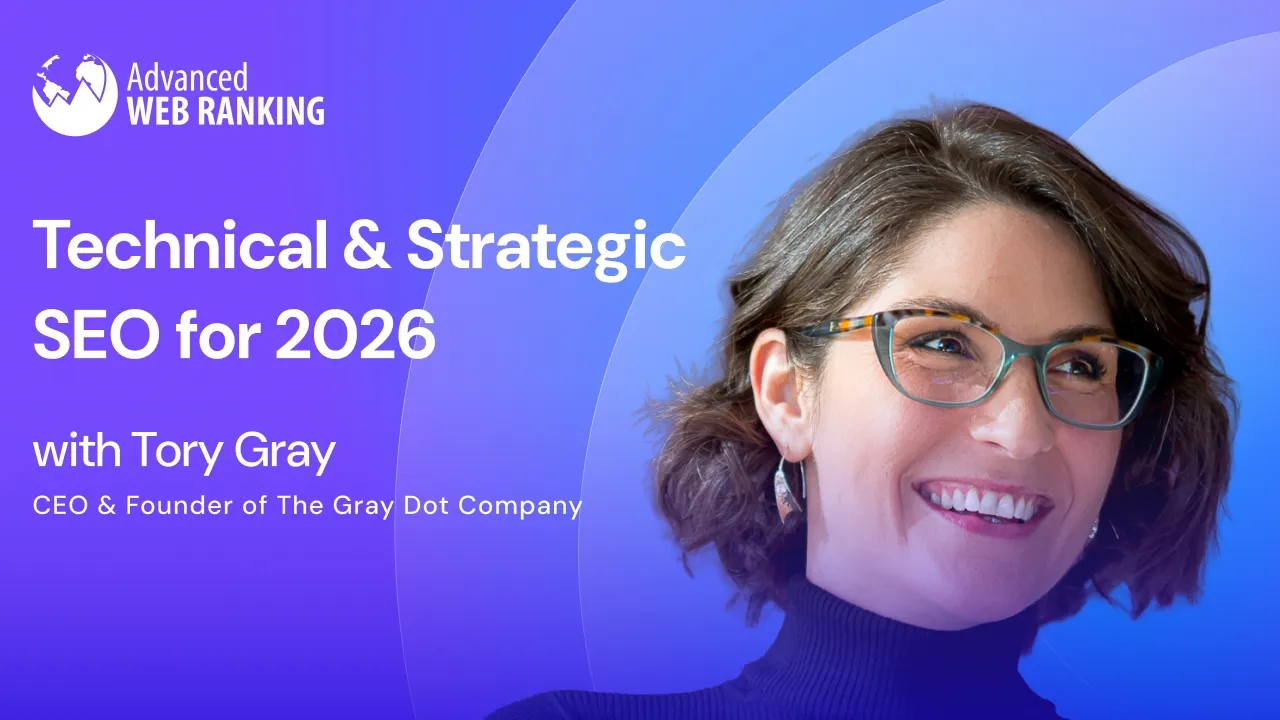
Thanks for joining me for another episode of The Search Session. I’m Gianluca Fiorelli, and for this episode, I sat down with Tory Gray, a technical SEO specializing in enterprise growth. We step back to look at how technical decisions, agency models, and people challenges are evolving together and what that means for the way SEO is practiced today.
In this episode, we dig into:
Navigating this new SEO era: AI disruption, limited visibility, and client uncertainty are pushing agencies to become cross-functional growth partners.
Inter-agency collaboration: omnichannel awareness is driving closer work across agencies for cohesive, brand-aligned results.
Log file analysis: understanding what bots access, how often, and why reveals crawl patterns and their impact.
Organic search strategy shifts: AI results, reduced top-funnel visibility, and changes in user behavior force realistic goals beyond vanity metrics and diversify across other channels.
Entity-based search: Google is prioritizing brands as core entities through branded filters and feature rollouts, reshaping how SEOs work.
From consultancy to agency: how Tory Gray’s drive for collaboration, love of new challenges, and reframing fears around sales and accounting led her beyond solo freelancing to build an agency.
Retaining talent in small agencies: senior, curious teams and shared learning practices help retain excellence and foster continuous learning without the challenges of large‑scale operations.
Bridging the SEO skills gap: Tory sees mentorship as a critical responsibility for senior SEOs to help the next generation grow beyond entry-level roles.
There’s plenty to unpack. Let’s begin.

Tory Gray
CEO and Founder at The Gray Dot Company
Tory is a technical SEO and marketing leader with over a decade of experience working with complex websites and enterprise organizations. Her background spans technical SEO, digital marketing, and consultancy, with a focus on aligning organic growth with real business goals.
In 2017, she founded The Gray Dot Company to provide technical SEO and organic growth consulting for brands and agencies facing complex search and website challenges.
Collaboration and mentorship are central to her work, particularly through her support of the Women in Technical SEO community, and shares her perspective through industry writing and speaking.
Video Chapters
Transcript
Gianluca Fiorelli: Hi, I am Gianluca Fiorelli, and welcome back to The Search Session. Today, our guest comes from Canada, and she’s the CEO of Gray Dot Co, a SEO data and market intelligence company based in Stratford, Ontario. She writes on websites and SEO magazines like Search Engine Land.
She published a wonderful post a few weeks ago about how to really measure and use Google Search Console and other tools to evaluate the impact of SEO efforts. She also collaborates with Women in Tech SEO. So, another great guest of The Search Session is Tory Gray. Hi Tory, how are you doing?
Tory Gray: Wonderful. Thank you for the lovely introduction, and it’s wonderful to be here.
Gianluca Fiorelli: Oh, well, it’s wonderful for me to have you as a guest. So, how is SEO treating you in this crazy year, 2025, and the beginning of 2026?
Tory Gray: Yes, I think like everyone else, SEO is kind of a lot right now. I think we're all in it together as we figure out how it’s evolving—and how it’s not—and how we support that. So, it’s frankly a fascinating time. I’m intrigued by the possibilities of the future, and I still think SEO is quite relevant, from my perspective, whether AI takes off or not.
Our job is to help bots and computers understand, contextualize, and transform information for new contexts, for new users, in new places. We work through the intermediary of a bot to help grow visibility, and I think that remains true no matter what the platform is. It’s been both challenging and invigorating to figure out and learn these new things.
Gianluca Fiorelli: Yes, indeed. I liked it when you said we are the intermediary between the business and the bot, because it reminds me of something that’s been coming up a lot in conversations lately, which is the human in the loop.
In terms of business and digital marketing, we can be considered the humans in the loop between the business and the agents. Especially if we consider LLMs—and not just LLMs—the future of agentic search.
As AI-driven search continues to evolve, it’s now possible to track how these new experiences impact visibility and rankings. Advanced Web Ranking monitors not only traditional search results but also AI Mode, AI Overviews (AIOs), and Brand Visibility in LLMs—giving you a full view of the modern SERP landscape.
Try AWR free and see how your site performs across all these formats.
Agency Life: Guiding Clients Through the AI Frontier
Gianluca Fiorelli: So, as an agency, with your clients, how did you experience 2025 as a year that started with disruption—like, “What can we even do?”—and then moved toward a better assessment of what was happening? Reassuring clients, finding the right way to work. Not forgetting classic SEO, obviously, but also working with this new frontier of AI search.
Tory Gray: I think mostly we're along for the ride with them. At Gray Dot Company, we work primarily with embedded teams—whether that’s engineering teams or SEO teams. They are smart people, in-house, who know their business really well and are deep in the details. But sometimes, they can use help. You know, getting more context from the outside world—as an agency, as someone who sits a bit outside—we have the benefit of seeing how other clients learn and react to things.
We have the benefit of keeping up a bit more with the day-to-day of how things evolve and really marrying that insight that will potentially impact their business. So our job is really to bring them that insight, to help them understand, and to support conversations with themselves and with their bosses—as needed. To set expectations, figuring out how we’re going to measure things in this new world and identify what’s working and where the gaps are.
For instance, what does your business do—and does ChatGPT understand that? Right? I think there are also some very interesting technical barriers. Because we focus a lot on the technical aspects of SEO—we just love that—and AI bots are no exception. There are challenges in how they get and absorb information in order to supply that to the LLM tech.
So we've been focusing a lot on that—experimenting, learning, growing. Helping clients improve their visibility, but also just understand where they are. Because, to some extent, I think we all know this is a black box. There are things we can't know, and we can’t even measure visibility in a predictable way.
And it's innovating every day, and clicks aren't great, right? Like, through these platforms. Though I will say, for some of our bigger brands, I think that's not always the case. It feels a bit like a winner-takes-all. Whoever’s the big Goliath in the room might get a substantial amount of clicks through from LLM providers and less so for anyone else who's not in that first tier. So that's anecdotally interesting data, I think, about where things are going in this world.
Gianluca Fiorelli: Yes, yes. This is something that I also notice with my clients. Somehow, it's a mix of classic online reputation management, so how the LLMs are citing and mentioning you based on the things they know about you. So this can be positive, it can be neutral, it can sometimes be something like you were able to hide right below page two, resurfacing immediately on LLM.
And on the other hand, it's also true what you were saying, because this confirms what I was seeing too. That, yes, in classic SEO— even if I don't really like that definition—it was a game between the 10 blue links. Though on some SERPs, there weren’t even 10. There were 6 or 7. But it’s a game of a few. So it's a really hard game. Maybe in this case, it’s really about understanding the true nature of the business and how to place the brand in the right field of battle, let's say, instead of making the brand fight all the battles.
Instead of, let’s say, if it were SEO—fighting for all the SEO topical sphere, let’s call it the service sphere to the one that really is the USP of the brand. So maybe this is a good way to start gaining traction and then acquiring visibility.
Escaping the SEO Silo: The Shift to Omnichannel
Tory Gray: Absolutely. It is very much based on SEO, and yet there's so much omnichannel marketing involved, and there are so many things outside of SEO.
Gianluca Fiorelli: Yes.
Tory Gray: I think it’s on us to be good cross-functional workers and good collaborators as team members. To explore, you know—whether it’s PR or digital PR, whether it’s affiliate marketing, whether it’s paid search, whether it’s content marketing—and figuring out how to make sure we frame things correctly and showcase the use cases, the edge use cases that will help users show up in the personalization. You know, I think it's such a broad strategic effort. And if we try and think of it as just SEO, in terms of the broader argument of what do we call this new discipline. Like, I don’t care.
But I do care about innovating and exploring, and frankly, making sure that companies understand that it’s not a box I can check by myself. It's us working with your other teams. It's being a great brand. It's being out there in the world. It's having good users who talk about you and being all of these multifaceted things.
Gianluca Fiorelli: Yes. About the name, just a little note. I usually say that I call it whatever the client calls it. I mean, it's not a problem for me. I know what it is, in my opinion, but that’s just my opinion.
Tory Gray: Yes.
Gianluca Fiorelli: I don't want to waste time on semantics, which is quite ironic, talking about semantics. I can even call it Mickey Mouse if the client calls it Mickey Mouse.
Tory Gray: Absolutely.
Gianluca Fiorelli: But yes, you were saying about the renewed importance of omnichannel. Which leads me to this: okay, you as an agency surely cover many aspects, even if you are a senior SEO agency. But how much has the collaboration increased in, maybe let’s say, just a hypothetical situation: your clients work with you as an SEO agency, but also with other agencies for doing things like, I don’t know, email marketing, social media marketing, and so on?
How much has this cross-channel collaboration with other agencies or professionals working with your clients increased because of this need to really work in synergy across channels?
Tory Gray: Great question. I’d say it’s something, frankly, we’ve been working on for several years. And I think the shift is that there’s broader insight into the fact that this is important and meaningful and worth the investment—today, versus how it was historically.
So if people know that’s important, they can invest in it, right? They can take the time to make sure there’s a budget allocated and that they have the right team members in the room to support that collaboration.
My background is that I’ve worked in-house. I’ve been the single SEO running things, running organic growth as a whole, and working directly with engineering, working with product, working with marketing, and the content creation and editorial teams, working with the strategists.
And so that’s always been in my DNA, simply because I was lucky enough to land in an environment where that’s how I learned to do it. And I learned how powerful a community that supports your brand, loves you, and talks about you, can be. How meaningful that is. And how important brand is in today’s SERPs.
Like, I don't think it'll shock most people who work in SEO to realize that brand matters. People will click on listings of brands they're familiar with because they already have an association with them. And that is a core advantage.
And if you're not that brand, you're going to have to take certain other steps in order to articulate that brand and help people know and become aware of—and appreciate and understand—the value propositions of that brand. And you might have to compensate in other areas to make up for that as you're growing and defining those things and evolving over time.
So yes, I mean, in summary, I don't think it's changed tremendously who we're collaborating with. I think it might mean we're doing that somewhat more effectively, with more organizational buy-in, and that’s meaningful.
Technical SEO: Patterns in Server Logs and LLM Bots
Gianluca Fiorelli: Cool. Interesting. I want to return a bit to the topic of technical SEO. You said that Gray Dot Cc, as an agency, is really strong on technical SEO because you like it.
I want to ask you the same question I asked Jamie Indigo in a previous conversation I had with her. A very technical topic that content SEOs usually don’t even consider, which is log analysis. So let’s talk about log analysis of this new generation of bots, including LLMs—both for training and for grounding and so on. What kind of discoveries, let’s call them, have you found when you were analyzing the server logs? And in relation to these kinds of bots, do you discover some kind of patterns, or not? Maybe there are no patterns.
Tory Gray: There are definitely patterns. I love log files. I think they’re super fun. I think they’ve been underrated for years, especially with who we work with, which is typically enterprise orgs. So, when you have enterprise scale and enterprise traffic volume, little tweaks can provide meaningful changes to your performance overall.
So, understanding and measuring logs, determining which pages bots are accessing, which pages are they not accessing, how frequently are they accessing them, which status codes are they hitting when they do that, do those change over time…
Not in terms of crawl budget, or however you want to define that, more in terms of simply crawl optimization. If you have a cap on how much time any bot is willing to spend crawling your site, are you sending the right signals, for example, in your internal linking, about which pages matter to you.
Through the years, we’ve done experiments to alter and update internal linking to make sure we’re sending clear signals. Because sometimes we have 14 case studies but only two service pages, and we link everywhere to all the case studies all the time. So Google is spending 70% of the “crawl budget” crawling these pages that—when we look at analytics—certain case studies matter a lot more to customers than others. So maybe there was an overemphasis on linking to things that weren’t meaningful to users.
So we had a disconnect of what those were. And we could use log file analysis to make tweaks and change links, change access, change the robots.txt file, and make sure bots aren’t getting caught in little snags, steps, and crawl traps that can create issues. Those things have always been true.
In terms of LLMs, I can’t speak to that too much, unfortunately. It’s a little bit proprietary, and it’s something we’re actively exploring. But I’d say some of the things I find most fascinating in this world overall are still what pages are they accessing, and further, which bots are accessing which pages?
So, which different AI bots from which different LLM tools, right? Is it ChatGPT, is it Anthropic Claude, et cetera—like, which bots are accessing which pages, at which frequency? And further, when we have that data—ChatGPT has multiple bots, right?—is it a user accessing your site through a live fetch, or is it an AI bot that’s just collecting data for potentially, you know, future training, and content updates? And so, understanding that data—doing correlation analysis, trying to uncover what the connection is, how that impacts your results—I think, as an industry, we're all actively exploring and understanding that. But I think there’s a lot of juicy stuff to be seen, specifically for logs.
Gianluca Fiorelli: Yes, I do a lot of technical SEO too—but I’m more, because of my personal history, prone to things like ontologies, architecture, content organization, and so on—what I found fascinating when analyzing logs was, okay, let’s see: what are the pages that the LLM insists on, especially when it comes to training—insist to visit, and what are they not? And try to figure out why.
Which is a good way to do a sort of—let’s call it—bot content assessment. An assessment made from the bot. And usually, it’s also interesting to then put all these things—this kind of big spreadsheet—into a Google Doc and then feed it to an LLM, along with your hypotheses, and make it work with you, chat with it.
Which is quite common for me, because being a solo consultant, my sparring partner tends to be either friends—with whom I can always ask things and talk, without citing names, in the privacy of a conversation—or with my fellow Padawan model of a situation, which can be depending on what I want to do, ChatGPT, Claude, or Gemini. Because I also discovered—and I think you did too—that each model is good for one thing specifically, not for everything.
Addressing the "Shrinking Traffic" Dilemma
Gianluca Fiorelli:I imagine that your clients usually ask you, “Okay, we are working to have all this great visibility, but where is my traffic?” How do you explain the shrinking of traffic? Because we usually say, “Okay, traffic is shrinking, but it has better quality, higher intent,” and so on. But this can be good for, let’s say, B2B, B2C, e-commerce, OTAs, travel websites, classified, whatever—brands that have a clear transactional conversion field. But I don’t know if it’s your case, if you have clients in publishing. I mean, this is not a justification for publishers who lived for 20 years on traffic volume. How can you explain that without being depressing somehow?
Tory Gray: I mean, I think being frank and straightforward and honest with people is really important, frankly. A key advantage I have here is that I’m working with teams that already know this. So I’m not bringing them insight—they know they’re losing traffic, and they know they’re not the only ones. I can help contextualize that data and help them understand: how much are they losing? How relative to the benchmarks or what’s shared out there publicly?
We can dive deep into their analytics and understand—if it’s a service business or a product business: Is revenue strong? Are sales and marketing-qualified leads holding strong? And so, can we peel apart these metrics and understand: is traffic shrinking, or are business metrics and results shrinking?
And I don’t want to underpin this. I think sometimes, as an industry, we can be a little bit flippant about what the loss of traffic means to these brands, if I’m honest. How many people are going around chanting on stages right now that “traffic is a vanity metric” and it doesn’t matter? If you are a publisher, you beg to differ.
And frankly, I also think that matters for brands in pipelines. If you don’t have users clicking through to your site, and you’re not answering top-of-funnel questions, if they’re not getting introduced to you as a brand, your brand awareness is shrinking.
So, you know, I do set expectations now that maybe conversions are holding strong now, but we should be diversifying and planning for a future where maybe that’s not the case—because we’ve lost, or at least reduced to some degree, a key means of growing that awareness.
If users are getting the answer from an AI Overview or an AI Mode, and what if our answer is there, but it’s hidden behind different applications of how Google displays that?
I’ve seen that happen. You are the cited, linked, referenced brand, but it’s a gray button with a little link. They never see your name. They don’t know it’s from you. They didn’t click through to your site. You don’t have any sort of tracking information. You can’t show ads to them based on that. You haven’t controlled the user experience to the same degree, or anything.
So again, I think there’s a real issue here of our future conversion rates. And I think we can be a little too shortsighted when we say, “Hey, conversions are strong now.” Will they stay that way? I have my doubts, based on what I’ve seen working with brand teams. But that just means that we can plan accordingly.
If we can have realistic expectations, we can start to understand: Where, in other channels, can we compensate for that? How can we get creative and innovative and support that? And frankly, how can we work to maintain as much traffic and as many conversions as possible? How can we lay the groundwork?
Because I think it’s true that brands and budgets will—and are—shifting, to some degree, away from SEO. But I also think there are plenty of brands that are already driving significant volume and have never put a lot of work into SEO.
So as they lose traffic, they’re wigging out. And they want to figure out what they can do to maintain that traffic for as long as possible while they diversify in other ways. So let’s not pretend that’s not meaningful for many enterprise companies and smaller ones as well.
Next-Gen Search: Google, TikTok & Beyond
Gianluca Fiorelli: True, true, true. And this brings us back to the omnichannel topic. Because if I remember well, on LinkedIn, you were advising about escaping the SEO silo. So that substantially means maybe changing the mindset from SEO as a synonym of Google search. But, like many people, Rand Fishkin included, thinking of SEO as Search Everywhere Optimization. So, optimize for the search experience on every surface where search can be performed.
How did you, as Tory Gray, as someone who loves SEO, but also as an agency, start to explore and act on gaining organic visibility in spaces other than Google? I remember, three years ago, the classic red alert: “TikTok is the new search environment for Gen Z,” data. So, how are you expanding your SEO efforts to these other surfaces?
Tory Gray: So again, because we’re working with these embedded teams, we have the luxury of working with smart people who are innovating in this space. Being an SEO stakeholder and bringing our needs, requirements, and recommendations to the table and, conversely, hearing and understanding theirs.
I think one of the more straightforward ones is really understanding, frankly, what’s always been out there, which is the fact that search is many things. It also involves discovery. And, you know, Google has specific services like Google Discover, obviously, a little on the nose there, right?
Gianluca Fiorelli: Yes.
Tory Gray: For finding things they didn’t specifically seek in the first place, but TikTok is fabulous for that. Whether you’re in your space because you’re following creators who, I don’t know, really love recipes, and then you see new trending recipes.
But let’s not pretend that wasn’t already happening on television, in cooking shows, in magazines, and in all these other places. It’s just brought a greater appreciation that search was never confined to Google.
We can and should be better and smarter about working across the broader marketing experience—the user experience—as people move through the world and discover these things.
If it's TikTok, I think working with advertising teams—whether that’s on TikTok, Reddit, a TV ad, or a digital ad—means creating awareness, creating interest, emphasizing brand needs, showcasing new use cases, and creating curiosity that then turns into searches.
Those might be brand searches, those might be product names your business offers. It could even be a concept associated with your brand. So, for example, maybe you're a new pasta brand—on shelves in supermarkets—and you want people to buy from you, not someone else. Like, what is your use case? What are the applications? What are the delicious ways to consume that?
I think you can share that information on TikTok and then have people look you up—for your brand, or perhaps for your brand plus “pasta.” Isn’t that nice? Because suddenly you have some brand association, and Google is really putting together that this is how people see you—and that people are seeking you. Because Google will want to put you at the top when that happens.
So it’s so much broader—and it’s always been broader—but I think we’re getting in the room more successfully, and can do a better job being strategic, and testing and learning together about how to make that system more effective and return more for the business.
Gianluca Fiorelli: Yes. And that’s maybe the real hidden reason why Google recently started adding the “branded queries” filter in Search Console and also the social media view. Because, I mean, Google was the one who invented the concept of the messy middle. That thing you were saying, the discovery, is what Google defines as the trigger. The trigger is what makes someone want to search for something.
I want to confront my idea with yours. Don’t you think that this new branded query filter, which, if you read the Google documentation, is not just a very sophisticated Regex, but it also presents products that Google considers brands for you? And then the social media view, combined.
Don’t you think this is, in a way, a definitive declaration from Google that we’re really living in the entity space? In everything related to search. Because the brand is an entity, the super-entity of a business.
Tory Gray: Yes, I think Google is very smart and very intentional. I think they’re very good at introducing features that benefit them and their users and tell a story about what they want to be in the world and what they want people to believe, whether that’s true or not in actuality.
You know, they’re ultimately a big corporation, filled with a lot of different people who believe different things and feel different ways. It’s like an ecosystem of people who feel different ways.
So yes, you can think of Google as this huge entity, but also as a lot of disparate people. It’s hard to say exactly which way they’re going. But yes, I do think Google cares about those things. And I also think it’s important, just the context, for us, SEOs.
Because there were plenty of SEOs I saw complaining about the new features, because they want features that are not deployed. And I think it’s just important to remember that we’re not always the target audience.
Gianluca Fiorelli: No, no.
Tory Gray: And Google speaks to many, many, many consumers. And so, it’s ok.
Gianluca Fiorelli: In fact, I just want to make a note. They never created a subdomain like seo.google.com. The SEO subdomain is developers.google.com. If they want to talk to somebody in plain English, they’re surely not talking to SEOs. They can eventually be true developers, the ones creating the apps and businesses. The keyword—the blog for everything search—is speaking to businesses. Businesses, not marketers or technical marketers like SEOs. And usually, yes, there are more things about paid search than organic search or AI search.
Tory Gray: Benefits them.
Gianluca Fiorelli: And historically, Search Console was Webmaster Tools. We’ll never be the true target. They had to invent people to talk to SEOs. And I don’t think it’s a coincidence that those people are not based in the States. They’re in Zurich. All the people who talk to SEOs are not in Mountain View; they’re in Google’s Zurich office.
Top-of-Funnel Strategy in the Age of AI Overviews
Gianluca Fiorelli: And talking about content, there’s one thing that’s really, really driving me crazy lately, which is this: if all the informational content is being used by AI, not just Google, but all the AI models, to create synthetic answers that don’t send us traffic, why should we invest in creating informational content? And I’ll tell you why it's driving me crazy.
Tory Gray: It’s a million-dollar question.
Gianluca Fiorelli: Yes, because I think it’s a myopic way of thinking. We were just talking about the importance of being a brand, but being a brand isn’t just about having a fantastic product.
You also have to prove that you created that product or service—because you understand the pain points of the people you’re targeting with it. And I mean, that’s informational content, substantially.
You have to occupy the discovery part of a search journey. How can you do that without it? I mean, you can try to come out like Steve Jobs, popping up at a convention with a brick and saying, “This is the future.”
But not everybody in the world is Steve Jobs. So what do you think about this dilemma of creating or not creating, occupying or not occupying the top of the funnel, and just concentrating on the commercial part, the middle of the funnel, and the transactional bottom of the funnel?
Tory Gray: Well, it’s funny because I heard an interesting story from my partner, who’s been a developer and a mobile developer for a very long time. He was telling me a story, I think yesterday, about Steve Jobs—that Steve Jobs didn’t have an iPad in his home.
Steve Jobs was not his own target customer. He wanted to sell those into other households, but people didn’t believe him. Reporters asked him, and he said it wasn’t in his house. And for a long time, reporters didn’t believe it. But then—I believe it was the biographer who came out and confirmed it—he really didn’t have an iPad in his house.
They talked about history and philosophy at dinner parties and when he had people over. He was not the target audience.
And so yes, I agree there’s a bit of an existential problem at play here where the powers that be are playing a little bit of a game—because they can. Because they have power and authority, and they can wield it over us. It’s creating this zero-sum-stakes game, where we’re all fighting for a pittance—a tiny piece of an ever-shrinking puzzle. The click-through rates, the links, the references, and the citations in LLMs—they’re minuscule, relatively speaking. And Google's is shrinking. So I think the web is changing.
I also think we, as SEOs, live in a bit of a bubble. I’m not saying adoption of ChatGPT and other LLMs isn’t growing—it is—but I also think we have a viewpoint that maybe makes it feel like it’s everything in the world to everyone right now. When it isn’t to everyone, to your point. Not everyone uses phones. Not everyone uses iPhones. There are exceptions to the rule. Now, if there are enough of those, then that is meaningful.
But I don’t, frankly, unfortunately, have an answer to the existential problem we’re all facing, which is: Who are we doing this? Is it worth it for us to do this? Is it worth it for our businesses to do this? Or do we focus on other means—of visibility, of awareness—because it is changing?
LLMs have this very interesting line to straddle: “We’re going to kill all the jobs, we’re going to kill SaaS, we’re going to put you all out of business—but in the meantime, everyone needs to learn this right now and start acting on it right now, or you’re going to starve tomorrow.”
And so this mentality—this starvation—they are forcing us all into, is a problem. And it might hurt them. It might hurt their growth trajectory.
It might not. I think it depends on how you feel about human nature, the nature of how technology evolves, and how society evolves. But it does feel like there’s this ever-growing chasm of the haves and the have-nots.
I read an excellent article yesterday—dang it, who shared that? I want to give them credit, but it was such a good read about the class privilege that comes from AI optimism and how, in order to be excited about AI, you need to believe you’re part of the class that will benefit. And you will believe that you—and probably your future children—are not part of the class that will not get hired, will not get laid off. You know?
Gianluca Fiorelli: Yes, it’s something that is a more…
Tory Gray: A moral quantity.
Gianluca Fiorelli: Yes. A wider problem. No, no, it’s fine. It’s totally fine. I mean, I would spend hours talking about these things.
And I also think that it’s a defensive way of thinking. I mean, let’s say there are two groups of people. The ones I call the AI bros—the ones who want to speculate on the bubble of AI as much as they can, like in the early 2000s, when the SEO bros were speculating before, let’s say, the Florida update, to earn as much money as possible.
And then there are people who really believe that there is a change. Because I think this change of behavior, for instance, in search, was already there.
Tory Gray: Exactly, I very much agree. It might be accelerating it.
Gianluca Fiorelli: Yes, AI is just igniting it with turbo velocity.
Tory Gray: It’s forcing us enough to pay attention.
Gianluca Fiorelli: Yes, and so I think the people who were already aware of this change had already created some defensive or proactive ways to deal with it. And these are the ones who think in terms of positivity, and not in terms of “SEO is going to be replaced by AI,” for instance.
Then there are the classic SEOs, who are still working and thinking in SEO terms as the 10 blue links, keyword targeting, and very basic stuff.
Tory Gray: Vintage SEO.
Gianluca Fiorelli: Yes. Well, more vintage in terms of gears, more in terms of mentality. The ones who are SEOs because they just read three blog posts and did a short online course about SEO. This is a problem that has always existed in our industry.
Tory Gray: Because that’s where we all start.
Gianluca Fiorelli: Yes. But the problem is that so many of these people never did what we did, which is break websites. Hopefully not client websites—but doing experimentation. Which is something that, as you were saying, we’re starting—or restarting—to do, especially now with these changes.
I always cite the case of Duane Forrester. Duane Forrester is a wonderful man, but he was really silent. And all of a sudden, he started writing Substack posts, being present on LinkedIn, and being a voice about all these changes. He even published a book. So people like this are kind of models for positive thinking about AI.
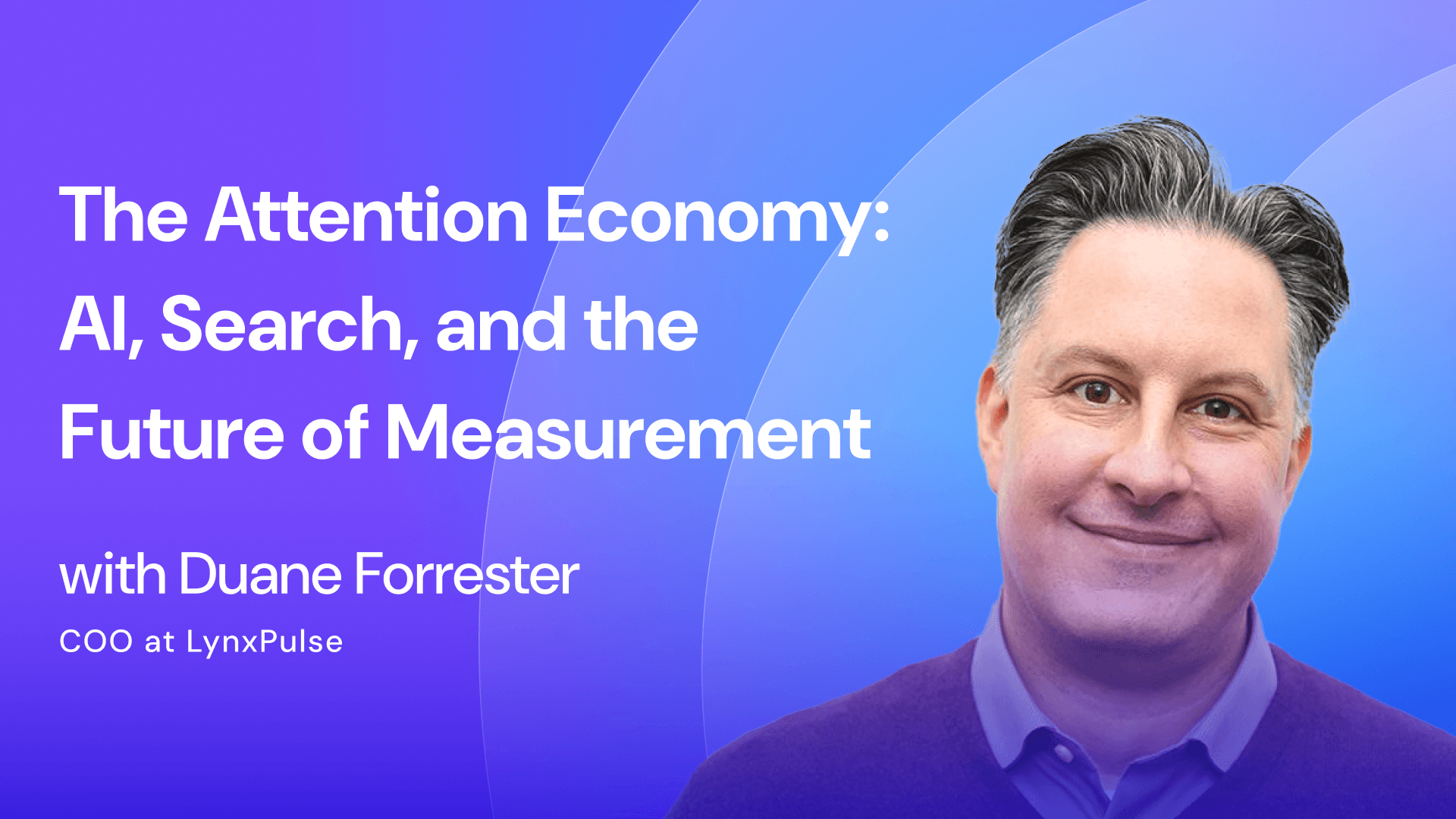
Want to hear more from Duane Forrester?
In this episode of The Search Session, he shares his perspective on how AI is reshaping search, measurement, and attention—covering everything from metrics and first-party data to the future of advertising.
And so I think there’s this kind of differentiation. It’s like during the Industrial Revolution in the early 19th century—on one side, you had the positivists thinking about the bright future of technology, and on the other, the Luddites, who had every reason to try to destroy the machines. So we’re in that moment.
Tory Gray: Yes.
Gianluca Fiorelli: You were saying the models that Google has for AI in search are AI Overview and AI Mode. They are trying to test AI Mode to see how it highlights links, the source links.
But did you see—did you test—or are you testing Web Guide? Because Google has really pushed, softly, the Web Guide as a test in the main search over the last few weeks. Have you had the opportunity to see it or test it? What’s your opinion?
Tory Gray: That particular one? Not yet. We’ve been focused on some other big ones that we’re closing up for the end of the year, so I can’t speak to that one, unfortunately.
Career Evolution: From Freelancer to Agency Founder
Gianluca Fiorelli: Okay, so let’s talk about something else. Because somehow, I think our careers in SEO are similar—up until a certain point.
You were, for many years, like me, a consultant. But then you decided to create your own company, which is something I also had in the past. That moment of thinking, “Okay, maybe it’s time for me to expand, to create—even if it’s small—my own SEO agency. Just to better serve people, better serve my clients, have people helping me,” and so on.
But then, knowing myself—for my own mental health—I decided not to do it, because I would’ve felt the responsibility too much. So what, instead, made you jump the shark and go from freelancer to successful freelancer, to the world of running an agency?
Tory Gray: Such a good question. I think there are a few different pieces here. A lot of it was fundamentally driven by what I’m good at and what I care about. So—as Simon Sinek says—go back to the “why.” My personal “why” is that I love working on interesting projects and learning new things with people I care about.
I simply love working as a member of a team. I think I’m better, smarter, and more helpful in collaboration than I am in isolation. Yes, there are costs to that. Yes, there’s stress. Yes, there’s infrastructure. Yes, there are things I have to sustain and maintain. There are costs to that, certainly.
But to me, those have been really worthwhile things, because it also means I get to collaborate in a more meaningful and ongoing way with people I can learn from, grow from, and enjoy working with. I think it also stems from the fact that I just like tackling new challenges. I want to try new things.
When I was a freelancer, and I first went out, I was convinced I was going to be bad at sales. I was convinced I was going to be bad at accounting, as most women do, unfortunately, have this mindset. Because, for whatever societal reason, I think we’ve often been told that we just are. And it’s uncomfortable, right? How can you do sales if you’re worried about people liking you and being nice, and all these things that are expected of us?
But as it turns out, if I framed sales to myself as, “I don’t need to sell you. I just need to tell you what I’m good at and what I’m not good at, and help you make a good decision for yourself, if I can help you.” And when I frame it that way—me helping them, even if the solution doesn’t end up being me—then I feel like I’m being a good steward of their time and budget.
And accounting-wise—who knew? When you’re tracking your own numbers, and you’re up 36% quarter over quarter, suddenly, I really liked maintaining my own books. And as the company has evolved and grown, there are always new challenges to sit down and figure out each time, and that’s been really fascinating to me.
So I don’t maintain our books at this point, because I got them to a place where I knew how to do it, I knew how to stay on top of it, and we were big enough that it made sense for me to take on new and interesting problems, so I could pay someone else to do that for me.
Gianluca Fiorelli: Yes.
Tory Gray: So now I feel informed and on top of it and I don’t have to maintain it. It’s the best of both worlds. I just like that sort of cyclical process: there’s a new challenge, I have to figure out how to solve it, and then I go on to the next one, sometimes. I think being at this stage enables me to do that thing that I love to do.
Gianluca Fiorelli: Yes, true. Interesting. And one question, obviously from the outside. I mean, as I was telling you before, off the record, I worked in television. And when I was working in television, I had a big team under me. I wasn’t the boss; I was the leader of a team, which is very different.
But since then, I’ve always worked solo. So my knowledge of the agency world is more from the outside, with a different perspective, but also as a judge in many global Search Awards and European Search Awards, and so on.
And when I look at entries for Best Agency or Best Small Agency, one constant thing that always comes up is the challenge of how to retain excellence inside the agency.
Because in our world, especially in digital marketing, but even more in SEO, the turnover is very high, very frequent. So, how to make people stay? Especially the excellence inside your agency—how do you keep them from leaving after a few years? Maybe to start their own agency. Maybe to go solo. Maybe to go in-house. Or even worse, maybe to your competitor agency. Do you, as an agency owner, prioritize this aspect of agency life?
Tory Gray: I’d say, frankly, we have an easier time of this because we’re small; we don’t have scale.
Gianluca Fiorelli: Yes.
Tory Gray: We work primarily with senior people who have learned this, who are curious, and who keep up on news because it's interesting and fascinating and because they're personally passionate about it. And so I think it comes naturally to me and my team. And it doesn't have to scale because we are not big, and we can share that.
And so I don't have necessarily answers for you—I mean, other than, like, I have worked at other agencies, I have supported that, I have trained people and educated people. You know, I've seen and worked as a part of companies where, you know, they have monthly meetings, for example. So if someone really is just great at the innovation and the learning piece, they can lead a session about, like, “Here’s the news that’s relevant and updated. Here are the things you need to know.”
Because not everyone wants to do that. Some people are really focused on, say, experimentation and being super excellent at that, which probably means you're not in the day-to-day of every new step in evolution, or, you know, whatever it is. Maybe it’s in the details of content, maybe it’s getting great at brand. And so you're not on the up-and-up on what technical SEO is.
So I think building in, prioritizing it, caring about it, and building in processes in order to do that and leveraging the people on your team that are good at that, to bring that insight to people, I think that's how you accomplish that at scale.
Mentorship and the Human DNA of SEO
Gianluca Fiorelli: Yes, great. Thank you, it's interesting what you said. And somehow it's maybe a big jump, but I don't think it's a big jump because I want to connect these things that you have just said with something that I cited when introducing you. You are really involved with Women in Tech SEO as a mentor.
Tory Gray: Yes
Gianluca Fiorelli: Which is somehow connected to what you have already said, somehow. So independently from the organization, in your case, Women in Tech, how important is it for a senior SEO to have a mentor mentality in order to educate the younger generation?
We usually say that you can learn from failures, but I mean, there are some kinds of mistakes that we can also teach people not to commit. So this is to mentor this younger generation to learn in the correct way. How important and how rewarding is it in your case?
Tory Gray: It's almost hard to say, because I think it is so inherently built into my DNA. I mean, I think because of my learning and growing experience. I come from the startup world where there's a lot of like sink or swim, push you in the pool and see what happens, like “She'll figure it out or she won't.” And so that was a frustrating experience for me. And I spent too long kind of beating my head against the wall and just trying to invent things. And that, you know, was not bad— I learned from that, I grew from that, and I was able to succeed in that environment. But that doesn't mean that's what I think is the good or right or best or, frankly, most effective way for people to learn.
So that felt important to me, to help people grow. And so I personally really focus on that. You know, I think there's a lot of amazing content on the internet for helping people learn SEO. So, beyond the use case you were mentioning earlier—you read three blogs and you took a course, and now you're an expert—I think there are plenty of people who are two, three, four years into their career. They're learning about the different facets. Maybe they're specializing in this thing versus another.
And there's just more content, there's more information available for entry-level SEO. There is much less available for people moving from beginner to intermediate, and then subsequently from intermediate to senior, and then I'd even say from senior to like developer level of expertise. Because I don't think SEOs need to be developers.
Can you synthesize, can you use, and can you understand that context? So that's where I personally enjoy, because that's where I had pain, and I want to help people make that with less pain—that transition. Right? And so I do think it's critically important, and frankly, I think it's going to be more and more critically important over time, thanks to AI. Because what's not happening is, you know, should the news stories be true—if juniors aren't getting hired—where is our next cohort of intermediate and senior-level people? Where are they going to come from? Someone's gonna need to train them.
Gianluca Fiorelli: Well, maybe we’re going to—just to put it as a joke—in the classic job posting meme: “We are looking for an SEO with, let’s say, 20 years, but with 10 years of experience.” This kind of absurd situation. But I really, really, really like when you were pointing out about mentorship being especially important for the changing moment in someone's career. Because yes, everybody can learn how to start in SEO, but when they want to decide, “What do I want to be when I grow as an SEO?”—that is important. Because it’s also a life-changing, somehow, the decision that someone can have.
Because one can maybe say, “Okay, let’s go all in on local search,” and then discover local search is not for them. Or, “Let’s go with this kind of specialization,” or “Let’s go broader—not really specialize in anything, go with strategic SEO, growth.” So this is something that is going to determine you as a worker, a professional, and also you as a person, in terms of how you are able to combine the satisfaction of the work you do with the satisfaction and felicity you have in your own life.
Tory Gray: Yes. I very much agree.
Gianluca Fiorelli: Because nothing is sadder than doing a job that you don’t like, but not having the opportunity to reframe yourself or not knowing how to reframe yourself from that first mistake you made, because you had no one counseling you about the decision. I think that’s really important. This is maybe sometimes the thing that, when we talk about mentorship, is somehow not ignored, but not considered the most important thing.
Tory Gray: Yes, at the end of the day, we’re all learning.
Gianluca Fiorelli: Well, yes.
Tory Gray: I’m also a mentee sometimes, right? Like, we all need context. We all need a broader point of view. We all need to grow in this or that way and why not help each other along?
Gianluca Fiorelli: Yes, as Socrates was saying, “I know that I know nothing.” But anybody having me as a contact on LinkedIn can see that sometimes I comment as if I were the newbie of the world, I don’t know, let’s say something super technical that someone like, for instance, Dan Petrovic is sharing—what he’s testing in AI models and so on.
And I ask questions as if I were a 13-year-old SEO just starting the job in that moment, because I don’t understand anything of what he says. So I need him to please explain it to me as if I were a total ignorant, because I am.
Tory Gray: I think that’s a superpower, honestly. To be able to be vulnerable to ask those questions, because I think they’re important. And I think there are a lot more people who don’t know those things than are willing to admit. So being a model…
Gianluca Fiorelli: Well, I don’t do it because I want to be a model, but if it also has that effect, I’m happy. But sincerely, I do it because I’m reinventing many things. I’m really, really open to learning from anyone, everything.
And if I have to give a suggestion to all the people listening and watching us, don’t frame yourself only into SEO knowledge and marketing knowledge. Start to discover other fields of knowledge, because everything returns, also in your job, in your mental framework when you’re working.
Personal Growth and New Horizons
Gianluca Fiorelli: So, one hour! Let’s stop talking about SEO. Let’s just do a last question about you. Before, when we were preparing this episode, I was saying to you—it seems, from what I see—you’ve lived in many places. So I wanted to ask you out of curiosity: What do you take home as your best memory? Memory, but also affection about the places you’ve lived during your sort of pilgrimage between one coast and the other, from the north to the south of North America?
Tory Gray: Fascinating question. I’ve really enjoyed the opportunity to meet new people, because there are places I fit in more than other places, just like anyone else. And that has given me, frankly, a lot of comfort and joy to know that sometimes you're stuck because you're stuck—and maybe you can find new places where you belong. And maybe you do have value that you don't understand.
I think it's also been an interesting opportunity to learn and grow within myself, reinvent myself each time, and decide what's important to me, and to break bad habits. Because it can be hard to break habits when people expect you to be a certain way because you've always been that way. So when you're ready to learn and grow, it can be a really powerful way to reset and be free to become who you want to be next.
And I’ve been fortunate to live in several places. And there are downsides to that too, frankly. Because then I have friends in all sorts of different places that are, you know, time and effort—and worth it, don’t get me wrong—to keep up with. But I have to do that each time.
So, like, building my community, building my people that feel close and I can do that digitally, and I can do that online, but there’s really nothing that can replace someone to go get a beer with and complain to when you need to.
Gianluca Fiorelli: Yes.
Tory Gray: Like, that's such a human need. And I think it's important to balance both. But I've had a lot of joy and experience in learning from all the different places I've been fortunate to be.
Gianluca Fiorelli: Cool. Nice, nice. Thank you, Tory. It was a real pleasure to spend one hour conversing with you. I'm hoping in the future to have a new conversation, and let's see what AI brings to us.
Tory Gray: Yes.
Gianluca Fiorelli: Okay, thank you again, Tory. And thank you to all of you people for being our guests too. Remember to ring the bell—you know, this is the influencer moment—and subscribe to the channel to help us grow and to be notified when another fantastic episode of The Search Session is going to be broadcast. Take care and ciao, ciao!

Podcast Host
Gianluca Fiorelli
With almost 20 years of experience in web marketing, Gianluca Fiorelli is a Strategic and International SEO Consultant who helps businesses improve their visibility and performance on organic search. Gianluca collaborated with clients from various industries and regions, such as Glassdoor, Idealista, Rastreator.com, Outsystems, Chess.com, SIXT Ride, Vegetables by Bayer, Visit California, Gamepix, James Edition and many others.
A very active member of the SEO community, Gianluca daily shares his insights and best practices on SEO, content, Search marketing strategy and the evolution of Search on social media channels such as X, Bluesky and LinkedIn and through the blog on his website: IloveSEO.net.