
The Search Session Advent ·
2 December
Why traditional search is as valuable as ever

Eli Schwartz
Author of Product Led SEO and Growth Consultant
Why Eli’s idea matters
When some people start asking ChatGPT or Google AI Mode instead of searching Google, it is easy to tell a client that Google rankings matter less now. Your client hears that and starts to wonder whether paying for SEO is still worth it.
Eli argues the opposite. The people who still click a Google result have typed a search and chosen to visit a website instead of reading an AI answer. There are fewer of these clicks now, so each one is worth more to your client’s business.
That means you need to see two things in one report: where your client ranks on Google for a keyword like “accounting software for freelancers”, and whether Google’s AI Overview links to the same page when it answers that search. If these numbers sit in two different tools, you will spend the client meeting arguing about which one is right.
Put Eli’s idea into practice
Try with AWR
Check whether the AI Overview uses the pages that rank
Using AWR’s Keyword Ranking report
Step 1
Make sure your project tracks a Google AIO or Universal search engine. Then open the Keyword Ranking report and look at the AI vs Organic Overlap card.

The card shows the percentage of keywords where your client’s page is both in Google’s top 10 and listed as a source in the AI Overview, counting only keywords where the AI Overview lists at least one source.
Step 2
Scroll down to the keyword table. The AI vs Organic Overlap column shows the result for each keyword:
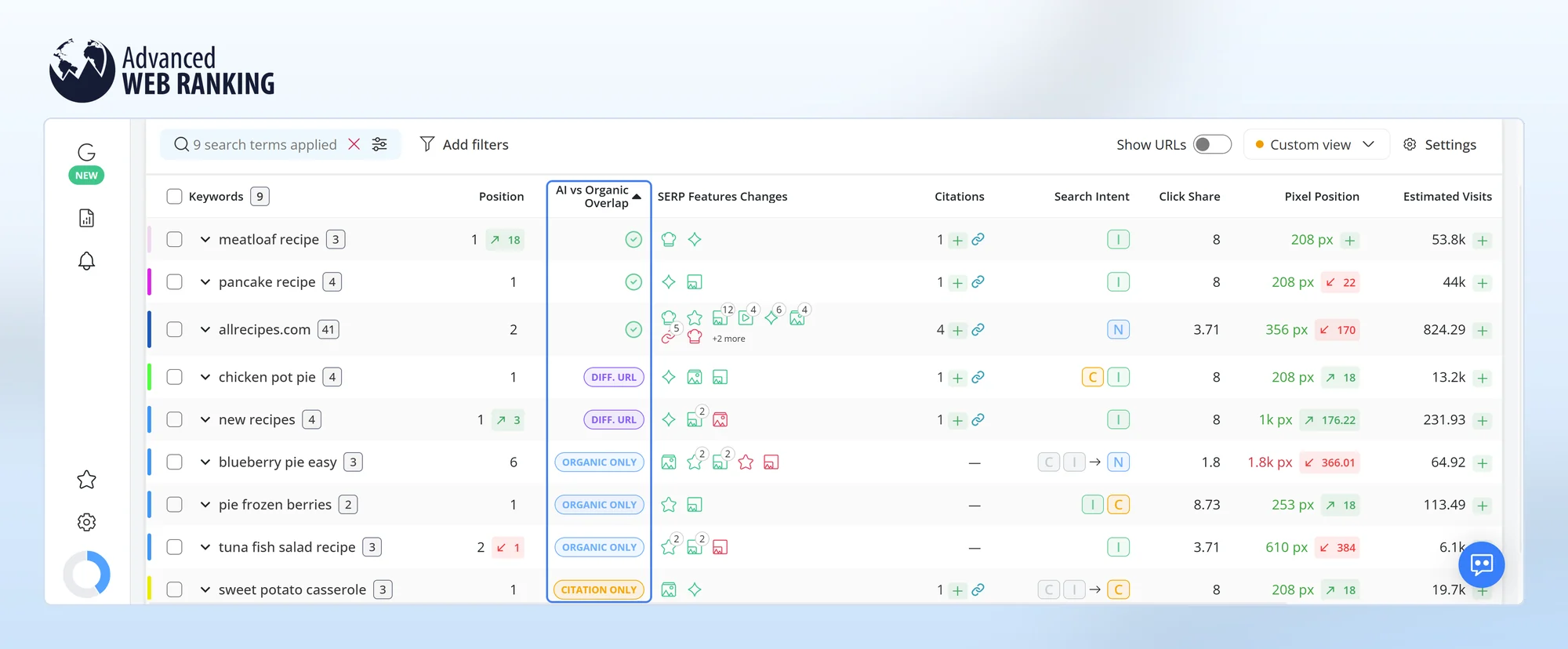
Both (a green checkmark): the page that ranks on Google is also a source in the AI Overview.
Step 3
Citation only: the AI Overview uses your client’s page, but the page is not in Google’s top 10.
Step 4
Diff. URL: the AI Overview uses a different page on your client’s site.
Step 5
Organic only: the page ranks, but the AI Overview uses other websites.
Step 6
Filter to Organic only and Diff. URL to see the keywords to work on first. For Organic only, the content is usually not in the format the AI Overview uses.

For Diff. URL, hover over the label to see both pages, then decide whether to merge them or link them to each other.

Step 7
Click the AI vs Organic Overlap KPI card to view how AI Overview citations and organic rankings change over time.
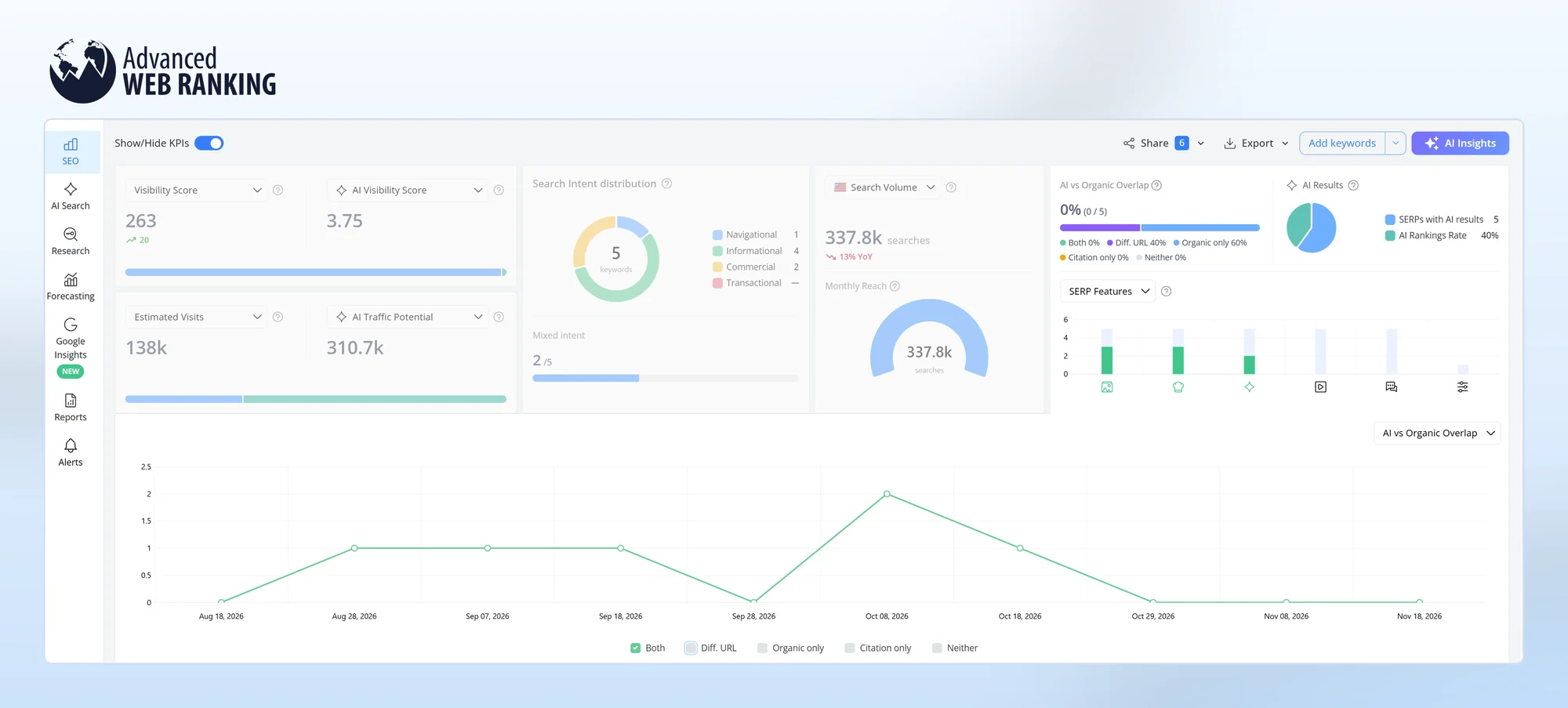
If the “Both” category decreases while organic rankings remain stable, it may indicate that AI Overviews are citing your client’s pages less frequently, signaling when to investigate and take action.
Learn more here: AI vs Organic Overlap: see whether your organic rankings feed your AI visibility
More from Eli
This idea is a small taste of what Eli Schwartz brings to search. The full conversation with Gianluca Fiorelli is worth hearing, and Eli’s work is worth following.
← Back to the calendar