


Welcome back to a new year of The Search Session episodes. I’m Gianluca Fiorelli, and we’re starting with a fresh conversation with John Shehata, an audience growth consultant and one of the leading experts in news SEO. We explore how visibility is shifting globally, why news SEO plays by different rules, and what publishers need to rethink as Google, AI Overviews, and creators reshape discovery.
What we talk about:
Global gaps in SEO knowledge: reframing access and visibility through VisiSummit to serve overlooked professionals in the Middle East and Asia, where traditional events rarely reach.
The unique appeal of news SEO: how real-time impact and the immediacy of paid media blends with long-term SEO strategy.
AI Overviews and news visibility: why they represent the real threat to publishers, and how tracking their presence by content section helps measure impact and guide editorial decisions.
Google Discover’s growing influence: how it became a major traffic driver for publishers, and why AI Overviews add new risk to an already fragile ecosystem.
Beyond single-channel SEO: adopting a multi-format content strategy that extends the reach of core journalism across platforms.
When the creator economy meets the newsroom: empowering journalists as creators to build trust, loyalty, and audience connection in a people-first media landscape.
To block or not to block AI: distinguishing between training bots and live crawlers, and why collective action matters to protect content value.
The future of news SEO in 2026: balancing AI-driven workflow gains with job displacement risks and content regulation needs.
Settle in and enjoy the conversation, just as we did.
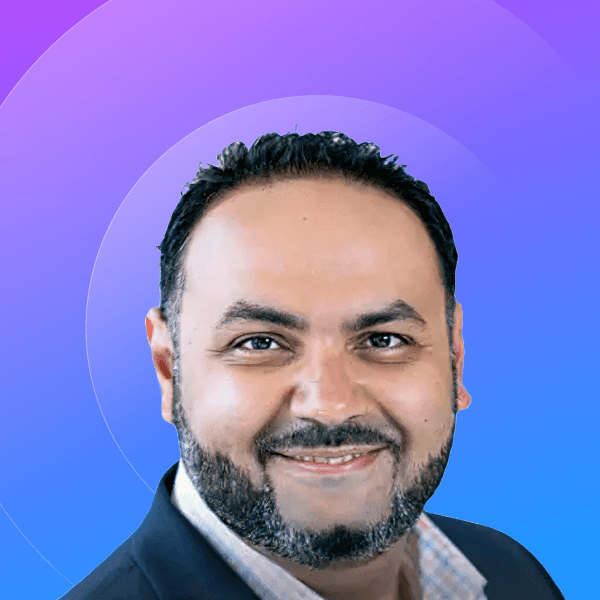
John Shehata is a veteran news SEO and digital marketing expert with 25+ years of experience. He founded NewzDash in 2014, a platform designed to support newsroom SEO at scale. In 2022, he launched GDdash to help news SEOs and editorial teams improve visibility across Google News and Google Discover.
Before founding his own companies, John held senior audience development and SEO leadership roles at Condé Nast and Disney Entertainment, where he led search, social, and audience growth strategies for major global media brands.
In 2021, John founded the News and Editorial SEO Summit, the first global event dedicated to news and editorial SEO. He is a regular industry speaker, sharing insights on news SEO, Google Discover, AI in publishing, and audience growth.
Video Chapters
Transcript
Gianluca Fiorelli: Hi, I’m Gianluca Fiorelli, and welcome back to The Search Session. Today, we're going to talk with someone you probably associate with news and SEO, but he hasn't worked only in news. He has a long professional career and, like everybody else, especially at the beginning, has worked in any kind of industry.
He’s the CEO and founder of NewzDash and GDdash, which is a wonderful tool. I highly recommend it to you. He's also the founder of NESS, the News and Editorial SEO Summit. In the past, he’s worked for Condé Nast and Disney.
This person is truly wonderful, and his name is John Shehata. How are you doing?
John Shehata: Hi Gianluca, how are you?
Building SEO Events Beyond the Usual Hubs
Gianluca Fiorelli: I’m fine. Apart from NESS, I know you’re very active organizing stuff around the world, like conferences, and I’m really bad with names, but I know you also organized something in Dubai?
John Shehata: Yes, the VisiSummit.
Gianluca Fiorelli: I like the idea of how you're organizing it, because when you go to the event's landing page, it’s not just like, “Hey, we’re doing an event in Dubai, so all the people from the ‘civilized world,’ like the US and Europe, and so on, can go have fun in Dubai.” No. What I like is that it’s meant for people who usually don't go to events there, because maybe events aren’t even organized.
John Shehata: Yes.
Gianluca Fiorelli: To see the people working in the industry. And I think that’s a wonderful idea, because it reminds me a lot of the event I did in the past, The Inbounder.
John Shehata: Yes.
Gianluca Fiorelli: It was meant to be an event that brought people you’d normally have to go to the US or the UK to see, right here to Spain. It was for all the people, but especially for those in the Mediterranean countries. It was meant for people from Spain and also attendees from Italy, from Greece—from the Mediterranean—not just the classic Central Europe. There were also a lot of attendees from the UK, because UK folks love to come and spend time in Spain.
And I liked it because I think it’s a very remarkable idea. It’s also a remarkable way to expand ‘good SEO’, especially into new geographies where SEO has always been done. But maybe, because of this distance, it wasn’t really the ‘good SEO’, the kind of SEO that people really need to be doing.
John Shehata: Yes. Since I started, I have had a lot of people help me in my early career. I was a junior SEO, and I didn’t have much confidence in coming and presenting. But I had great managers who helped me and sent me to conferences. And then, if you remember, SES was a huge conference back then.
Stephan Spencer was like, “Hey John, you have to speak to Chris, the organizer,” and they pushed me to speak. And I felt that, because of all this help and people sharing their knowledge at these conferences and helping me, I always felt like that was the greatest value I received. I wanted to share more knowledge with people who may not have easy access to it.
So throughout my career, at Disney, Condé Nast, and so on, one of my biggest goals was always, “How can I improve people’s careers? How can I empower them with more knowledge?”
And when I left Condé Nast, I had a hundred people on my team. One of the things I was most thankful for was being able to empower all those team members.
At Disney, we organized internal conferences for all the Disney marketing employees. We brought in top speakers from outside and everything. So I carried this whole idea and those values with me after I left in-house and became a solo entrepreneur.
It started with NESS, the News and Editorial SEO Summit, a conference I’d wanted to do for the longest time. But every time I went to the big conferences and said, “Hey, we want to do a conference focused on news SEO,” the response was always, “Nah, it’s too small. It’s not big enough.”
Gianluca Fiorelli: Too niche, yes.
John Shehata: Very niche. Exactly, right? So I finally decided, “You know what, I'm going to fund this conference out of my own pocket. And even if I lose money, it's okay, but let's just bring the community together.”
So I reached out to Barry Adams and said, “Hey, I have this idea. I’m funding it. Would you like to help me organize it?” And he said, “Oh yes, I love it! I really want to do this with you.”
So we put it together, and I think we were expecting 50 people at our first conference. If we could get 50 people to attend this one- or two-day event—we had seven speakers the first time—that would be an amazing success. But we got, like, 400 people! It was a real community here. And then, last October, we held our fifth edition of the conference, with 500 attendees.
So sharing knowledge, especially if you make it affordable and accessible—that’s why I do it virtually. And we had people from 55 countries attending, and that’s amazing.
Gianluca Fiorelli: Yes.
John Shehata: And this is where the idea came from for the VisiSummit. Visibility Summit, or I call it VisiSummit. There are a lot of SEO conferences in the United States, right? There are great conferences in Europe. But when you come to this area—the Middle East—and I’m originally from Egypt—there aren’t many speakers from around the world who come here to share their knowledge.
So I said, “Okay, what if I can bring top speakers from all over the world?” We had Aleyda Solís from Spain, Mike King from the US, Cindy Krum from the US, and Bastian Grimm from Germany. Jes Scholz and Dan Petrovic from Australia. And Bart Czerniakowski from Poland. Right? So let’s bring all these amazing people into one place and see how it goes.
So I said, “Okay, Dubai, it’s the center. We can reach the Middle East, and we can reach parts of Asia”. We had people coming to the conference from Japan, which was a surprise to me, and from India. So that’s the whole idea: just making sure we share knowledge in an affordable, accessible way.
Gianluca Fiorelli: Yes. Sharing may be a stereotype, but “sharing is caring.” Remember the plugin?
And I think that sharing and caring slowly lead us into the topic of SEO. It's also the way brands can have a positive impact, not just for their own benefit, but also for the benefit of their customers.
Why News SEO Is Different: Speed, Scale, and Impact
Gianluca Fiorelli: And I have just one question before we go deeper into your story in SEO. What made you fall in love with news SEO?
John Shehata: Sure. I know it’s a crazy story, but I didn’t start out as an SEO, right? I actually started as a pharmacist. I had one year left to graduate as a pharmacist, and then I woke up one day and said, “I really hate chemistry. I don’t know why I’m doing this.”
So I switched my major in college and went into computer science. I became a software engineer and joined an agency where I was developing apps for the marketing and SEO teams.
I was like, “Wow, this is amazing. What is this SEO?” This was back in the days of AltaVista, Yahoo Directory, Lycos, and so on. And then, slowly, I fell in love with SEO. So I moved from coding to actually doing SEO.
My first in-house job in SEO was at a news organization. It was a group of local newspapers, around 35 sites. And I started falling in love with it more and more, because news SEO is this hybrid thing between SEO and PPC.
With PPC, you see immediate results. You launch an ad, and you see the results. With SEO, it’s more about problem-solving and optimizing a lot of different things.
But news sits right in the middle. You can work on news in real time and see the results of your work within minutes. You don’t have to wait three or four months to see the results.
Gianluca Fiorelli: Yes, that's actually true. If we think about it, what’s the most important thing for a newspaper? To be the first result people see when they search for breaking news.
John Shehata: Yes.
Gianluca Fiorelli: And then, obviously, there’s also the Discover universe, where it’s all about always being in the stream for a user, depending on their interests. So yes, totally true. I never thought about this substantial hybrid nature of news SEO, between SEO in nature but PPC in practice. Very cool. I really like that.
John Shehata: It’s like PPC and speed, right?
Gianluca Fiorelli: Yes, yes.
John Shehata: You do your work and can see it right away. We optimize this, or we change the headline, and we see the results immediately. That’s the beauty of news SEO specifically.
Measuring the Real Impact of AI Overviews on News
Gianluca Fiorelli: And lately—obviously, like everybody else—during this year 2025, with the explosion of AI, especially AI Overviews first on Google, but then also with the new models of ChatGPT, the introduction of AI Mode, and Perplexity. Less Claude, because it’s more niche and, in some cases, more for coders.
John Shehata: Yes, it’s focused more on coding.
Gianluca Fiorelli: It’s a wonderful tool for working, more than for searching. So, how has the evolution of the perception of AI's impact on the news industry been?
From the moment AI Overviews became an official feature in search, to now, after all these months. How has the perception changed, if it has changed?
John Shehata: Yes, I think I need to start by saying that news and technology, or news organizations and technology, have always had kind of a love-hate relationship, right?
If you go back in time, when there were newspapers, and the web started, some news organizations actually claimed the web was just a fad. I think it was the Daily Mail that did that, saying that it’s just going to go away, and we should just focus more on newsprint and all that stuff.
So it took them some time to say, “Okay, let’s jump on the wagon”. And then, when classifieds became free with Craigslist, they were so upset because a lot of revenue was lost. And when bloggers started sharing news and their own blogs that weren’t like professional journalists, they didn’t like that either. The same thing happened with radio, TV, and all these different platforms, right?
I think newspapers now recognize that this is a pivotal moment. This is not like any other moment in time. You have news organizations that fall somewhere in between the spectrum. On one end: “This is really dangerous to our business and revenue models, and we have to fight it and not accommodate it.” And on the other end: “Okay, let’s go all in.”
And I think that’s more on the SEO side. “Let’s go all in. Let’s change the name of SEO. Let’s call it whatever name we want.” So you really have these two extremes.
How do SEOs in general deal with AI? When it comes to AI Overviews and AI platforms, I’m more concerned about AI Overviews than ChatGPT, for example. We’re seeing that with ChatGPT, most people go there task-oriented, looking for information, and so on. And I think a recent study said that less than, maybe 5% of users actually search for or look for news using AI platforms.
And I think there’s another study by SimilarWeb, which said that 95% of all users who use ChatGPT are still using Google. So it’s not like ChatGPT has taken market share away from Google, right?
So I’m less concerned about ChatGPT when it comes to news than I am about AI Overviews. Because AI Overviews come before the news box or the Top Stories. And it’s on the platform that people are actually using to search for news.
Now, there are a lot of characteristics and triggers that will trigger AI Overviews. But I think for me and for most news organizations, the first step is to start tracking AIOs, to understand how they function, when they are triggered, and what the impact is.
That’s really the first step in all this: tracking them so we can understand how AI Overviews affect news a little bit more.
Gianluca Fiorelli: Yes. I think you’re right. If the Top Stories box is pushed down and people click on the expand button in the AI Overview, they may become unaware of the news box and scroll down or swipe through multiple pages.
John Shehata: Yes, especially on mobile.
Gianluca Fiorelli: Yes, because sometimes we still think in terms of indexability, but we should always be thinking, first and foremost, about the mobile experience.
And yes, I think it’s right. And I talked about this a few months ago with Barry Adams, when AI Mode was just starting. He said, “Yes, I’m more worried about AI Overviews than AI Mode, because AI Mode is more conversational.”
Inside the Future of News SEO with Barry Adams
To dive deeper into what the rise of AI Mode means for publishers, check out the episode featuring the SEO veteran, Barry Adams. It’s an engaging conversation about how AI Mode could reshape news search, why Google Discover might matter more than ever, and what it will take for publishers to stay competitive in a shrinking news ecosystem.
Gianluca Fiorelli: I know you’ve done studies on this, so how are news results treated inside the AI Overviews?
John Shehata: Yes, we did a couple of studies, and I recently shared one as well, the updated data in NESS. And I don’t know if any of you will be in London, but we’ll be sharing more updated data in a couple of days, on December 2nd, if you’re there.
So, it really depends on the news section. But let me explain how we track the data first, because I think that makes a huge difference.
We track all the trending news queries in whatever market—U.S., Spain, or the UK, right? And we track these trending news queries every 15 minutes. For every trending news query, we track the rankings—who is ranking in the SERPs, in the news box, in organic, Perspectives, People Also Ask, and AI Overviews.
We noticed that the visibility of the frequency of AI Overviews appearing above the news box or Top Stories differs drastically depending on the news section. Just to give you an idea, in the U.S., for major breaking news—any trending news that’s really big, that millions of people are searching for, or that’s political in nature—we’ve seen AI Overviews range anywhere from 3 to 5%.
Which means that only 3 to 5% of all the big trends and breaking news might trigger an AI Overview. So Google is actually very shy about introducing AI Overviews for these kinds of big trends and sensitive topics.
But when you look at something like health, it’s a completely different story. In health, around 40 to 50% of all trending health queries trigger an AI Overview. That means one in every two trending health queries will trigger an AI Overview. Sports, for example, is a bit lower, around 18%. So it really differs tremendously and drastically by section.
That’s why I usually tell news organizations, “Segment your content by the news sections, see the frequency of AI Overviews in that section, and then look at the impact. Did you lose traffic because of AI Overviews for that specific section in correlation to the frequency of AI Overviews there?”
So I think this is the very first step. And then the second question is like, “Do we need to produce 300 articles about that specific section? Or should we maybe produce less and allocate more resources to another section that has less AI Overview impact?”
This becomes a business question and an editorial question. But it all starts with measuring and knowing the frequency of AI Overviews versus your content.
If you're wondering how AI Overviews affect your specific industry or content vertical, Advanced Web Ranking's free Google AIO tool lets you explore the prominence of AI Overviews across different industries and content categories—with data refreshed weekly to keep you informed of the latest trends.
However, to move from general trends to specific action—and precisely identify which of your targeted keywords are triggering AI Overviews—you need granular tracking.
Start a free trial with Advanced Web Ranking to see exactly how AIOs are impacting your specific keyword set today.
Gianluca Fiorelli: Indeed. And when you were talking about the case of health queries, I was remembering the very first announcement Google made about AI Overviews. They said that AI Overviews will not be triggered for YMYL (Your Money or Your Life) queries.
John Shehata: Yes, I remember.
Gianluca Fiorelli: And now, Advanced Web Ranking, which is actually the host for The Search Session, recently presented their CTR study, and it shows that health queries are among the most frequently included in AI Overviews.
I can't say the acronym because we’re in audio, but you know what everyone’s thinking: “Google, what are you doing?”
Will AI Enter Google Discover—and What Happens If It Does?
Gianluca Fiorelli: But anyway, there's another place where Google is really pushing the bar now. And it’s a classic area. It's a place where—again, remembering from the conversation I had with Barry. He was, at the time, still confident that Google wouldn’t have pushed AI into this surface and in Discover.
We’ve started seeing some tests of using AI. This is the first change, but it’s still a test. And I remember I was commenting on a post you wrote on LinkedIn that I’m starting, for the first time in X years, to see traffic from Discover because of X. Also, the social stream, as it was starting before, with some Shorts, etc., etc., etc.
So, how are these changes in how Google is shaping Discover being taken by news in order to take advantage of them?
John Shehata: In 2018, Google started an experiment with Google Discover. And Google has been trying to get into social for so many years; there were so many other failed experiments they had just started with Discover.
I remember, in 2018, I was speaking with Google engineers, and they were telling us about this new experiment. And back then, Google Discover was actually built on RSS feeds provided by sites.
I think I was the second or third site in Google Discover, and I worked with them since then, when it was still based on RSS feeds. Since then, Google Discover has become the biggest traffic driver for news publishers.
So, if you look a little bit before 2018, Facebook started growing in traffic and sending so much traffic to news publishers. To the point where, actually, Facebook was sending 50% of the traffic. It was more than Google.
And then in 2018, the family and friends algorithm hit on Facebook, and the traffic from Facebook started dropping, dropping, dropping. Now, the drop is almost 90%. So Facebook and social media, for most publishers, bring maybe anywhere from 10 to 15% of the traffic now.
That’s the moment when Google Discover started rising. To the point that it now surpasses all the other channels. Right? If you look at the Google pie, Google Discover sends about 67%, on average, of all Google traffic. Search, or the web in general, now sends about 29%. So, for every visit you get from search, you get two visits from Discover. It’s huge for publishers. It’s great, but at the same time, a very dangerous situation to be in.
As for AI Overviews in Google Discover, it’s still very shy. You see it every once in a while, here and there. It does make sense for AI Overviews to come into Google Discover. It’s a highly personalized experience, and AI Overviews could give a lot of useful summaries and stuff like that.
But if AI Overviews were to come into Google Discover, would this hurt the traffic that publishers are getting from Discover? That would be the last straw, right? A lot of publishers depend on Google Discover now. Does Google want to upset more publishers or not? What’s the impact? We don’t know the full effect yet, because it’s still a very small experiment.
Gianluca Fiorelli: Yes, if I have to use an allegory for AI Overviews or something like Discover, for me, it would be like moving from reading, let’s say, The New York Times to the classic Metro newspaper, where it’s just the title and three lines.
Responding to Short Attention Spans
Gianluca Fiorelli: I think we also must consider—and I don’t want to be Google’s advocate—how much the reading behavior has changed for users. And the younger generation doesn’t read. So that format is perfect for them. It’s a TikTok format—without video—but it’s still a TikTok format. So, maybe it can be something like this. I don’t know.
I don’t know if maybe Google will try, instead of really using AI Overviews, to bring something like what they experimented with in Web Guide. So, something like presenting the news with an image, but then showing the Gemini summarization of the news below the title.
John Shehata: Yes, I think it depends. If you're in Search, it really depends on the query, right? Because if you're telling me, like, “Hey, I want to see what happened in that area, the war, the conflict,” then Google gives you all the news.
But if I go and search for something like, “Can you give me the TLDR, the summary? What’s going on?” and so on, Google understands that you're not really looking for news articles to go and read. You just want the summary, right? So a lot of the time, it depends on the query, what’s the intent of the user?
And you're absolutely right; you have newer generations with more focus on video, right? Short video snippets, visual cards, and Google Discover work very well for this kind of audience.
So, it’s the newer reality we have. We need to accept that the benchmark for traffic that’s going to websites will only continue to go lower. I’m not saying it's going to disappear, but it’s a new reality, right?
SEO is a single channel. Or Google is a single channel, per se. Publishers and sites in general need to focus on how they can bring visibility across all the different channels they can work on. You said you're getting traffic from Twitter, right? So now, I would like to give, if you don’t mind...
Gianluca Fiorelli: No.
John Shehata: …this Thanksgiving approach, since yesterday was Thanksgiving. You do a big turkey, right? A big meal. And then there are a lot of leftovers. You don’t throw them in the garbage. You take them, and you make sandwiches, lunch boxes, and different meals.
So, you take this podcast—this is the main content. And I always tell publishers, “Your main product is the content.” It doesn’t matter what the medium is. Yesterday, it was on paper. Today it’s on a website. Tomorrow, it could be a hologram.
So, you take that content—you take that podcast—and you slice it and dice it to fit all the different formats and channels to bring visibility to the content. Regardless of what the medium is. You know? That’s my approach to content in general—regardless of the medium.
Gianluca Fiorelli: I know, yes. Maybe it’s because of the influence of the country where I live, Spain, but it’s what I call the “pork strategy,” you know?
John Shehata: Okay.
Gianluca Fiorelli: In Spain, pork is somehow a divinity. Because they use it for jamón, they use it for… well, everything actually. You recycle the pork for everything. Even for—I'm a mini painter—making brushes, you use the pork! So yes, I totally agree with you on the nature of repurposing.
Journalists as Creators in the Creator Economy
Gianluca Fiorelli: But what I was thinking, for instance, in the case of using X posts, is to connect this to entities. So, the journalist, you know—let’s say the columnist of a prestigious newspaper, but also the journalist of a niche publication, very specialized in a single topic.
Because it’s not something that you see so frequently in the news sector. Maybe it's not in the U.S., but certainly not here in Spain or in Italy—where journalists have their own, let's say, social profiles, but they talk as themselves, as a person, not as the journalist of…
So how much should news publishers start thinking about their journalists—at least their top journalists—not only as journalists but also as content creators in the context of the creator economy?
John Shehata: Yes, absolutely. There’s a name I want to bring up here. Let me get you the name. Okay, the CEO of The Atlantic, Nicholas Thompson.
I worked with him closely back at Condé Nast. We were speaking, and he started doing these LinkedIn videos, like “What’s happening today?” Very simple videos, right? One-minute long, and what he shared was like, “This is what’s happening in the technology sphere today.” And it’s grown so big now. He has hundreds of thousands of followers, and so on. So he started small, just tapping into this.
I think the first step is you just need to start. Michael King is just now starting Instagram videos, and he’s saying something like, “Oh, maybe we’re too old; maybe that’s why we’re not doing it. I’m going to start.” And I’m guilty of that as well.
But when we talk about news organizations, we’re not saying that everyone in the news organization needs to become a creator. I actually wrote an article about this, and I said that the first step is to identify who has the appetite to do that. Who is already vocal on social media? Who’s already sharing content? Empower these kinds of users?
That’s the first step. You don’t have to reinvent the wheel. If there are some of your journalists and writers who already have a presence as creators, start empowering them, train them, and see what they need.
The other thing is that you need to start thinking about the hiring process, right? Because content isn’t just the written format. Now there’s the visual—video and audio format. Who are the creators out there, with a good reputation, who are reliable, that you can bring into your news organization? So that’s the second step.
And then, slowly, start seeing which topics your organization can cover in different formats. CNN is now creating a Creators group, and Wired, too.
Eight years ago at Condé Nast, I presented this idea and said, “Hey, we need to make more of our writers into creators.” But the idea was shut down. There was this fear that, “Hey, if we empower all these creators and writers and journalists, what happens when they leave us?”
I think news organizations are beyond this now, already.
Wired, for example, saw a 94% jump in subscriptions because of the creators they empowered. So, it definitely benefits the organization overall.
Gianluca Fiorelli: Yes, I totally believe in this. Also, because I see, outside of the news industry or the publishing industry, when brands can find brand advocates inside the company, it can be really effective.
Sometimes, maybe it’s not a good idea to have, let’s say, a CEO do it. Because maybe you have a CEO like Elon Musk. Better not to have someone like Elon Musk doing the branding for you. But let’s say it’s people who are more relatable to the public…
John Shehata: Yes.
Gianluca Fiorelli: …not too big, but someone your customers can relate to. And I’ve seen very big success with these kinds of things, because people then go to your brand or your website because there is this person.
And related to the fear people have. What do we do when journalists go from—I don’t know—from newspaper A to newspaper B? To the competition, for instance. I mean, this is life. You cannot do anything about it. But what you can do is say, “This person started with us.” It’s the alumni philosophy, recognizing where these people started.
So I think this can be used as a way to keep using the old content. A way to still bring people in and to establish the brand. If we just talk in very specific semantic search terms, if we cut all the boundaries from that entity—which is so important—then you are losing all the benefits that entity was bringing to you. You can maintain it, even if it’s just in an archive or something like that.
But if you put it in evidence, you’re still receiving the benefit of what that person is doing now, even if they’re not working with you anymore.
John Shehata: Yes, and Gianluca, if you think about it, this applies to all aspects, regardless of whether it's a creator or not. Even if you have an amazing writer writing for you, right? Let’s say you’re The New York Times, and you have this writer and people like them—because people connect with people, regardless of the medium.
Gianluca Fiorelli: Exactly.
John Shehata: So I’m reading The New York Times, and the first page I open is this opinion piece by this writer. If this writer leaves and goes to another organization, I’m still following that writer. So it’s not only about creators on social media leaving and taking their readers with them. It’s true for anything. People follow people. People connect with people.
And that’s why we see more and more organizations—even SEO tool companies and big organizations—now have ambassadors, or they have faces, right?
I love what Ahrefs does with Tim. Tim is, in a way, the face of the company. He shares, he talks, and he expresses his opinions. And now, Ahrefs is somehow associated with Tim. When you think of Tim, you think of Ahrefs. When you think of Ahrefs, you think of Tim.
And this applies to many other companies, right? That example just came to my mind. So I think it’s healthy to have a face, so people can connect with your company, your brand, and your entity through that face. You know, when I think of Gianluca, I think of brand A or B, right? And when I think of brand A, I think of Gianluca as well.
More Episodes on the Creator Economy:
Joanna Lord - AI is Merging Creators with Brand Strategy
Tom Critchlow - Creator Economy in the AI Era
Giorgio Taverniti - YouTube, Creators, and the Future of Publishers
Barry Adams - What Traditional Publishers can Learn From Creators and Community Builders
Phil Nottingham - Why Brands Struggle with YouTube Compared to Creators
To Block or Not to Block AI Crawlers
Gianluca Fiorelli: Yes, totally. And let's talk about the classic question when it comes to news and AI. Because, in the case of Google, it's impossible to have this kind of choice. But when it comes to LLMs—especially ChatGPT—let’s focus specifically on that.
John Shehata: Sure.
Gianluca Fiorelli: To block or not to block? This is the question—like Hamlet—because, especially if you are a really big publisher or a big publisher with a lot of news websites, even if they are small websites, but you’re a big conglomerate of small news websites, maybe you can find the classic deal: “I let you use my content in exchange for X.”
But it's not always supposedly possible. I cannot imagine the small news website of a specific little town in Scotland being able to negotiate something like this. So, let’s say for all the big long tail of news publishers, if someone like this approached you, what would you suggest they do?
John Shehata: Yes, I think we have to start by differentiating that there are two types of crawlers when it comes to AI platforms, right?
There are crawlers—or what we call training scrapers or training bots—that are used to gather vast amounts of public content to train and improve the core LLM models. So, for example, you have GPTBot, you have ClaudeBot, you have Google-Extended, and so on. That’s one kind of AI platform scraping and crawling.
Then there’s the other type, which we call live retrieval fetchers or on-demand scrapers. This happens when you go to ChatGPT, you ask a question, and ChatGPT determines that this question needs retrieval of fresh data. So it sends its crawlers out there, pulls in recent results, synthesizes them all, and gives you an answer.
So these are two completely different things. I think, in my opinion, that you should definitely block the training scrapers unless you have a deal—as a single organization or as part of a unified group of news organizations—with these companies.
Hey, you want to train your data on Reddit, you want to train your data on the New York Times, you want to train your data on my small niche content? You have to pay me. But I think you should allow live retrieval fetches. When I ask a question like, “What is the best so-and-so?” or “What is the latest here?” and ChatGPT goes and fetches all the latest news articles—and they link back to them, most of the time or sometimes—I think you should allow that. You need to be visible in this kind of situation.
Because in the first scenario—when it’s all really training data—there are very rare instances of any citations or resources or links sent back to where the content was trained from. It’s becoming one big thing of training model data.
So I think it’s case by case. If you are a news organization, my advice is that you have to join a bigger organization. Not like structurally, but in negotiating these kinds of deals. Because ChatGPT would rather have big deals with big news organizations or with a group of organizations.
Like, “Hey, we are a group of 50 publishers, and we want to negotiate with you.” I think that gives you better leverage. Or go sue them. You know? There are organizations that are suing them.
Gianluca Fiorelli: Like everybody’s doing now with Perplexity.
John Shehata: Absolutely, yes. And this might give you the leverage that you need.
News SEO in 2026: Regulation, Workflows, and new SEO Roles
Gianluca Fiorelli: Yes, so let’s talk about 2026. What is the thing that you are feeling in your stomach, in your gut, that is going to happen in the news sector? And what are the news you're waiting for with a positive mind—and what is the kind of news that you wouldn’t like to read at all? Regarding news and SEO in 2026.
John Shehata: Sure, absolutely. I think on the SEO level, right, I’m hoping and expecting that more countries will have regulations about how AI processes, collects content, and produces content for users.
I like what Europe is doing in general in regard to privacy laws and regulations and so on. So I’m hoping that there will be more regulations that protect content owners and reward them for their hard work. So this is on one side.
I’m also very excited—because if you think about it, there are certain tasks in SEO that used to take us hours or weeks. Now, with the advancement of AI and MCPs and all these kinds of connections that we have, there are a lot of things we can do—like, you know, you create the workflow, you optimize it, and you get all the data. Right?
So I keep thinking of us like this: we are evolving from instrument players to maestros and composers. You no longer have to go and do keyword research, collect data, download Excel sheets, and filter them manually.
Now, your work might be about building a workflow and making sure it's accurate and that it's collecting the right data. So you become a composer, coming up with ideas of how to create different workflows that benefit your brand and business, and so on. And at the same time, a maestro, saying, "I’m going to collect data from here, connect it to that source over there, and so on."
Gianluca Fiorelli: Yes.
John Shehata: So we’re moving from instrument players to maestros and composers. Now, that’s the positive side of things.
On the negative side, we have to agree that with technological advances, some jobs are always lost. They’re not lost forever, because usually there are shifts, like, “Hey, you used to do this job, now it's gone, but a new opportunity opens up.” So I think about the generation right now—in school or just graduating from college—that they are not yet prepared for this new reality. I feel like I’m in school now.
Gianluca Fiorelli: Totally, totally.
John Shehata: There’s new stuff every day, and I’m trying to catch up. I’m going, I’m writing notes, I’m testing, and I’m following smarter people than me. I’m like, “Okay, what are they talking about?”
So I’m worried about the jobs that will be lost in the process until we evolve. A lot of entry-level jobs will be lost. Which makes me think: if there are no entry-level jobs, how do you become a senior in your job if you never had the chance to start with an entry-level role?
So, there are going to be pros and cons for any kind of evolution, especially in this fast, accelerated evolution of AI that we’re seeing right now.
Gianluca Fiorelli: Yes. I totally feel like a student. And yes, it’s a common sensation because all the people around our generation, with many, many years of working, are saying the same.
Many even say, “I almost had a disillusion with SEO,” because it had become something commoditized, not really something new. It was just, you do A, then you do B, and you get to C. Yes, sometimes there were updates, but if you had done everything fine, the updates didn’t even touch you.
And this has revolutionized everything. So you feel young again. Like you’ve just had a Monster energy drink. You feel energized!
And for me, it’s not even a contradiction to the fact that there are wonderful young SEOs working and sharing things about everything we’re talking about AI and LLMs, how to work, how to optimize it, etc., etc.
But sometimes the most interesting things come from people who are more considered, let’s call it, “senior SEOs.” I think of Duane Forrester. I think of Dan Petrovic, even though he’s really young, still, he has 20 years already working. Mike King, still young, but I remember 20 years ago, he was already working.
So people who are seasoned in this work, maybe they’re the ones presenting the most interesting things, because of this new energy we are feeling. And it makes us remember when we were younger, and we didn’t have a white beard.
John Shehata: Yes.
Beyond the Bio: John Shehata
Gianluca Fiorelli: So let’s stop talking about AI, SEO, and news. Let’s talk about you. We’ve talked about the Dubai event, but I want to ask, you are from Egypt, right?
John Shehata: Can you say it again?
Gianluca Fiorelli: Where were you born?
John Shehata: Where am I right now?
Gianluca Fiorelli: No, you are now in the States, but your family is from...?
John Shehata: Oh! I’m originally from Egypt. But I’ve been in the States for many years now, like almost three decades.
Gianluca Fiorelli: Well, like me, I’m Italian, but it's almost three decades since I’ve been in Spain. But I’m curious, what part of Egypt? Because I love Egypt.
John Shehata: Sure, I was born in Alexandria.
Gianluca Fiorelli: Ooh!
John Shehata: It’s Mediterranean; it’s more or less like Italy.
Gianluca Fiorelli: Yes, I’m in Valencia, so you’re exactly on the opposite side.
John Shehata: We’re neighbors! Like, if we are on the opposite side. When I went to Italy, it was funny because I felt like I was back in Alexandria. Because Alexandria has had Italians and Greeks and so on, who came and stayed there for a long time. So you still have some Italian restaurants, architecture, and stuff like that.
So when I visited Italy, it was amazing. It gave me the feeling that I’m still in Alexandria somehow.
Gianluca Fiorelli: What do you miss about your own country?
John Shehata: I think I miss the food a lot. And the people, but now, I think I’ve lived in the States longer than I lived in Egypt, so you build new friends and stuff like this, right? But the food, and every country has its own flavor of culture.
Gianluca Fiorelli: Yes.
John Shehata: There's no right or wrong; you visit a country, see part of its culture, and like it. So, it’s a mix of many things. That’s why I try as much as I can to go back and visit.
Gianluca Fiorelli: Yes. And it’s something that I also would like to do. I’ve already visited Egypt three times. —
John Shehata: Oh, you did it already, three times?
Gianluca Fiorelli: Yes. I mean, personally, I always say that the most beautiful experience I had in my life—outside of things like my sons, my wife, my family—was navigating Lake Nasser, standing on the boat in the deep night. I never saw so many stars.
John Shehata: Yes.
Gianluca Fiorelli: And arriving at Abu Simbel in the depths of the night. Just the statue of Ramses illuminated, nothing else. And the stars. I mean, I was feeling, you know, the impact of a classic Stendhal syndrome, when you experience too much beauty, and you just can’t stand it.
John Shehata: Yes.
Gianluca Fiorelli: So yes, I would love to return.
John Shehata: You have the new museum that they opened.
Gianluca Fiorelli: Yes, that’s another excuse, because I always need an excuse. I was never able to visit Hatshepsut’s tomb, and now there’s the new museum.
John Shehata: Yes, it’s going to be beautiful. I’m also planning, hopefully, a visit sometime soon to go see the new museum.
Gianluca Fiorelli: Yes. Thank you, John. It was really a pleasure for me to have you as my guest here at The Search Session. Let’s hope maybe one day we can do a new episode, maybe combining people like you and Barry together...
John Shehata: Oh, absolutely.
Gianluca Fiorelli: …talking again about what’s happening.
John Shehata: Gianluca, thank you so much for inviting me. I’m glad, this is actually the first time we've connected.
Gianluca Fiorelli: Yes.
John Shehata: We’ve been in the industry for too long, but hey, it’s never too late. Thank you so much for having me.
Gianluca Fiorelli: Thank you. And thank you to you for listening to a wonderful guest: John is surely someone to follow.
And do me a favor, follow the channel, subscribe, and ring the bell so you’ll be notified whenever a new, fantastic episode of The Search Session is coming out. Thank you!

Podcast Host
Gianluca Fiorelli
With almost 20 years of experience in web marketing, Gianluca Fiorelli is a Strategic and International SEO Consultant who helps businesses improve their visibility and performance on organic search. Gianluca collaborated with clients from various industries and regions, such as Glassdoor, Idealista, Rastreator.com, Outsystems, Chess.com, SIXT Ride, Vegetables by Bayer, Visit California, Gamepix, James Edition and many others.
A very active member of the SEO community, Gianluca daily shares his insights and best practices on SEO, content, Search marketing strategy and the evolution of Search on social media channels such as X, Bluesky and LinkedIn and through the blog on his website: IloveSEO.net.