

We’re back on The Search Session! I’m your host, Gianluca Fiorelli, and in this episode, I talk with MJ Cachón—Spanish SEO consultant and strategist—known for her work across search ecosystems, business strategy, and data-driven decision-making. From her perspective in Spain, MJ talks about how AI Overviews are changing search and what’s still to come with AI Mode—plus what she’s learned from years of analyzing Google core updates and years of hands-on work with site migrations.
Key ideas we dig into in this episode:
Education remains a top priority—both for SEOs and clients—as widespread misunderstandings about how AI and rankings truly work still persist.
AI’s influence varies by brand size—large players adapt faster, smaller ones redefine success metrics.
SEO can support brand growth through meaningful content, research, and integrated PR efforts.
Key lessons from recent core updates and common migration errors that still cost websites visibility—and how to avoid them.
Strong collaboration between SEOs and developers starts with clear client-side leadership.
Tips on using AI tools effectively—enhance your capabilities, but never let them replace human expertise.
It’s a clear, grounded look at SEO—let’s get into the conversation.
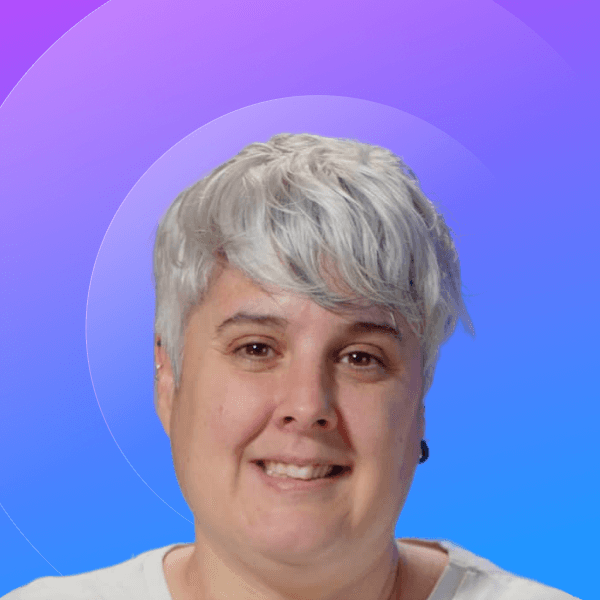
Mª José Cachón Yáñez
SEO specialist and digital strategist
With over 15 years of experience in search engine optimization, analytics, and SEO education
MJ Cachón brings extensive SEO experience across diverse industries, having helped hundreds of websites identify issues and unlock growth opportunities.
She’s the founder and CEO of LAIKA, a Spanish digital agency focused on human-centered strategy, technical audits, migrations, international SEO, and training for clients across industries. Passionate about sharing knowledge, MJ also teaches SEO and regularly speaks at top industry events across Spain and beyond.
Beyond her professional work, she co-founded the #MujeresEnSEO community, promoting visibility and opportunity for women in SEO, and she is known for combining her love of basketball with her “playmaker” philosophy in SEO—anticipating moves, seeing the landscape, and orchestrating strategy.
Video Chapters
Transcript
Gianluca Fiorelli: Hi, I'm Gianluca Fiorelli, and welcome back to The Search Session. Today, our guest is a Spanish SEO—a very well-known SEO here in Spain. She's recognized for her ability to spot all the little details, explain them clearly, and help resolve issues, build strategies, and carry out technical analysis in a very friendly way that everyone can understand.
She’s a frequent speaker at conferences in Spain, has collaborated with many tools, and is known for how generously she shares her knowledge. She's also very—I’m not sure if this translates well into English—but on her LinkedIn, she says she’s the “jefa de la tripulación” of the agency Laika. I suppose that translated in more formal English, it would be “founder and CEO” of Laika.
And this person—this good friend of mine—is MJ Cachón. How are you doing?
MJ Cachón: Hi, Gianluca, how are you? I'm very well—very happy to be here, so thank you! Thank you for inviting me. It’s a pleasure.
Gianluca Fiorelli: Well, the pleasure is mine. As I was saying with other SEOs—very skilled SEOs—they’re not always used to participating in something for a more global audience, like this podcast, The Search Session. I really like to highlight these hidden gems from countries that aren’t always the usual ones—like the U.S., the U.K., or other nations that tend to have more visibility and louder voices in the SEO world.
MJ Cachón: Yes, I guess that’s because of English—the language barrier. In Spain, maybe not everyone speaks English or travels abroad to share their experiences or their knowledge. So maybe we are the hidden gems in the SEO field. But yes, we have a lot of things to say, I suppose.
Gianluca Fiorelli: I’m sure—and we’re going to prove it with our episode today.
MJ Cachón: Okay!
Managing Client Expectations
Gianluca Fiorelli: So, MJ, how is SEO treating you lately? That’s a classic question I ask all my guests.
MJ Cachón: It’s a very special day today, and I’m glad you asked that—because early this morning, AI Mode was launched in the Spanish market. And yes, what a wonderful time to be alive!
But I guess people in the U.S. or U.K. might think, “Yes, we already know what you feel.” So, yes, it’s a moment full of changes, and we have to face those changes. It’s very challenging to be in the SEO field right now. But we’re here, and we’re ready to put in the effort.
As AI-driven search continues to evolve, it’s now possible to track how these new experiences impact visibility and rankings. Advanced Web Ranking monitors not only traditional search results but also AI Mode, AI Overviews (AIOs), and Brand Visibility in LLMs—giving you a full view of the modern SERP landscape.
Try AWR free and see how your site performs across all these formats.
Gianluca Fiorelli: Oh, sure. Finally, we’re no longer forced to use a VPN just to explore how AI Mode works!
Anyway, speaking of AI and search, all the conversation, all the buzz really exploded when AI Overviews became a standard feature in Google. But honestly, the more savvy SEOs—and I’m sure you’re part of this group—were already looking at AI search and thinking about how it was going to change the way people search.
And especially, how it was going to change our work—your work as an SEO. In your case, as someone working in an agency, how that role might evolve.
So, what are the biggest changes you’ve seen from clients when it comes to search and SEO, since the arrival of AI search—and in particular, AI Overviews? And now, with the launch of AI Mode in Spain, has anything changed in your agency work? Did things stay the same? Was it an evolution? What happened?
MJ Cachón: Yes, I think this isn’t really something new, because we've spent the last, I don’t know, 15 years dealing with constant changes. But I must confess, this one is a big one.
Everybody is talking about AI—even my mom! And when a trend becomes so big that your own family is talking about your work, you have to really think about what’s going on.
So, from my perspective, and in my agency, the first thing we’re trying to do is understand all the changes that are happening—and then, try to inform our clients and be proactive. Because when a big trend like this happens, there’s often a lot of noise. And when there’s noise, clients might get nervous or want to do things that just aren’t possible.
For example, as we talked about the last time I saw you—the term “SEO” is now being questioned. Some people are even trying to rename the field. I think that’s one of those specific moments where we have to be very clear with clients.
So basically, over the last few months, I’ve been focused on speaking with clients to explain what actions we can realistically take—what kind of actions we can take and analysis we can do—and also what we can’t do.
Because sometimes, they believe—or someone has told them—that they can magically rank using ChatGPT, without understanding anything about ranking factors, or what kind of prompts people are actually using.
There are so many details that people don’t know, and I don’t know if you get me?
Gianluca Fiorelli: Yes.
MJ Cachón: The trend is bigger than them, so...
Gianluca Fiorelli: Yes, the confusion is big. I think the most important thing—even now, almost a year after AI Overviews were introduced—is still education. Both for us, as SEOs—because it’s clear there are still a lot of misunderstandings—and for people. Just the fact that some people—personally, in my opinion—still think in terms of “rankings” when it comes to a ChatGPT conversation, that’s not a real ranking, not in the literal sense.
And especially with clients—because clients are people who tend to get confused, hear different voices and opinions, and, as you were saying, start expecting miracles.
So I’m curious, when you tell them there are certain things we can do to make their websites or their brands more visible in AI Search, and some things we can’t. What are the things you recommend they do—and what are the things you tell them aren’t really possible, simply because that’s not how it works?
MJ Cachón: For example, there are two key points.
The first is AI Overviews and how they impact a project or a website. In my clients’ cases, many of the projects are e-commerce, so the impact is usually lower than with more informative or content-based projects.
Most of my clients have seen little to no impact—or just a very minor one. A few have experienced a big drop in traffic, but not in sales. So, in essence, this is something we have to take into account.
Maybe we need to rethink how we approach content strategy, because now the conversion funnel is different—Google is taking part of that funnel. That’s the situation for one segment of my clients.
Then there’s another point. We’ve extracted data from Google Analytics, looking at organic traffic and the impact of referral traffic from ChatGPT, Claude, Perplexity, and others. And what we discovered is that my clients receive less than 100%of the traffic.
So if I think strategically, I could put a lot of effort into optimizing for ChatGPT, for example. But the impact on business is minimal.
So what we’re doing instead is researching, analyzing, and trying to find quick wins or some opportunities in ChatGPT or other platforms like YouTube, TikTok, etc.
But in essence, most of the traffic for my clients still comes from Google. So I can’t change the core strategy just yet—I have to maintain my core actions focused on attracting traffic from Google.
Gianluca Fiorelli: Yes, that’s why it’s always important—because we’re starting to see some cases in the wild. I don’t know if you’ve come across them too, since you’re always scouting and keeping an eye on what’s happening with other websites.
We’ve started to see sites that really pushed hard on reoptimizing their content in terms of chunking optimization. And suddenly, they saw a strong drop in organic traffic from classic search—because they basically destroyed all the signals that their previously established content already had.
MJ Cachón: Yes.
Gianluca Fiorelli: So that’s why it’s so important to keep a balanced approach. Yes, we must consider LLMs in our strategy to extract tidbits of content to generate a synthetic answer. But we have to do that without destroying existing visibility, especially for websites that are already established and successful—because doing that would be, essentially, suicide.
Visibility vs. Traffic: The New Value Proposition
Gianluca Fiorelli: You were mentioning earlier the traffic your clients’ sites are receiving from GPT, Perplexity, and other platforms. And yes—we know that using the “zero-click” formula, LLMs are even worse than Google Search in that sense.
We know that Google is doing everything it can to keep users inside the platform. That’s why zero-click search exists. But using ChatGPT or a conversational search is even worse in that regard. Because we all know that every time ChatGPT gives you an answer, it always suggests doing something else at the end. So people keep going. That’s why traffic from those platforms is usually not very big.
But I want to share a concern—one that I know others, including myself, are talking about. If traffic from classic search and from LLMs is shrinking—if it’s really diminishing—then what’s the new value?
Everyone keeps talking about the importance of visibility—both in the SERPs and now in LLMs. So I’ve been wondering, and I still haven’t found the formula for this—I don’t know if you are thinking about it— if there is some kind of correlation between visibility (in SERPs, AI Overviews, ChatGPT, Perplexity, and so on) and an increase in, say, branded searches. I mean branded traffic, direct traffic. Have you seen anything like that? Any sort of correlation? Or is it just me, being stubborn and stuck on this idea?
MJ Cachón: It’s a good question. I think it depends on the kind of project we’re talking about.
Because it’s not the same if you’re the market leader—someone with a strong and solid presence—or if you’re a small player, or the second player. So for me, that’s the key point we have to think about. The impact is not going to be the same if you’re the leader or not.
Why? Because some queries, some types of searches, are about deciding which company to choose. And in those comparative searches, if you have a big brand, I think you have an advantage. So it matters less whether LLMs recommend you or not—because you already have a huge market share, right?
Gianluca Fiorelli: Yes.
MJ Cachón: But when we talk about smaller projects, I think we really need to think carefully about what the new metrics are that we should focus on. This whole "zero-click" thing has actually been a problem for years—it’s not something new. Maybe it started with position zero, with featured snippets. I think you remember what happened at that time. All the SEO professionals were going crazy because the featured snippet was stealing part of our traffic.
We were trying to figure out how to appear in that zero position, and all those strategies. But now, it’s worse—because now there’s not even a click. And obviously, that’s a big issue.
But I think we need more time. AI Overviews and AI Mode still need to be consolidated. We don’t know yet how users are really going to interact with them. I mean, Gianluca, do you know how many people are actually using AI Mode right now, say in Spain?
Gianluca Fiorelli: Well, there are data shared recently by our mutual friend, Aleyda Solís, that showed AI Mode had an interesting start in the UK.
In terms of percentage, it was something like 3.5% of people using it. But then usage started to drop—as if, after the initial curiosity, people kind of forgot about it. And I think it’s similar in the U.S.—the percentage is about the same.
Discover how Aleyda Solís navigates the AI shift in SEO
In this Search Session, Aleyda Solis shares how AI is reshaping SEO—and how SEOs can evolve with it. From chunk-based content to optimizing for new interfaces, she offers practical tips for adapting without starting from scratch.
Whether you're in a startup or enterprise, Aleyda’s take on strategy, communication, and using LLMs to boost productivity makes this a must-watch.
Gianluca Fiorelli: And let’s be honest, all the things Google is trying to do within the main search experience, for instance, I don’t know if we’ll start seeing it now in Spain, or if you try searching in Italian for Italy, you’ll notice these calls to action showing up on the main search surface.
Like at the bottom of the AI Overview box, where Google says something like: “Search and discover more in AI Mode.” Or recently, I saw a kind of carousel suggesting related queries you can explore in AI Mode—even though you’re still in the classic search view, the old search.
That kind of move, to me, suggests that not many people are actually using AI Mode yet. And more importantly, we don’t even know if the AI Overview we’re experiencing right now is going to be the same AI Overview that we’ll experience in six months.
The same goes for AI Mode. We don’t know if it’s going to be integrated more and more into classic search. So yes, it really feels like we’re standing on shifting sand. We’re not on stable ground at all.
MJ Cachón: Yes, I agree. With AI Overviews, some of my clients are seeing less than 7% of their queries affected. So honestly, it’s not something I worry too much about.
Especially because their focus is on transactional keywords, so for now, there's no problem with that.
But look at what’s happened with Medium, The New York Times, or here in Spain, El País, El Mundo—these types of websites have been hit hard by AI Overviews. That’s because they mostly target informational search intent, which is exactly the area where AI Overviews are having the most impact.
Check out Advanced Web Ranking’s free Google AIO tracking tool to keep an eye on how AI Overviews are shaping the search landscape.
The tool lets you monitor their impact across industries and keyword intents — from informational to transactional. It’s an easy way to understand where AI Overviews appear most and how they affect visibility over time.
MJ Cachón: So the big question is: Are AI Overviews—and even AI Mode—going to expand to cover more diverse keyword intents? For example, transactional queries, local searches, and so on. I don’t know. Google obviously has more data than we do.
But as usual, today they announced the launch of AI Mode in Spain, and in their blog post, they claimed that AI Overviews drive a lot of clicks to websites. That’s just not true—because we know that, on average, around 30–40% of traffic disappears when AI Overviews are shown.
And we always rely on the work of Kevin Indig, who does excellent UX research and has studied how users behave with AI Overviews. His findings show that most people don’t click; they just read the first few paragraphs and move on. So that’s the current situation.
But the key question for me is: Will AI Overviews and AI Mode expand to cover the full spectrum of search intents, or will they remain mostly limited to the informational layer? I don’t know, but for me, this point is key.
Gianluca Fiorelli: Yes, and I mean, I think we’ll only really know the answer once Google figures out how to place ads in AI Search—whether that's in AI Mode, AI Overviews, and so on.
SEO's Role in Brand Building
Gianluca Fiorelli: Earlier, you were talking about visibility—like visibility on LLMs such as ChatGPT. But it’s the same with AI Mode or AI Overviews: it’s really impactful if you’re a brand that’s already recognized. You’ll naturally show up stronger, even when you're just one of several brands mentioned in an answer.
So branding and SEO for brand visibility have become a big topic over the past 12 months, especially earlier this year. How do you see it? Or what do you recommend? How do you think SEO can help amplify the value and perception of a brand, without clashing with the brand marketers inside companies—whether you're in-house or at an agency?
What are some of the things you think, “Okay, SEO can support brand growth by doing this”? What’s worked for you?
MJ Cachón: Looking at the big picture, I think we need to improve how we approach content strategy. And I really believe SEO can—and should—play a key role in brand recognition and brand growth.
For example, one area I think is going to become even more important is PR—specifically, how we handle content distribution, press releases, all of that. Everything related to the communication and spread of the content that we produce. So, I see two key areas that will grow in this AI era—and that I recommend focusing on.
First, creating better content—not just content designed to rank. Every time we do keyword research, we uncover a lot of ideas that can turn into meaningful content—things like original studies or interviews with well-known people in your field.
And second, we need to start thinking more about how to connect these ideas with the PR side of things.
Gianluca Fiorelli: Yes, exactly. Digital PR is going to get a new boost. It was already important, of course—but now it’s even more critical. And not just because of links (which still play a big role), but also because of mentions.
You’re no longer limited to links—you can now create campaigns that are truly impactful. And I think also that maybe we, as SEOs, can help with what you were just saying—and I want to underline it.
Whenever we’re doing keyword research, or even just analyzing Search Console data to see which queries our brand is visible for, or when we’re running a keyword gap analysis against competitors, we’re identifying exactly what people are actually searching for in relation to our products, our services, and the information we provide, and so on.
So yes, this was important even before—but in the past, it was more about ranking for high-volume keywords. Now, it’s more diffuse. For example, if we’re talking about e-commerce, or even if we’re a manufacturer—let’s say in B2B—or a SaaS company, the approach shifts.
Instead of creating content that tries to target the top-of-funnel keywords, it may be much more effective to create content that is more branded and makes your brand more relevant. This kind of content is helpful because it can build trust, and so on.
Core Update Analysis & Patterns
Gianluca Fiorelli: And now, in Spain, you're well known for something you do around almost every core update—or at least, you consistently monitor two big topics.
One is your long-running project on website migrations. For those watching or listening to us: MJ has been tracking what's happening with site migrations for many years now. She goes deep into how migrations are handled and shares insights based on her analysis. That’s one big area of focus.
The second one is: every time there’s a core update, you run your own analysis—similar to how, for example, Lily Ray does for the U.S., or other SEOs do in their regions. We always say core updates are like Pandora’s box.
MJ Cachón: Yes.
Gianluca Fiorelli: They include everything—a full, general update of the algorithm. But from your analysis over time, what kind of recurring patterns or consistent trends have you seen when it comes to the impact of core updates?
MJ Cachón: This is a good question. I usually analyze the core updates on a weekly basis using Sistrix. I extract data for, more or less, 1,200 websites that I always analyze—the same ones—for the Spanish market. And I’ve learned some things.
For example, if one site begins to drop during the core update, maybe when the update finishes, it starts growing again. So it’s not about how you start—it's about how you finish. The rollout usually lasts about two weeks, sometimes three or four, but it depends. So, that’s the first learning: it’s not how you start.
The second learning I can share is that every time I conduct this analysis, there are always a few websites that are migrating. And I always think—how bad luck—for those websites that choose the worst moment to do a migration.
And the third learning is about the websites that are actually impacted. There aren’t that many. In the end, I usually go deep into maybe 10 or 15 cases, because every update is a new mix of things.
So I think the summary is: try to choose carefully when to do a migration. And also, don’t trust the first week of the update. Stay calm, be patient, and wait until the core update is finished. And obviously, there’s always a mix of factors. I’ve never seen a drop happen for just one single reason.
Gianluca Fiorelli: Yes, it's a combination of things. And this is why it’s always difficult to understand the exact reason why a website drops—or even increases.
Because we always talk about why a website drops, as if that’s the only scenario to analyze. But sometimes we see websites that didn’t do anything, and all of a sudden, thanks to a core update, they jump in visibility like crazy. You were saying?
MJ Cachón: The last core update in Spain—I saw different recipe websites that increased a lot, because they made crucial changes. I could check with Wayback Machine, and yes, they really understood what needed to change, and they did it.
Gianluca Fiorelli: Yes, but I think that’s also a very specific case. Because Googlers—for example, I remember John Mueller—have hinted that when site owners use long storytelling before getting to the actual recipe, all that fluff... the more of that kind of content there is, the less it’s valued by Google.
So this is probably the biggest change that has been made. And there’s one thing I’ve seen consistently: one of the reasons why a website improves or declines during—and especially after—a core update is because Google, for two reasons.
First, maybe Google recalculates not only the value of the website, but the search intent of the query set that it’s targeting. So maybe a query that was previously considered informational suddenly becomes commercial after a core update.
Secondly, it recalculates based on—let’s say—the more passionate among us who dig into all the documentation Google provides. We start finding all these little signals that Google might be using to evaluate the quality of a website. Google calculates the value of hundreds of signals. And maybe that’s what makes a website go from being seen as “okay” to “high quality.”
I think, at the end of the day, quality is about the ability of a single page, not just the whole website, to clearly demonstrate its beneficial purpose—and to satisfy it immediately. That beneficial purpose means answering the user’s search intent in a direct and effective way.
Website Migration: Common Mistakes & Best Practices
Gianluca Fiorelli: But okay—talking about migrations: What are still the same mistakes that keep appearing? Because there’s already a lot of literature out there about how to do a proper site migration—so why do so many websites still fail at it?
MJ Cachón: I was thinking about this question—I think all my life—because I still see a lot of websites falling into the same mistakes. And sometimes I can’t believe it, because there are so many people sharing their checklists, their advice, their methodologies, and still, websites keep failing in the same way.
But I’m curious because this week we launched a migration with a client, and we had to postpone it more than three times because the redirects were not in the right place and weren’t working properly in the staging website.
So we had to speak with the CEO and say, “I'm sorry, I know you want to launch the new website, but it's not possible. Without redirects, you’re going to lose everything—all the work we’ve done over the last years—you’ll lose it in one second.”
So, I still can’t believe how, in 2025, there are websites that don’t put enough effort or aren’t really aware of the importance of redirects—and of all the improvements that need to be made when launching a new website, because it’s not just about redirects. You need to add improvements with the change.
Every time there’s a migration, Google is going to come back to your website to analyze it—it’s like an exam. And if you want to pass that exam, you need to show and demonstrate that your new website is better. And honestly, it’s not that hard. I don’t know what you think, Gianluca...
Gianluca Fiorelli: Yes, this is something that we know, but it even happens on a micro level.
For instance, that’s why it’s sometimes so hard to say, “Okay, we have this page that’s working really well, but we need to update it,” because there are new things. Just think about updating, for example, a guide, a successful blog post, or a successful landing page.
It’s always a little like a thriller. You don’t know what’s going to happen when you click the publish button because you know that Google is going to re-evaluate the page. Especially if you’re doing a small migration—not even a big one.
It could be something simple, like a section of services being reformulated by the company, and now we have to reflect those changes in the site architecture. So, it becomes an internal migration, a very small one, without changing so much. So every time you change a URL, Google will treat that content as new, even if nothing else changed. And so, it’s going to re-evaluate it. So yes, it’s a very tricky moment.
Managing Developer Relationships
Gianluca Fiorelli: And when it comes to migrations—but also to all the technical SEO part of the work—we always have to deal with developers. And there’s a lot of literature about how to work with developers.
You are a strong technical SEO, so I’m sure that helps in managing this relationship. But with all your years of experience, what are the things you’ve learned that really help you work well with developers—without that constant stress that sometimes comes up in what people in SEO describe as a conflicting relationship?
MJ Cachón: From my experience, I think we need someone from the client side to be with us and to fight with us. This is the person who, in the end, is going to decide.
So this person needs to have knowledge about the development part, the SEO part, and obviously the product and business side. For me, this management part is even more important.
Obviously, I have technical knowledge—I can speak with the developers with no problem. But the big challenge is trying to help them understand why we need the things that we need. For example: canonicals, meta robots, content, international setup…
Gianluca Fiorelli: JavaScript.
MJ Cachón:: Yes, there are a lot of things, and sometimes, if the roadmap is not respected—we’re always in a hurry. Like, we need the work for yesterday, not for tomorrow.
And when this happens, developers usually try to save work. And of course, SEO tasks sometimes bother them. So we need to try to be very friendly with them.
But in the end, the final decision is with the client. And sometimes I find that, on the client side, there’s no one with the knowledge or the skills to manage all these people.
So, sometimes, from my agency, we offer this profile—a project manager—to try to solve this kind of situation. And usually it works fine. But it’s not the best solution.
Because I want all the knowledge that we create during the migration project to remain with the client, so for me, that’s not the best scenario. I want to find a profile on the client side that can manage the full relationship between all the teams. So, I don’t know if I’m answering to your question…
Gianluca Fiorelli: No, you're answering well. And actually, it's similar for me—even though I'm not in an agency, I'm a consultant.
One thing I always make very clear to my clients when I do consulting—and maybe it's even easier to say this as a consultant—is this: “One of the reasons you're paying me—apart from the immediate work and the long-term work, the strategy, tactics, and optimizations—is because I want to be your tutor. I want to teach you what’s really important for you in terms of SEO, so that eventually, you can create your own SEO team inside your company—or improve the one you already have. And maybe in the future, you won’t even need me anymore as a consultant.” For me, that’s one of the most interesting things I try to do.
And yes, I know that by doing this, I might lose the client in the future. Maybe they’ll say, “We now have our own SEO team, and we think we don’t need an ongoing collaboration anymore.”
And I’m like—okay, fine. But still, it’s a point of pride. Because if that happens, it means SEO has really been embedded into the client’s mindset.
AI Tools in Daily SEO Work
Gianluca Fiorelli: And speaking of that—I'd like to return for a moment to the use of AI. But more specifically, to how you use AI in your own work. Because another thing you’re known for is being a strong educator, especially around how to use, for instance, a crawler like Screaming Frog. And Screaming Frog, for a few months now, also has features like embedding analysis and so on. So, apart from the use of AI in that sense—thanks to Screaming Frog—how are you using it, or how are other people in your agency using AI for work?
MJ Cachón: This is a good question. Before going too deep into the actions or use cases, I want to say that I was already studying machine learning, statistics, and other programming languages before the pandemic. So I was working with some kind of AI before the ChatGPT boom or the whole trend around ChatGPT.
And I want to say something that might not be very popular: a lot of tasks that we try to do with ChatGPT or other LLMs—we can actually do them without AI.
It’s not a problem. Sometimes, we just need a few lines of Python, JavaScript, or other languages. So I think that’s important to point out: we don’t always need AI or generative AI to get things done.
Now, to answer your question about AI—how I usually use it: I incorporate AI mostly to build internal tools, for example, to connect with APIs and automate some processes. But those processes are always the kind where people aren’t essential. I’m very clear on this: I’m totally against using AI to replace people.
We can replace some tasks and some processes—especially the ones that are repetitive or boring. Tasks that people would get tired of doing. Okay, maybe those we can automate. So I’m right with that. But the experience of a person, of a consultant—right now, it's impossible to replicate with AI, from my perspective.
Maybe there are people who say, “Okay, but you can put all your experience into a custom ChatGPT, and then this personalized GPT can answer the same way you would.” But I don’t agree.
Gianluca Fiorelli: No, no, I also don’t agree with fully delegating SEO to AI. I like to use AI for collecting data, for instance. But that also falls into what you were saying before—if you know Python and machine learning, you could already do that with Python or ML, without needing to use ChatGPT or Claude.
What generative AI has done is make that process easier—especially for people like me who aren’t really on the technical side. I don’t want to call it vibe coding stuff because I think vibe coding is very fast in the beginning—but then you end up spending the same amount of hours correcting, rechecking, verifying over and over again.
But yes, especially for connecting data from many services and then asking for certain kinds of insights to AI in the reading of big data. That’s where I see the value of AI. Not in the interpretation of data, though.
Let’s say we’re using BigQuery to gather all the Search Console data. Then, with Gemini, we could ask something like: “Tell me what doesn’t fit in this huge dataset”, or: “What are the discrepancies?”, or: “Which group of queries are really falling from one period to another?” That’s helpful.
But the question of why they’re falling? That’s not something AI—or a custom GPT—should be fully delegated to answer.
MJ Cachón: Yes, for me, it’s really about being conscious of what each model can actually help you with. But always making a separation between people and, I don’t know, “monkey tasks.” You know, tasks where I can’t really add value. So, okay—this kind of task can be done by a machine. But for the rest, I need a person who has intuition, who has empathy, who can speak with people, and understand the nuances that are silently present in communication, in words.
Obviously, all the LLMs can understand words perfectly—because they are language models—but still, it’s not the same.
If I go deeper into your question, I can maybe mention three use cases. For example, with Gemini—it's very good at classification. If you give Gemini a list of keywords and a list of categories, it's very accurate in classifying them. So, that’s a very specific task you can try.
And for example, with Claude, I always try to use it for programming—for JavaScript, Python, whatever. It’s very accurate with coding. I mean, for example, I get more mistakes when I ask for help with Python from Verum than when I use Claude.
Then, I discovered Lovable—I suppose you already know it?
Gianluca Fiorelli: Yes.
MJ Cachón: It’s very useful to build a landing page or a tiny website. It’s really quick. Today I built a few websites for very specific content—like a study, very direct—or for a podcast that I have about statistics. And I built the website very quickly because it’s just one page. So maybe in half an hour, the website is done.
Gianluca Fiorelli: Oh, great.
MJ Cachón: Yes.
Learning from Failure: The User Agent Mistake
Gianluca Fiorelli: And just one last question about work. You have quite, quite many years of experience, but you know, we always—it’s normal—we always try to talk about our success. But sometimes we learn more from our failures. What’s something you failed at that really taught you a lot? The biggest teaching—something from which you learned the most?
MJ Cachón: Yes, some years ago, I blocked a user agent by mistake. Because this user agent was responsible for the paid part—like Google Ads, but not exactly Google Ads. I don’t remember if it was Google Merchant, but in the documentation, it wasn’t very clear that this user agent was for Merchant URLs. So finally, we blocked it—because we detected in the log files that there was a lot of crawl budget being wasted on these kinds of URLs and with this user agent.
And we finally discovered that the user agent from the desktop was responsible for the Google Merchant tool. So we blocked it incorrectly. And we spent a few days losing part of the revenue from Merchant.
Gianluca Fiorelli: Oh, yes. I imagine.
MJ Cachón: Yeah. It was a mistake. Because maybe the correct way would have been to do a quick test and then comment out the line. So, we sent the recommendation, and we may have spent two days before we discovered it was wrong. So we need to be very careful when we block something in robots.txt.
Gianluca Fiorelli: Yes, and everything about robots is becoming relevant again in the past months—because, you know, blocking AI agents, AI bots, and all this stuff. But if you block AI bots, maybe you’re also blocking, for instance, Google and so on. A lot of it comes down to the whole Cloudflare policy about blocking AI bots by default, when maybe it should be an opt-in, not an opt-out function of Cloudflare, and so on.
MJ Cachón: For me, the big learning here is not only to check the documentation—which obviously we already did—but usually the documentation is not always complete. And for example, in Spanish, the translations aren’t great.
Gianluca Fiorelli: The same in Italian. It’s the same in Italian.
MJ Cachón: It’s not an excuse, but we need to learn from this.
Gianluca Fiorelli: Yes, I know. Well, that’s why I always try to go directly to the original English version.
Personal Life & Interests
Gianluca Fiorelli: And well, one hour of conversation has been all about work. Let’s just do a couple of very fast questions about you, so our listeners or people can get to know you better.
So—what does MJ like to do when she finally switches off the PC and hopefully doesn’t think about SEO?
MJ Cachón: I’m a sports lover. I usually practice basketball, and I’m a huge fan of Atlético Madrid—the football team. So I usually go to the stadium, and it’s always a lot of fun. And obviously, I like to read a lot. I read a lot.
Gianluca Fiorelli: What do you read? What kind of things do you like?
MJ Cachón: I read books related to business, to companies, a mix of things, actually.
Gianluca Fiorelli: And, one more question—last one. What is your favorite food? If you had to choose one, what would you eat right now?
MJ Cachón: Oh, that’s difficult! I think it’s the hardest question today. Because in Spain—I don’t know if your audience knows—we have really, really tasty food and a huge variety of recipes. So it’s hard to pick just one. But maybe I’d choose the Spanish omelette.
Gianluca Fiorelli: Ah, tortilla! But with onions, or without?
MJ Cachón: Without. I'm in the no onion team.
Gianluca Fiorelli: Okay. And with this important declaration, we conclude this episode. Thank you, MJ Cachón. It was a real pleasure to have you here at The Search Session.
MJ Cachón: Thank you so much for having me, Gianluca. It's a pleasure.
Gianluca Fiorelli: And remember to click on the bell to be notified of new episodes and subscribe to the channel. If you liked this episode—or any other episode—please share it. I’d really appreciate it. Thank you!

Podcast Host
Gianluca Fiorelli
With almost 20 years of experience in web marketing, Gianluca Fiorelli is a Strategic and International SEO Consultant who helps businesses improve their visibility and performance on organic search. Gianluca collaborated with clients from various industries and regions, such as Glassdoor, Idealista, Rastreator.com, Outsystems, Chess.com, SIXT Ride, Vegetables by Bayer, Visit California, Gamepix, James Edition and many others.
A very active member of the SEO community, Gianluca daily shares his insights and best practices on SEO, content, Search marketing strategy and the evolution of Search on social media channels such as X, Bluesky and LinkedIn and through the blog on his website: IloveSEO.net.