

Welcome back to The Search Session podcast! I’m Gianluca Fiorelli, and joining me in this episode is Cyrus Shepard—SEO consultant, online marketer, and founder of Zyppy SEO. Cyrus brings an evidence-based view on what really drives rankings today.
We discuss what Google’s latest updates reveal about ranking, why authenticity and brand reputation matter more than ever, and how testing, tracking, and smart brand building can help businesses of any size stay ahead.
The main topics discussed include:
Studies on Google’s core and spam updates: what hurts rankings most—and what truly helps? Over-optimized, low-authority sites are out; strong brands and authentic content are in.
The value of large-scale testing in SEO: to uncover patterns—especially how personal experience and authenticity often outperform conventional strategies.
The truth about AI visibility tools: still messy, but while Google tracking covers most SEO needs, AI tracking provides a future-proof edge for larger brands.
Brand building and off-site SEO: the key drivers now shaping AI answers and search visibility.
Reputation matters more than ever: manipulative tactics still exist, but Cyrus predicts Google and AI will increasingly reward authenticity and ignore low-quality signals.
SEO focus in a fragmented landscape: prioritize fewer, high-impact channels over trying to be everywhere to maximize results in an increasingly overwhelming search environment.
Enterprise vs. SMB marketing strengths: how large and small businesses can learn from each other—enterprise brings scale, while SMBs offer authenticity and agility.
There’s a lot to unpack — let’s get into it!
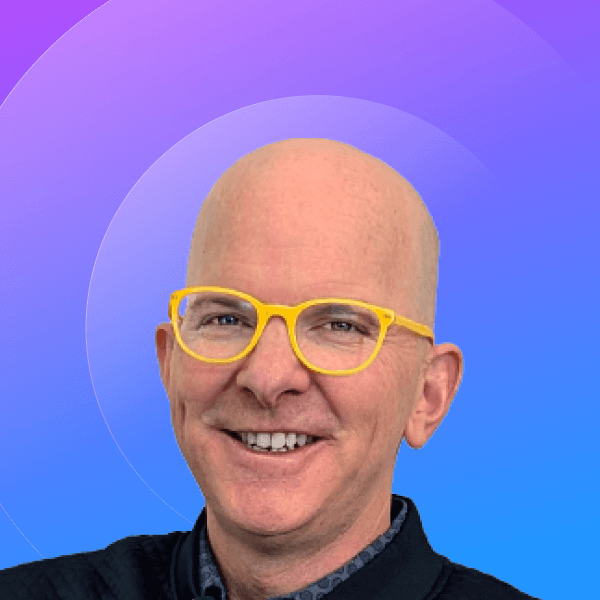
Cyrus Shepard
SEO consultant, online marketer, and content publisher
Cyrus Shepard is a data-driven search-engine-optimization (SEO) strategist who helps brands grow qualified organic traffic through evidence-based testing and clear, actionable methods.
In 2018, Cyrus founded Zyppy SEO to help companies boost search visibility, traffic, and revenue through strategic, content-driven, and technical optimization. He also created Zyppy List, a curated directory connecting businesses with vetted, high-quality marketing agencies and consultants.
Cyrus is a well-known speaker in the SEO community, having appeared at international marketing conferences, including MozCon, SerpConf, SMX, and many others. He also writes a newsletter and blog where he shares SEO experiments and algorithm insights.
Video Chapters
Transcript
Gianluca Fiorelli: Hi, I’m Gianluca Fiorelli, and welcome back to The Search Session. Today, we have as a guest someone you surely know. For many years, he was associated with Moz—first as Director of Audience Development, and then as Chief SEO Strategist.
From 2016, he’s also the founder and owner of Zippy SEO Consulting, and I think it was no more than a couple of years ago—or maybe even less—that he launched a sister site, which is Zippy List, a very interesting resource for people searching for companies, agencies, or SEO consultants. Really well crafted by our guest.
He also has an interesting past, not originally in the SEO world, but—like many in our industry—that’s where he ended up. Our guest today is Cyrus Shepard. Hey Cyrus!
Cyrus Shepard: Hey!
Gianluca Fiorelli: How are you doing?
Cyrus Shepard: Gianluca! How are you?
Gianluca Fiorelli: I’m fine. It's extremely hot here in Valencia. We're recording at around 8:00 PM my time, but I’m basically obliged to have the air conditioning on—it’s something like 27 degrees Celsius.
Cyrus Shepard: Oh, wow.
Gianluca Fiorelli: It's incredibly hot. You know, climate change.
Cyrus Shepard: Yes, I live on the Oregon coast, where it's always cold and rainy, so it's very gray today.
Gianluca Fiorelli: We compensate each other.
Cyrus Shepard: Yes! But I’m so happy to be on your show today. We haven’t spoken in a while. You and I go back a long way—back to the early days of Moz. We've known each other for almost 14, 15 years now.
Gianluca Fiorelli: Yes.
Cyrus Shepard: I’ve had such good times with you in different parts of the world, and it’s so amazing to me—I never would've predicted, when we started, that we would: A) still be doing this, and B) that SEO would still be so interesting. There are still new things to learn, and we’re still so involved with it. So much cutting-edge stuff. It’s a real testament—and what a great time to connect and talk SEO over the next hour or so.
Gianluca Fiorelli: Yes, it’s a real pleasure for me to have this conversation with you. I really wanted to, also because it’s been such a long time since we last chatted. We used to at least see each other once a year at MozCon, but then things changed for both of us, so the occasions became fewer.
Current State of SEO and Client Experiences
Gianluca Fiorelli: But going to SEO—how's SEO treating you lately?
Cyrus Shepard: Oh, SEO has been a rough ride the last couple of years—especially with clients.
My e-commerce clients are doing fantastic. They’re not even aware that anything has changed in Google, because, you know, they’re manufacturing products, they’re selling them, and Google seems to reward that.
On the other hand, my more informational clients have definitely been feeling the sting—especially those that rely on lead referrals and things like that. They've had to change some of their content models, put a bigger focus on conversions, and start looking at other channels. So, it’s been a mixed bag.
My own sites—I run a number of affiliate sites on the side—have certainly changed over the last couple of years as well. But, you know, where one door closes, another one opens. There are lots of new opportunities. I think these past couple of years, we’ve had more to keep up with than at any other time in our SEO careers. So, it’s been an interesting time.
Gianluca Fiorelli: Indeed, and at least, with all the bad and the good things happening in these last three years, what we can surely say is that our industry is not becoming boring.
The change is almost daily, and I think it’s an exciting time—stressful for sure, and uncertain in many ways—but still, a sort of… let’s call it a renaissance of SEO. Even if people are calling it by 3,000 different names, I still think that, at the end of the day, it’s still SEO whenever people search for something—that is search.
Cyrus Shepard: Yes.
Correlation Studies: What Google is Prioritizing Now
Gianluca Fiorelli: I wanted to ask you, because you recently spoke at Ahrefs Evolve, and you gave what I think was an updated version of your study about common characteristics of websites that have been hit by Google updates—especially core updates, which are always kind of big, huge, and many times, not really easy to decipher.
So, with your correlation studies, what are usually the most common traits of these websites? And, to make it really synthetic—before going into details—what was the most unexpected reason for being hit by an update that you found during your research?
Cyrus Shepard: Yes, it's always surprising to me. And for those not familiar, I was just down in San Diego for Ahrefs Evolve—great conference! And kind of strange for me, because I’ve always had a long history with Moz, and Ahrefs was a competitor to Moz for many years. But now, that competition…well, it’s a little different. So it’s weird for me to be so involved with Ahrefs, but I still love Moz.
Anyway, to answer your question: we’ve seen an evolution of content Google wants to promote in its SERPs—and the one it wants to devalue.
I think it really started way back in the day with Panda—the “farmer” updates, targeting content farms. Then we saw an evolution of it around 2017, 2018, with the rise of E-A-T. A lot of that centered on the so-called “Medic Update,” where we saw medical misinformation sites start to decline.
Then came the next big evolution: the Helpful Content Update. I think that’s where we really started to see Google almost take your business model into account.
So, if you were monetizing clicks—through affiliate links or ads—they really raised the bar on what kind of content was acceptable. And a lot of those sites just disappeared from the web.
More recently, the very last update we had—the Google spam update—I think was much more significant than we’re seeing reported on social channels.
It seems like Google’s definition of “spam” now is not what we traditionally think of as spam at all. Google’s saying that spam can be content that isn’t different from anybody else’s—content that just says the same thing as everyone else is now considered spam.
And that’s a strategy SEOs have used for years: create content that looks just like everything else out there.
So, to really answer your question—the biggest surprise to me over the last several years has been Google cracking down on common SEO techniques. Content that is optimized really well—the script has flipped. A lot of that content used to do great: good internal links, good title tags, good content architecture…
If it doesn’t have, you know, those brand and authority signals—or if something else is missing—that content is going to the bottom. So, a lot of the things that you and I have worked on over the last 15 years, a lot of those best practices, no longer work the way they used to.
That’s been my biggest surprise: that Google seems to be targeting exactly the best practices we’ve been advocating for years.
Gianluca Fiorelli: Yes, but I think—digging into this—I don’t think that Google, by itself, penalizes the fact that a website has good internal linking or good architecture. Because that, to me, would be too weird.
I think what Google sees is: “Okay, this is a well-optimized website,” which is actually weird—if we look at the web at large, 80% of websites are not well-optimized for Google.
So maybe that optimization becomes a flag—not necessarily positive, not necessarily negative—but more like: “Let’s take a closer look at this.”
“Is this a website that’s just been optimized for SEO to run well? And does it have, let’s say, what you were talking about—brand signals that justify it not to rank well just because it has been optimized. “
So this is maybe the cause and not that internal linking or technical optimization, etc. But if there aren’t supporting brand signals—and we know from Google’s own words that they consider a huge number of signals—then that site might, somehow, be treated like scaled content.
Cyrus Shepard: Yes. Well, a couple of points. We’ve done a lot of data studies over the past few years—and a couple of things have really stood out. And I’m not saying these are ranking factors; they’re just correlated.
The predictors of whether a site has won or lost that we found are that brand signals are huge. The biggest predictor we’ve found over the last three years of sites that have won or lost Google updates is the percentage of branded anchor text—specifically from unique linking root domains.
Again, I don’t think that’s a ranking signal. It’s just a correlation with brand strength. And the correlation is huge. If you had sites with a high percentage of branded anchor text—relative to their overall linking root domains—those sites generally won. And sites with no brand presence, where people just weren’t linking to them that way, those sites were generally losers, especially if they were monetizing clicks.
So you have the brand, the business model…And then the other factors we found were those SEO signals I was talking about. Sites that had more aggressive SEO—if they didn’t have the brand, and they didn’t have the business model—those sites tended to lose worse, and harder, than the ones that were less optimized. And that was surprising to me.
I'm not saying it’s ranking factors—I’m just saying that’s where the data landed.
AWR lets you track your search visibility over time and automatically correlates your ranking changes with major algorithm updates and SERP volatility spikes.
This means you can quickly identify whether traffic drops coincide with broad Google updates or are specific to your site, helping you distinguish between algorithmic impacts and site-specific issues like the brand signal correlations mentioned above.
Try Advanced Web Ranking free to start building your own historical SERP data and spot these patterns before they impact your bottom line.
Gianluca Fiorelli: No, this is clear. Correlation is not causation, as we used to say when we were together at Moz and doing the yearly ranking factor.
Cyrus Shepard: We had to say that every time.
Gianluca Fiorelli: Yes, but I think at the end of the day, it’s completely logical that Google is doing these kinds of things.
If nobody mentions a website—even in the context of LLMs, Gemini, AI Overviews, and AI Mode — and there's little or even less linking to a website by name or brand, maybe that website is not so relevant. Obviously, there can be huge mistakes from Google—false positives and so on.
But I think that now Google can understand how valuable a brand is—how much it matters to people using Google. And it’s not just through search data or web crawling anymore.
For instance, now Google is opening services to professional Instagram profiles. So it can understand if a profile on Instagram, associated with a brand, is equally important. Maybe it’s less important than a website, but it gives huge brand visibility on Instagram. So that can pair. So I think it’s quite normal.
Perhaps we were so accustomed to obtaining things simply by optimizing mechanically that it angered many people, or they may be angry. But actually, it’s the normal way of doing marketing. Marketing usually pushes the brand, and then everything comes.
Cyrus Shepard: Yes, I agree with that so much. And, by the way, your recent work—you’ve been producing some excellent work lately on ontologies and AI search—and I think that’s so relevant to this conversation.
If we look at what Google has been trying to reward over the past several years, you used to be able to rank a website just based on SEO. If you had the information, if you were hitting the keywords, if you had the links—you could rank almost anything.
And then, over the years, Google updates have started to prefer brands. They want to rank businesses and websites that have real existence—that are legitimate.
And part of the way you demonstrate that is through brand signals, knowledge graphs, and entity signaling. All that excellent work that you are one of the best in the business at. Those are the real-world signals that Google is looking at.
And for a traditional SEO, if you don’t have those brand signals—it just doesn’t cut it anymore. You need legitimacy in the eyes of Google, in the SERPs, in what you're doing on social media, on all these other platforms. That’s so much more important than it was five years ago. And a lot of people just aren’t catching up to that. So I think those are some really good points you made.
SEO Testing and Experimentation Methods
Gianluca Fiorelli: Yes, and another thing—apart from this correlation study you’ve done—maybe less now, but especially in the past, you used to do kind of a storytelling, a live storytelling on social, of all the many tests you were doing. And I have some questions: How much did you learn from testing? And why do you think testing is so essential for SEO? Not only for SEO, but also for technical marketing disciplines. And what was the most surprising test you did?
Cyrus Shepard: That’s interesting. So yes, I am a serial tester. Addicted to testing. Back in the Moz days, it was just fun to work with some of the data scientists there and do these large-scale tests. But here’s the thing—there are two types of tests.
There’s on-site testing, where you’re testing something directly on your website—maybe you’re using something like SearchPilot to do some A/B tests, or you’re just doing something. Those are so much fun for me, and I’ve learned so much from doing those. It’s just great.
And I love getting clients who allow me to experiment and try things. And I always tell clients: “40 to 50% of the things we’re going to try aren’t going to work”, so we just have to have that experimental mindset. So keep that in mind when we’re allocating resources. But this is a process. We’re going to try a lot of things. We’re going to have to revert some things. And that happens all the time. And my best clients are the ones that are willing to do that—willing to just have this experimental mindset. But I think we might be talking about something else here.
The types of experiments and studies that I really enjoy doing are looking at thousands of sites—looking at who’s winning Google updates, who’s losing Google updates. Getting massive amounts of data from Ahrefs or another provider, and then just trying to tease out correlations. Looking at a hundred different factors and then trying to tease those correlations out.
That’s so informative, because when you have a client that’s maybe seen a decline in traffic and you’re trying to figure out why—you’re probably not going to figure it out just by looking at that one client. You’re going to want to find a lot of sites that look like that site, and then start to tease out the correlations. And you can figure out so much from those data studies.
So, the most surprising thing that I’ve found—and I’ve been talking about this for a couple of years, from looking at the data over the last couple of years, and I think this played out in the last Google update—is the role of personal experience and perspectives.
So all I do is, I’ve got my Screaming Frog set up to look for personal pronouns—people talking about “I,” “we,” “us”—people talking about how they did something, injecting themselves into the conversation.
And every time I look at this—every time I crawl sites and do the correlations—I find a bigger and bigger influence of people talking about themselves in reference to a particular thing.
It always correlates extremely well. So I think that’s a shift we’re seeing in SEO. And Liz Reid from Google has talked about this—they want to see perspectives and personal experience. And the more I try to measure it, the more it increases in relevance. So that’s something both surprising and actionable.
Why Google Is Rewarding Imperfect but Authentic Content
Gianluca Fiorelli: Well, yes—and that’s also something I noticed myself. More than a year ago, I was working for a client who was penalized by one of the many updates, and I noticed what Google started to prioritize. It was a travel website…
Cyrus Shepard: Oh, yes.
Gianluca Fiorelli: …focused on bed and breakfasts in inland Spain—so, sometimes in places where there are no hotels or something like this.
What I saw was that Google started to stop showing them. You know, because platforms like Airbnb or Booking also offer access to those types of listings for tourist reasons. So, they stopped ranking well, too. Not just my client.
Instead, Google began to present two different types of sites.
One was personal blogs from travel bloggers. Which was weird, because this was after the Helpful Content Update—where many classic travel blogs, even very professional ones, had been hit. But the ones Google was surfacing now were more naive blogs—personal ones, with real photos of a person, real “I stayed here, I ate there” stories, and stuff like that.
And the other type of websites that Google really prized were local websites. It’s as if Google had the assumption that if there’s a local website—let’s say, one from a city council—talking about what you can see in a little town, even if it’s on a crappy page, even if it’s horrible and probably still made with Dreamweaver or something like that. Still, because it’s local—and moreover, it’s an official website—Google was rewarding it. The assumption seemed to be: if it’s local, it knows what it’s talking about.
Cyrus Shepard: Yes.
Gianluca Fiorelli: I think that experience—apart from the use of “me,” “I,” “you,” “we,” “us,” etc.—is also about these types of signals that can be detected through experience. Not fake experience. Because I also started to see—surely you’ve also started to see—a lot of websites faking experience that they didn’t actually have.
Cyrus Shepard: Yes, absolutely. I think your experience is spot on. I had a client in the travel industry—probably very similar—a very large travel blogger who experienced these declines. And it was always funny to see what was beating the client in the SERPs. It was exactly as you described: like the ugliest page on the internet, not optimized at all. But what it did have was a hyper-local experience.
And those pages would be dripping with: “This is what you wanna do,” “You go here,” “You visit this,” and so on. And that’s not how we traditionally optimize. But that experience—and the one thing you hit on, that I think is so important, and that a lot of people are still sleeping on, is the images you talked about. The images of people actually doing the thing. And I think Google is training its algorithm on examples of exactly those types of images. So many people in the travel blogging space would rely, and still rely, on Stock images. And I’m like—it blows my mind.
Google can tell if you’re using Stock images. Easily. And, you know, I think the Google leak—Shaun Anderson from Hobo Web—just released all these ranking factors about image uniqueness and quality.
Gianluca Fiorelli: Yes, I will link it in the description. It’s a really wonderful study.
Cyrus Shepard: I think people need to treat their images as content, not as a throwaway that just makes the page look pretty. Your images are actual content. And think about the content you’re communicating to Google: Is it unique? Is it high quality? Does it show experience? That’s what people are looking for.
I tell so many of my clients: “We’ve got to invest in a photographer. We need a better studio.
We’re going to bring some of this image production in-house, and it’s going to pay off in the long run”. So yes, I think you hit on some great points there.
Gianluca Fiorelli: Yes, and it works wonderfully. But sometimes I think that as SEOs—I include myself in this group—we usually work with: “This is a travel site,” or “This is an e-commerce site,” and so we have… what’s the name of that thing that doesn’t let you see outside?
Cyrus Shepard: Blinders.
Gianluca Fiorelli: Yes, we’re kind of wearing blinders. So if it’s an e-commerce site, we just focus on e-commerce SEO, if it’s a travel site, same thing. And then, you take off the blinders and you see that Google, for instance, has been urging local businesses—on their Google Business Profile—to “Add more images, add more photos of your store.” This is, somehow, not a direct indicator—but a very strong one—that helps make your site feel true, not made up.
Cyrus Shepard: Yes.
Gianluca Fiorelli: Whatever brand idea you have—it might pay off more to show reality, than to try to mimic National Geographic.
Cyrus Shepard: So, here’s another example in another industry. I have a manufacturing client. They make tools out of steel. I won’t tell you the actual client, but over the last three years—even though they’ve invested in their products and everything like that— their biggest growth has come from their tutorials. They take pictures of how to actually use the tools. They make video tutorials showing how to build things with the tools. That content has skyrocketed.
And I think there are a couple of things going on there. One—they have the brand authority. They have lots of branded search. So they’re exactly the type of business that Google wants to reward.
But also, that methodology—that personal experience, the “this is how you do something,” “these are real people doing it”—that’s powerful.
Investing in that type of content, as opposed to just beefing up your product page, I think, is a direction a lot of companies would be wise to explore. Instead of just perfectly optimized content, let’s talk about how you do something—because that’s what Google’s really interested in.
Gianluca Fiorelli: Totally. That’s why—especially since I work a lot with B2B—I usually ask them to send me all the PDFs they have. Because in those PDFs is all the content they’re missing on the website.
But another big mistake I see—and not just with B2B—for instance, in the SaaS industry, it’s quite common to have a subdomain. At least two subdomains: help.domain.com and developer.domain.com.
Cyrus Shepard: Yes.
Gianluca Fiorelli: They usually have the most interesting content—the kind of content that, if it were on the main website, could make the whole site more visible. It would create a flywheel effect that boosts the visibility of the rest of the content on the site as well.
Cyrus Shepard: That’s really smart. So many companies have hidden resources. They have these hidden libraries. And the PDFs are an excellent example. My manufacturing client is exactly the same way. Hundreds of PDFs that aren’t optimized, that are very much hidden, and that people would love—if they could actually find them. So I think that’s really smart.
Also, I love it when you find all the support content—thousands and thousands of support documents that aren’t getting crawled, but that people are looking for.
You know, it’s hidden somewhere, and then you discover it—sometimes after you’ve already been working with the company for a month. And you’re like, “Why didn’t you tell me you had all this wonderful content?” So yes, discovering all those things is often really, really interesting.
How Cyrus Uses AI, Voice Search & Google
Gianluca Fiorelli: Yes, so let’s start talking about the AI experience in search. First of all, a more personal question. You, as someone using search every day—not as a professional, but as a private person—how much of your time searching is now taken by Gemini, ChatGPT, or Perplexity? And how much is still on Google?
Cyrus Shepard: That’s a really interesting question. I certainly use AI so much. But I don’t think my search behavior has decreased across any channel. I’m still in Google about the same amount that I was previously.
But my search across other platforms has certainly increased. I usually have a ChatGPT window open. I usually have a Gemini window open. And then my regular Google Search—for when I want something quick and easy—over here.
What I don’t know is how much my visits to external websites have decreased. I suspect that they have. I suspect that with AI Overviews, I let that do the searching for me—because it’s usually pretty good.
One note I think is interesting: I still type everything out as if I’m searching Google from 2016. My wife—lovely woman—I watch her with AI. She has adopted voice search so much more. She asks really long, complicated questions, and just lets Google figure it out. And it does a fairly good job.
And I think that’s the future. I wish we had more studies on how that search behavior is changing and becoming much more long-form. But there are some interesting, interesting shifts going on in the industry—and I’m not sure where it’s all going to head.
Gianluca Fiorelli: And I think that what you’re saying about using voice, maybe, for once, we can finally say that voice search is taking up.
We were talking about, “Voice is going to be the new SEO,”—SEO for voice search—back in the days of Google Assistant. But it never really took off, because it was quite crappy, honestly.
And especially people, I don’t know how it is in the States, but here in Spain, in Italy—in Europe—people are really used to—which is something I personally hate—sending not text messages anymore, but voice messages.
Cyrus Shepard: Yes.
Gianluca Fiorelli: Like five-minute-long messages. That’s where I use Meta AI to make a summary, because I just can’t stand it. But I think that also explains why voice is picking up—because people are really used to just doing this (they just bring the phone up and start speaking).
And obviously, that’s what—for me—makes generative search perfect. Because sometimes you have a very long question in your mind, and it’s just so easy to spit it out as it is—very long, very verbose. And an LLM will try to understand it. Because it’s a language model—it’s designed to understand it. Sometimes it may have problems, because of my accent—but it’s fine. And that, I think, is really interesting.
AI Visibility Tracking: Hype, Tools & What to Measure
Gianluca Fiorelli: Which leads me to another question, about a more professional use of AI: What’s your opinion about all these AI visibility tracking tools suddenly popping up in a frenzy?
Cyrus Shepard: Yes, so full disclosure, I worked with a company in Seattle called Gumshoe AI, which does exactly that.
Gianluca Fiorelli: Yes, I know them. They are really good.
Cyrus Shepard: Yes, excellent company. I’m no longer engaged with them, but I had a great experience. I think the jury is out on AI visibility tracking. People are unsure what to track, where to track it, and what kind of questions they should be asking, and things like that. I’ve heard a lot of—I haven’t tried it out—but Dixon Jones, I think you’re familiar with, how do you say it?
Gianluca Fiorelli: Waikay
Cyrus Shepard: Yes, lots of praise about that. I think, as an industry, we need to figure out how to simplify AI visibility tracking. We’re not quite there yet. But a lot of companies—like Gumshoe, Ahrefs, and some others—I can’t even think of all their names…
Gianluca Fiorelli: Also, our host here at The Search Sessions—Advanced Web Ranking. It’s based more on topics, so it’s somewhat similar to Waikay in certain things. They’re not tracking individual prompts—like Profound, for instance—but tracking topics in AI search.
Cyrus Shepard: Yes. And I think, now that AI answer engines—including ChatGPT—are out there, and we see how heavily they rely on Google search results, I think there’s a huge overlap between how well you’re doing on Google and how well you’re doing in AI answers.
So, I think right now—for most people—just tracking your Google visibility is probably going to get you 80% of the way there. For companies with larger budgets, who are really concerned about the future and about AI tracking, I think it makes a lot of sense to set up some basic AI visibility—just to understand where you’re going. They look at those reports and really understand.
Whenever I share these reports—whenever I share Gumshoe reports with clients—they are fascinated. And it really makes them think: “Where are they getting this information?” “What are the websites this is pulling from?” “And how can we be more visible on those sites?”
So, as an SEO consultant, I think it’s really valuable to get clients thinking about that—and to get them investing in AI visibility practices. Because that also helps with Google rankings and traditional search. So I think it’s great.
I just think we need to simplify the process a little bit. Because right now, it’s all over the place, and no one’s quite sure what to do.
As conversations around what and how to track in AI search continue to evolve, it’s worth knowing that Advanced Web Ranking already covers some of the trickiest parts of AI visibility.
Beyond topic-level tracking, AWR lets you see how LLMs talk about your brand, which other entities they mention alongside you, and where you surface within Google’s AI Overviews and AI Mode results.
If you're exploring how AI systems shape brand perception and search exposure, this is an easy way to get clarity without adding complexity. Try AWR for free and see what AI really says about you.
Gianluca Fiorelli: Yes, exactly. Also, because we have to consider something that’s happening even more with LLMs, but it’s also starting on Google.
I mean, now that Google is allowing you to see classic search with and without personalization—it’s showing you how much personalization really matters. And this is even more true with LLMs. So that’s why I sometimes wonder why people want to track visibility for specific prompts—when that prompt is probably going to deliver a different answer to each person using it.
And that’s why I think tracking by topic is the interesting direction—because it’s broader. It can give you some sort of—let’s call it—a Sistrix visibility range.
In the case you mentioned—Gumshoe—I tried it too. I was a beta tester for them as well. And they were probably the first ones using the concept—or at least introducing the idea—of buyer personas in order to diversify the type of answer received by the LLMs, which is great because that’s really how you should work to understand the biases or the differences between answers.
Because the answer for someone with strong knowledge of a topic can be completely different from the one given to someone who knows nothing about it, even if they ask the exact same question.
Cyrus Shepard: Yes. I think another point, going past tracking, is about the strategies that actually work. There’s so much overlap between traditional SEO and AI answers. You know, if your brand is mentioned by Consumer Reports or The New York Times, that’s great—and that’s going to help your brand show up in both places.
I think the big shift that’s happening is this: Off-site SEO, brand building, and visibility have always been important. But now, more and more people are waking up to just how important that is with these recommendations and AI suggestions.
Because what other people say about you is much more important than what you say about yourself. And that’s a big shift that’s happening in the mindset. It’s probably a good thing.
I think the problem that Google is going to have—and that ChatGPT is going to have—is just combating the spam, the listicle spam. You know, looking for those authentic voices, like Consumer Reports, The New York Times, or whatever trusted source applies to what you do.
And it’s probably a problem they’ll be able to solve. But waking up to that need for brand building, and getting your brand mentioned in more places—that’s definitely a shift we see happening.
Off-Site SEO and Reputation Management
Gianluca Fiorelli: Indeed. I think that in this sense—and maybe not so many are really saying this, but you are one of them, you just did it, even if you didn’t cite it—visibility in LLMs is a foundation of SEO, for sure. Because, especially when there is a retrieval‑augmented generation (RAG) moment for LLMs, they are going to Google. So if you are ranking in the query-fun-out in Google, you’re fine.
But the other thing very few people are talking about is that LLMs are substantially about the fact that you must know online reputation management. But it’s a different type of reputation management. Because once you were able to do it, creating content and pushing down to the second page—because nobody goes to the second page—the things that you didn’t want people to see, it’s impossible now.
So you have to create content on a huge number of websites that talk rightfully about your qualities, not about your defects. And this is also forcing you, for instance, if you have review management to do it—and many websites never really do it. How many websites, from the more local ones to the biggest ones: Google Reviews, Trustpilot, Yelp, never answer a review? So this is something that is basic. But in the past, we didn’t really care. Now we should care, because if a bad review is popping up, it surely is going to pop up in an LLM. And it’s going to pop up also in the experimental Google Web Guide.
Cyrus Shepard: Yes, let's talk about that. I discussed this in my last conference talk—the idea of reputation. Because, as you—and maybe the listeners—may know, a couple of years ago I got a job secretly working as a Google Quality Rater.
Gianluca Fiorelli: Oh! Yes.
Cyrus Shepard: And one of the jobs—one of the first things you do as a quality rater (and this is no secret, it’s in the Quality Rater Guidelines)—is you evaluate the site’s reputation.
It’s one of the fundamental tasks of a quality rater. So, you're going and looking at reviews, it’s one of the first things you do. You're looking at what other sites say about the site.
And if you're a big brand—like Amazon or something like that—a few bad reviews don’t make a difference. But if I don’t know who you are, if I’ve never heard of you, and you don’t have a huge brand presence, and you have bad Glassdoor reviews—which a lot of people think don’t matter—or bad Yelp reviews, that’s going to have an influence.
Not just on how quality raters look at you, but also on how Google algorithmically looks at you. If they don’t know much about you, those reviews matter hugely. So cleaning up your reputation, cleaning up what other sites say about you, is a lot more important than people realize, those brand mentions.
The other thing—on this topic—and I don’t want this to go unsaid in this conversation. I think right now, a lot of people working in SEO—you know, Lily Ray and other people in the industry—have shown us how easy it is to kind of game these AI systems by appearing in a lot of “Top 10” lists. If you Google best SEO companies in the United States, it’s not necessarily the best SEO companies in the United States.
It’s just people who have appeared on all these top 10 lists everywhere. And people are starting to realize this, and they’re starting to game the system.
More from Lily Ray on Gaming the Algorithm
Lily gives her take on how publishers can adapt to a search landscape that stretches far beyond Google — and why “gaming the system” with spammy content won’t be a winning long-term strategy. There are plenty more insights, so don’t miss this episode.
Cyrus Shepard: And what I predict will happen is: Google will crank up the authority and trust signals of the people being mentioned. So, they don’t want just anybody—they’re going to be like: “Is this an individual that’s trusted and respected? Is this a company that we trust?”
It’ll still be gameable, but I think we’re going to see Google—and by extension, OpenAI and Perplexity and Gemini and all these things—really amp up those trusted brand signals. So, authenticity is going to be more important, but right now, it’s still gameable.
Gianluca Fiorelli: Yes, I think that Google would probably—I don’t know if it’s going to be really like this—but probably do something like it did with Penguin. But in the evolution of Penguin, when it actually wasn’t penalizing the people receiving the link—but Google was quitting the value of the link from the start—maybe Google will start somehow doing something like this: quitting the value of a brand mention from the start, if a website is repeatedly creating top 10 lists of something.
Cyrus Shepard: Yes.
Gianluca Fiorelli: This listicle thing is like the new guest blogging. I’m receiving at least three or four emails a week asking to appear—to put myself or my IloveSEO website—in one of these lists. Then I have to explain that no, thank you. But I think that could be an idea.
The sad news is that so many businesses are going to spend a lot of money on this, not knowing that these lists have a very short life. I mean, they can work if you are constantly appearing for a long time in lists like this. But if you’re just appearing in many—it could even be thousands of lists—but if you’re only in them for two weeks and then disappear, it’s pointless.
There is something called recency, which we know is so important—especially for ChatGPT. And we know that ChatGPT favors fresh content a lot. So if this content is going to be rotten very fast, also the brand value—the brand measure value—is going to be rotten.
Cyrus Shepard: I think you raised a great point about Penguin. Google is very good at ignoring stuff. Because you know, maybe 80%, maybe 99%—I don’t know—of the internet is spam.
And Google doesn’t know what to do with it, even though they know what signals. And I see this with my clients' analytics all the time. You know, if I look in Ahrefs or Moz, I see huge spikes in backlink spam—because I think people believe that this is an effective strategy to demote your competition. And it just doesn’t matter, because Google just ignores it. And they’re very good at ignoring really horrible, horrible spam. I’m almost insulted as an SEO when I see the laziness of these attacks.
But to your point, I think Google will often learn to ignore a lot of the signals that we currently see working— you know, signals of trust and authority and authenticity. So yes—Google, I think Google only pays attention to about 1% of the web. But we want to be in that 1% that matters.
Gianluca Fiorelli: Yes, and I think—well, regarding this, just to make it for our new SEO listeners, in many things we help Google a lot with all of our disavow.txt files, giving Google a wonderful database of spamming websites to train its spam algorithm. As we did with trying to start using schema, working on mobile optimization, and all these kinds of things. We were so diligent to promote when Google was saying “it’s a ranking factor”—and then later “no, it’s not really a ranking factor.”
Cyrus Shepard: Yes, exactly. Google has a stick and carrot approach, and we’re very good at doing both. SEOs generally give Google what it wants. Well, we’ll see.
The “Messy Middle” & Multi-Channel Presence
Gianluca Fiorelli: And now, let’s consider both the multiplication of surfaces where people search—and these surfaces don’t just mean Google, Bing, ChatGPT, or Perplexity. It seems like an era ago, but it was just two years ago when everybody was talking about TikTok SEOs. People are searching on TikTok, on Instagram, etc.
So search is done in every place—it can be inside Amazon, it can be in TikTok, in Instagram, in ChatGPT, and so on. We know all these things that Google usually calls the “messy middle”. Given that search is substantially going through so many surfaces, how important is it for your work, as an SEO, to truly collaborate with other aspects in other areas of digital marketing?
Cyrus Shepard: Yes, it's a huge challenge, especially when you’re working with clients and you’re working with marketing budgets that have finite resources. This is one of the huge challenges of AI, right? Because we get these AI visibility reports and we can see, “Oh, these are the 50 sites being referenced,” and then we look at fan‑out queries, and this is the content that you should be producing, and these are the social platforms that we can be working on. For most clients and most websites, it’s simply too much. It is an overload. We have trouble. A lot of clients have trouble just, you know, producing a single piece of content a week—and now we’re asking them to address fan‑out queries. We want them to be on Instagram. We want them to be on YouTube.
I think for a lot of people, for a lot of clients, they should focus on just a couple of things, a couple of channels. And they should—instead of quantity—they should focus on quality. We are going to produce the best content that we can. We’re going to produce—we’re going to do some video. We’re going to distribute that video across our various channels.
And maybe the answer is producing less, but producing better. That’s a philosophy I’ve always had. I’ve always tried to produce the absolute best content that I can instead of just creating cookie‑cutter content.
It’s a huge challenge, and I don’t think you can be in all the places all the time. So focus on three channels that you can be really good at, hone them in, solve problems for people, and be the focus of conversation. And then, if you’re really doing that well, people are searching for you instead of you just trying to appear where they are searching—and it works better that way. So that—that’s a great question—and I wish I had an easy answer. Just be better. Be better.
Gianluca Fiorelli: Not all answers can be easy.
Cyrus Shepard: Yes.
SMBs vs Enterprises: What Each Can Learn from the Other
Gianluca Fiorelli: The last question. You have surely worked with both enterprise and small to medium‑sized businesses. So if you had to give—having viewed both sides—what should a medium/small business company learn from an enterprise in terms of digital marketing? And what should an enterprise business learn from a medium/small business in terms of digital marketing to be better?
Cyrus Shepard: That's a great question. So, like you—I love technical SEO—so I always have a little bit more fun working with enterprise because there's usually some data or levers that you can move at scale. Like, “Hey, you never told me you had this old domain that had a million linking root domains pointing to it.” So that's fun.
But I think in this new era—and we’ve talked about this over the last hour—I think where enterprise can learn from small SEO websites is the idea of authenticity. Enterprise websites lack authentic voices. They lack personal experience. They’re so corporate—they’re so safe. And I think what most large websites need is more of those small voices—real humans communicating in blog posts and videos—an authentic experience.
On the other hand, for small businesses and medium-sized businesses, those authentic voices are their strength. They have their advantage—because they can tell those personal stories. They can pump out those YouTube videos of just them talking, solving real problems, and being authentic.
I don't think small and medium-sized businesses—if they try to compete at an enterprise level—are always going to win. But they can take that personal experience, and that's their foot in the door. And they can start to rank for some really interesting things—like we were talking about with the travel sites. “This is a very specific problem that I am solving—and I'm going to show you how to do it.” That’s the advantage that small and medium businesses have.
Gianluca Fiorelli: Yes, and that’s why—maybe I’m starting to see this especially with enterprise—starting to rethink what for many years has been a fairly heavy marketing channel, which is influencer marketing. And so, moving from the classic influencer marketing to co‑marketing with creators, because creators can bring this experience to the enterprise.
Cyrus - Behind the Scenes
Gianluca Fiorelli: Okay, wait—almost one hour. Let’s stop talking about SEO and —let’s talk. Let’s talk about you. I usually want to talk about someone I know because, sometimes, as I did with Rand and as I did with an Italian friend of mine, I was saying, “You guys are wonderful, but your wives are even better.” Let’s talk about Dawn Shepard. I think you are a sort of—apart from your personal story—between you and Dawn—it’s somehow coming out of a movie because you met very young. Talk about her.. I know that she was in graphic art or something, no.
Cyrus Shepard: Yes, the love of my life, Dawn. We started dating in high school. We went to prom together. It took us many years to get married because I’m an idiot. But we figured it out eventually.
She—funny enough, I told her I was going to be on this show, and she has met you many times. She loves you to death, Gianluca, and she remembered one time when you were in Seattle—randomly for MozCon—and she was getting off work, and you passed each other in the street and you both saw each other, but you were in such big crowds that you couldn’t stop. And she’s like, “It’s Gianluca Fiorelli!” Yes, she loves you to death.
Also, the thing about my wife that has benefited me personally in my marketing career is that she is a terrific graphic designer. And even from my early days at Moz until now, when I have a piece of content I want to produce, I’ll sketch out some ideas and pass them to her. We make a great collaborative team, and she is my secret weapon for viral content. Whenever I include one of her graphics in a post—it goes viral. She’s taught me a lot. So that’s wonderful.
And she continues to design, she continues to work. She was unfortunately working for a travel blogger who got hit by Google’s Helpful Content Update, but she’s moved on from that and, you know, everything’s good. I’ll tell her you said hi.
Gianluca Fiorelli: Yes, sure! And another question. Some of the people listening to us might already know this, but you had a short period in your life when you worked in the entertainment industry. What’s your nicest memory of that period?
Cyrus Shepard: That was a crazy time. So, the backstory of that is—I never thought I was going to go into marketing. I actually went to film school. And I know you’re a big film buff yourself—a huge film buff. Did you go to school for film? I don’t remember.
Gianluca Fiorelli: Yes, I studied cinema—not really like UCLA, but something similar.
Cyrus Shepard: So I graduated from USC Film School, the famous place where George Lucas and Ron Howard and so many people went, and I was trying to be a screenwriter. And so after college, I worked for a producer named Steve Tisch. He made Forrest Gump, he made The Postman, he made a bunch of movies. Also, Risky Business with Tom Cruise. A lot of stories from that.
And then for many years, I was just trying to break into screenwriting. The problem is, I was a really bad screenwriter, so I never really made it very far as a screenwriter. To support myself, I would do these acting gigs, you know, background actor.
One of my favorite memories was when I got cast as Steve Martin's photo double in the movie Cheaper by the Dozen because they thought I acted and looked a little bit like Steve Martin. So any scene that was a flashback where we saw Steve in college…that was me. And I got to do a scene with Bonnie Hunt at the Rose Bowl. That was a great day of filming.
I was already balding at that point, so they had to give me a lot of fake hair. But that was with Shawn Levy, who is a really big director. He's made billions of dollars at the box office. It was fun interacting with him and Bonnie Hunt. There's a part of me that secretly wishes I had continued my acting career, and maybe someday, as an old man, I'll go back to Hollywood and try that again.
Gianluca Fiorelli: It’s somehow the same for me. I always somehow dream, at least if I can’t return to work in television, as I was doing—buying TV rights for Battlestar Galactica or The Office, or this kind of TV series or movies, I must have one Hollywood website as a client for once. I would know everything about how to make it better.
Last question. What are you finding in living in such a tiny city like the one you’re living in now, that made you decide to live there?
Cyrus Shepard: Oh, yes. So, just a little background. For most of our careers that we’ve known each other, I lived in Seattle, worked at Moz, and I was almost neighbors with Rand Fishkin, which was great.
And during the pandemic, like a lot of people, we moved from the large city to a tiny town on the coast—Astoria, Oregon. If you’re a movie fan, as we both are, Astoria, Oregon, is most famously home of The Goonies. If you grew up in the 80s, you’re probably familiar with that movie.
And it’s a small town—10,000 people. We get a lot of tourists, but we love it. I’ve got a view of mountains and water outside my window. So many hikes. It is a little inconvenient trying to get to the airport, but other than that, I love this community. I love walking around and knowing all my neighbors.
I do miss restaurants, good restaurants. There aren’t that many around here. But we love it here. And I wouldn’t go back. So, great question.
Gianluca Fiorelli: Okay. Thank you so much, Cyrus. It was a pleasure and an honor to have you here on The Search Sessions.
Cyrus Shepard: Great conversation about SEO. Thank you, Gianluca.
Gianluca Fiorelli: Let’s see—maybe in the future we’ll have another one.
Cyrus Shepard: Absolutely.
Gianluca Fiorelli: Okay. Thank you. And thanks to you guys and girls. So remember—ring the bell, subscribe, and you’re not going to miss any other episode. Thank you very much and bye-bye.

Podcast Host
Gianluca Fiorelli
With almost 20 years of experience in web marketing, Gianluca Fiorelli is a Strategic and International SEO Consultant who helps businesses improve their visibility and performance on organic search. Gianluca collaborated with clients from various industries and regions, such as Glassdoor, Idealista, Rastreator.com, Outsystems, Chess.com, SIXT Ride, Vegetables by Bayer, Visit California, Gamepix, James Edition and many others.
A very active member of the SEO community, Gianluca daily shares his insights and best practices on SEO, content, Search marketing strategy and the evolution of Search on social media channels such as X, Bluesky and LinkedIn and through the blog on his website: IloveSEO.net.